Saudi Arabia / Explore
Mundafan Study Reconstructs Life Beside a Saudi Lake 125,000 Years Ago
Findings announced on 13 November connect stone tools, animal remains and plant traces at Uruq al-Julaybah in southern Saudi Arabia. The dated lakeside evidence gives researchers a detailed setting for examining how people used a wetter Arabian landscape.
A landscape assembled from different evidence
The Saudi Heritage Commission and research partners have announced findings from Uruq al-Julaybah, beside the ancient Mundafan lake in southern Saudi Arabia. KAUST’s 13 November account says the study combines stone tools, animal fossils and preserved plant material from a context around 125,000 years old. The work, published in Science, involved KAUST, Griffith University and other institutions. Its central value is the ability to consider human activity together with the environment in which it occurred.
That combination changes the questions a reader can ask. A stone object considered alone may show how it was shaped. Placing it in an environmental setting allows researchers to examine which resources were nearby and how different activities might have been connected. The result is still an interpretation built from surviving evidence, rather than a complete record of daily life. Its strength lies in the way separate lines of investigation can constrain and support one another.
Why the ancient lake matters
The published institutional account describes a freshwater lake and a surrounding environment very different from the desert seen today. Geological evidence places water, vegetation and animals within the same broad reconstruction. This matters because the modern appearance of a landscape can otherwise dominate how people imagine its past. The study invites a different starting point: examine the conditions present during the period under investigation, rather than project today’s aridity backwards without evidence.
A lake is also more than a backdrop in an archaeological explanation. Water, raw materials and living resources can create a set of opportunities in the same place. Researchers can then ask whether traces of making tools, preparing equipment and processing resources are associated spatially. Such associations do not automatically prove that every object was used at the same moment. They provide a framework for investigating activity and for distinguishing a plausible reconstruction from a story that merely sounds convincing.
Tools and residues ask different questions
The research accounts describe a large stone-tool collection and analyses of traces preserved on tool surfaces. Such evidence can address different parts of an object’s history. Its shape concerns manufacture, while microscopic wear and residues can help examine use. The university also reports evidence consistent with plant processing and possible composite hunting equipment. Possibility is an important qualification: a trace associated with a material does not, by itself, establish every step of the method used by the person who left it.
This is especially relevant to reports of potentially toxic plant compounds. A careful reading distinguishes identification of a substance, an interpretation of its possible purpose and a demonstration of how an object performed. Those are separate evidential questions. The news should not be expanded into a precise recipe or a certainty about effectiveness. The more interesting point is methodological: small traces can open questions about behaviours that the visible outline of a stone tool cannot answer alone.
Dating gives the reconstruction its scale
The researchers used more than one dating approach alongside mapping, survey work and laboratory examination. For readers, the lesson is that an archaeological age is part of an argument supported by methods. It should be understood in relation to the material dated and the context in which it was found. A headline age communicates the broad period, but it is not a claim that every activity at a site happened on one identifiable day.
The same discipline applies to animal remains and environmental evidence. Their presence contributes to an account of past conditions, while the relationship between each item and human activity requires analysis. A useful public explanation keeps those steps visible. It can convey why a site is significant without turning uncertainty into a weakness or replacing it with unwarranted certainty. Scientific detail is most valuable when it shows the route from observation to interpretation.
A research announcement, not a new visitor opening
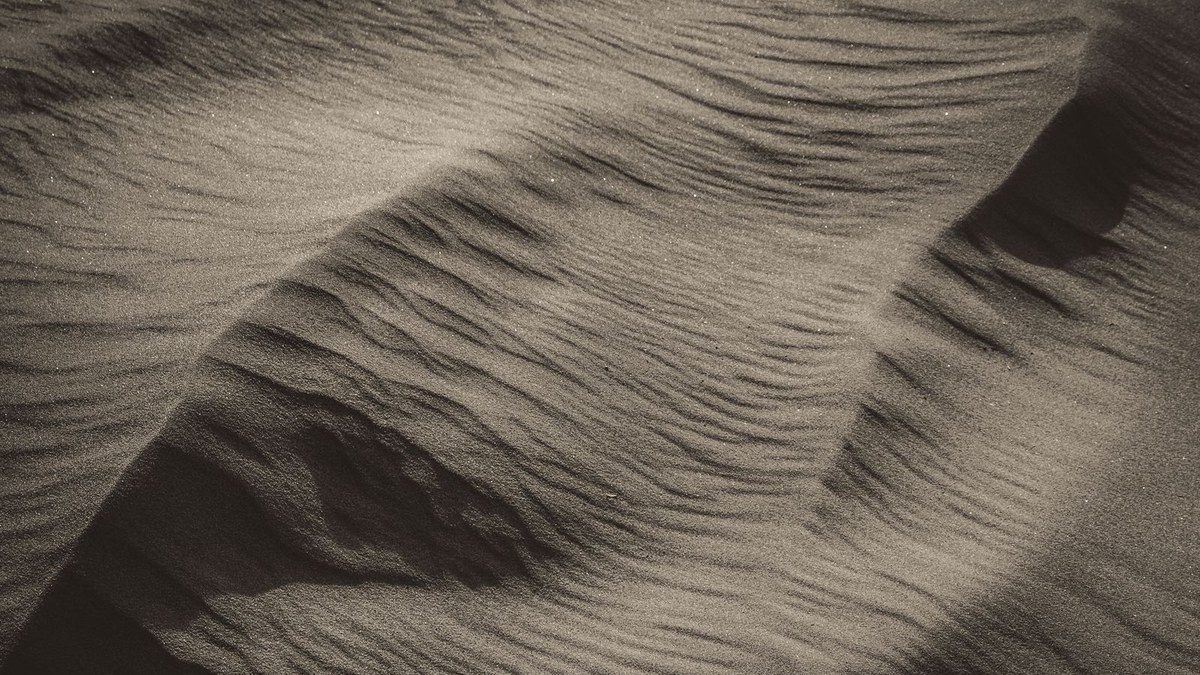
The announcement concerns findings from scientific work. It does not establish that the archaeological location has opened for general visits, and readers should not treat the news as directions to enter or collect material from a site. A photograph of desert terrain used to illustrate the report is also not evidence that the pictured location is Uruq al-Julaybah. Maintaining that distinction protects both the interpretation of the story and the integrity of the archaeological record.
The broader significance for Saudi heritage is a richer way to explain the relationship between people and changing environments. Rather than presenting an isolated object as a curiosity, the research connects technology, resources and landscape. Further study can refine that picture as methods and comparisons develop. For now, the new evidence gives readers a reason to reconsider the Empty Quarter’s deep past through the material traces that survive, while keeping the boundaries of the findings in view. That is the difference between a compelling discovery headline and an explanation grounded in evidence.
Gabriel Nicolaev – CyGuru
Sources & further reading
KAUST: Mundafan research announcement, 13 November
Riyadh Daily: Heritage Commission findings