
Saudi Arabia / Explore
How to Listen to Saudi Performance Traditions: Hear the Exchange, Not Only the Drumbeat
Alardah, Almezmar and Samri become more intelligible when rhythm is heard together with poetry, movement and the relationships among performers. This listening guide offers a way into distinct traditions without reducing them to one national soundtrack.
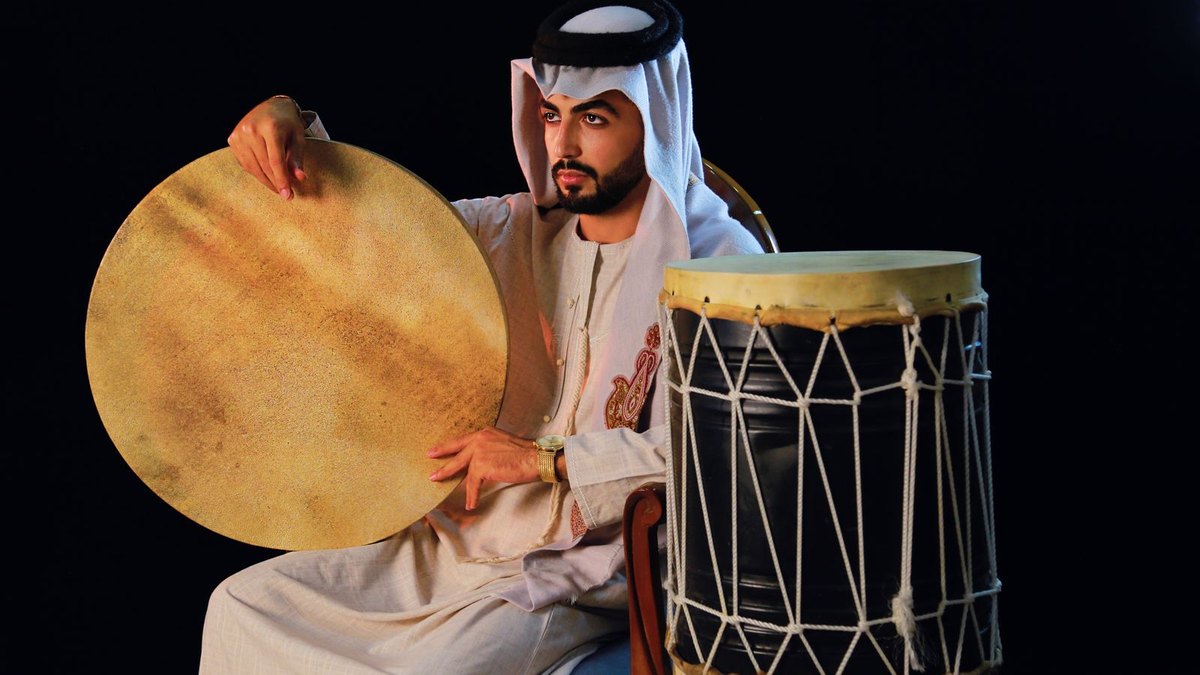
Listen for a relationship
A first encounter with a group performance can be dominated by its most immediate features: the sound of drums, coordinated movement, distinctive clothing or a ceremonial object. Those are meaningful, but they are not the whole event. A more attentive listener asks how one participant’s action becomes another’s cue. Who begins a phrase, who answers, and how does the group know when to change? These questions reveal performance as organized interaction. This feature draws on UNESCO descriptions and Saudipedia to introduce a listening method, not a claim that a brief visit provides mastery of a tradition or the authority to define it for its practitioners.
The method also resists treating Saudi performance as one undifferentiated category. Alardah Alnajdiyah, Almezmar and Samri offer different starting points, with distinct histories and performance relationships described in the sources. They are not presented here as an exhaustive list. Nor does the feature announce an event, promise a current public schedule or direct visitors into a private celebration. The aim is to improve what a person notices when encountering a performance through an authorized public setting, a knowledgeable explanation or a documented recording. Better listening begins with recognizing specificity before searching for a single label that seems to explain everything.
Alardah: poetry gives the movement a structure
UNESCO describes Alardah Alnajdiyah as combining dance, drumming and chanted poetry, with facing rows and verses answered by participants. It was inscribed on the Representative List in 2015. Those details give the listener an immediate framework: attend to the relationship between a vocal phrase, the group response and the coordinated movement. The light swords and flag are visually prominent, but hearing only the percussion misses the verbal organization of the event. The description establishes a tradition with interacting roles rather than a dance that happens to have a soundtrack placed behind it.
A practical listening exercise is to follow one short exchange rather than trying to absorb every element at once. Notice when a voice becomes a collective sound and how movement relates to that moment. A listener who does not understand the poem can still recognize a pattern, but should distinguish that recognition from understanding the words. A translation or explanation from an informed source can add meaning without making every performance identical. The point is not to assign a universal interpretation to every gesture. It is to hear that language, rhythm and group coordination are doing connected work, and that a visually striking object is only one part of that work.
Almezmar: watch how the centre and the rows interact
UNESCO identifies Almezmar as a Hijazi group tradition involving clapping, chanting, drums and paired performers moving with sticks between facing rows. It was inscribed in 2016. That description suggests a different focus of attention: the relationship between the collective rows and the changing activity in the centre. The listener can ask how the group sustains the event while different performers take their turn. The sticks are visually memorable, but a focus on that feature alone would leave out the vocal and rhythmic exchange that organizes the shared performance and connects the participants around it.
When watching a documented example, try shifting attention from the most active performer to the people supporting the pattern. What continues while a pair enters or leaves the centre? Which signals seem to be shared? This is an observational exercise, not a technical instruction for performing Almezmar. It makes visible the expertise in maintaining a collective sequence, including the work that may look repetitive to an untrained observer. Repetition can be a framework within which timing, response and individual action become meaningful. The observer should therefore ask what a repeated pattern enables rather than assuming that the absence of constant novelty means nothing is changing.
Samri: hear a family of practices, not a frozen example
Saudipedia describes Samri as a folk performance associated with Qassim and practiced in several regions, identifying different local forms. Its account of Al-Jawf describes rows responding to verses and the place of percussion in that sequence. The useful lesson is that a familiar name can encompass local variation. One recording or one public presentation should not automatically be treated as the standard against which every other example is judged. A listener can begin with the documented description while remaining open to explanations from practitioners about what distinguishes their own form, setting and way of carrying the tradition forward.
A hypothetical visitor might hear two performances called Samri and notice differences in pacing or presentation. The next useful question is where each version comes from and what occasion it serves, rather than which one is real. The example does not claim that every difference has a regional cause; staging, group choice and the recording itself can affect what is perceived. It illustrates an interpretive discipline: describe the difference before explaining it. That makes room for the practitioner’s knowledge and prevents a visitor’s first encounter from becoming an overly confident rule about a tradition whose internal variety the visitor has only begun to hear.
The performance includes people outside the spotlight
The UNESCO accounts identify teaching, practice and the contribution of people making costumes or instruments within the wider life of these traditions. This broadens the listener’s attention beyond the most visible moment on stage. A performance depends on skills and relationships that may not all appear in a short clip. Recognizing that does not require inventing a story about an individual craftsperson or assuming that every group works in the same way. It means understanding that cultural continuity involves preparation, learning and material knowledge as well as the act the audience sees during a celebration or public presentation.
For a family or educational visit, an informed question can be more valuable than asking for another photograph. How do younger participants learn the timing? Who explains the poem? How are the instruments and clothes prepared? Answers should come from the people and sources relevant to that setting. Questions also need to respect the occasion: a public demonstration may invite explanation, while a celebration may not be organized around visitors’ curiosity. This is not a demand that every performance become a classroom. It is a way to recognize expertise and participation without treating practitioners as interchangeable figures providing atmosphere for someone else’s experience.
A better recording is one you can place in context
When encountering a recording, look for the tradition’s name, the performers or community, the occasion and the source of the explanation. These details help establish what the clip represents and what it cannot represent. A short extract can reveal a rhythmic exchange while omitting the opening, the poem’s full meaning or the end of the sequence. It is useful evidence of a moment, not a complete substitute for the event. The same principle applies to UNESCO inscription: recognition identifies a cultural element and its significance; it does not mean every later public presentation is identical or that the tradition has stopped changing.
The most useful listening habit is therefore to hold three things together: the sound itself, the relationships that organize it and the context that gives the performance meaning. This creates a more precise encounter than reducing the experience to drums, costumes or spectacle. The sources provide reliable starting points, while the method offered here is an interpretation for attentive audiences. It neither promises access to a current event nor claims mastery for the observer. What it offers is a better first question: not only what instrument am I hearing, but who is answering whom, and what does that exchange allow the group to do together? Gabriel Nicolaev – CyGuru
Gabriel Nicolaev – CyGuru