
Saudi Arabia / Explore
SAB and Cultural Development Fund Back a New Riyadh Museum Through Financing Agreement
A financing agreement announced on November 3 links Saudi Awwal Bank and the Cultural Development Fund to a new Riyadh museum. The next questions concern delivery, interpretation and long-term operation.
Financing puts a museum project into the delivery conversation
Saudi Awwal Bank and the Cultural Development Fund announced a financing agreement on November 3 to support a new museum in Riyadh. The Saudi Press Agency reported the agreement, and the bank's statement was carried by MarketScreener on November 4. The proposed museum is intended to provide an interactive exploration of Saudi history and cultural heritage. The announcement identifies a financing milestone rather than an opening. It does not provide a public opening date, the amount of financing or a complete visitor programme, so those details should remain open questions rather than being filled with assumptions.
A specific project follows an earlier framework
The agreement follows a cooperation framework that the two organisations signed at the Cultural Investment Conference in 2025. Their stated purpose is to expand financing channels for cultural enterprises and help projects develop sustainable operations. This continuity matters because a general partnership and a project-level financing agreement describe different stages of work. The earlier framework establishes an area of cooperation; the latest announcement attaches that cooperation to a museum development. It still leaves the public with limited information about the underlying financing structure, conditions and timetable. None of those undisclosed terms can be inferred simply from the existence of the partnership.
The operating model matters after construction
For any new museum, the financial challenge continues after the building and galleries are ready. Staff, maintenance, conservation, security, research and programme renewal require recurring resources. An interactive format also creates choices about technology support and the replacement of equipment. These are general operating considerations, not disclosed features or costs of this Riyadh project. They explain why cultural finance needs to connect the initial development with a credible plan for years of operation. A visually impressive launch is only one moment in the institution's life; a reliable visitor experience must be delivered repeatedly through ordinary weekdays as well as major events.
Interactive interpretation needs a clear purpose
The word interactive can describe many approaches, from guided participation and physical demonstrations to digital displays. The announcement does not specify which will be used. The editorial question is what visitors should understand more clearly after taking part. Technology can support interpretation when it makes evidence, chronology or context easier to grasp. It can also distract when spectacle becomes the main objective. Evaluating the eventual programme will therefore require looking at its historical content, accessibility and educational design, not just the number of screens or installations. These are criteria for future assessment, rather than a verdict on a programme that has not yet been published.
Private participation brings practical responsibilities
The organisations present the agreement as a way to increase the financial sector's participation in cultural development. For a project operator, participation by a lender usually makes the quality of planning and reporting especially consequential. Revenue assumptions, operating costs and delivery milestones need to fit together. This does not establish the terms of the announced transaction or imply that a particular ticket price, attendance target or repayment mechanism has been agreed. It highlights the information that distinguishes a cultural concept from a financeable operation. The relevant evidence will be project documents and subsequent announcements, rather than generic expectations about the sector's growth.
Potential suppliers should follow concrete procurement signals
Museum development can involve architects, exhibition designers, historians, conservation specialists, digital producers and visitor-service teams. The agreement does not announce contracts for these roles. Businesses interested in the project should therefore distinguish a possible market from an available commission. A useful next step is to monitor confirmed procurement notices and identify the actual commissioning body, scope and eligibility requirements. Preparing a portfolio of relevant work can be sensible; claiming an expected contract or hiring around an unconfirmed schedule is a different decision. The financing announcement supplies context for business development, but it is not itself a tender invitation or supplier appointment.
A new institution must be distinguished from existing museums
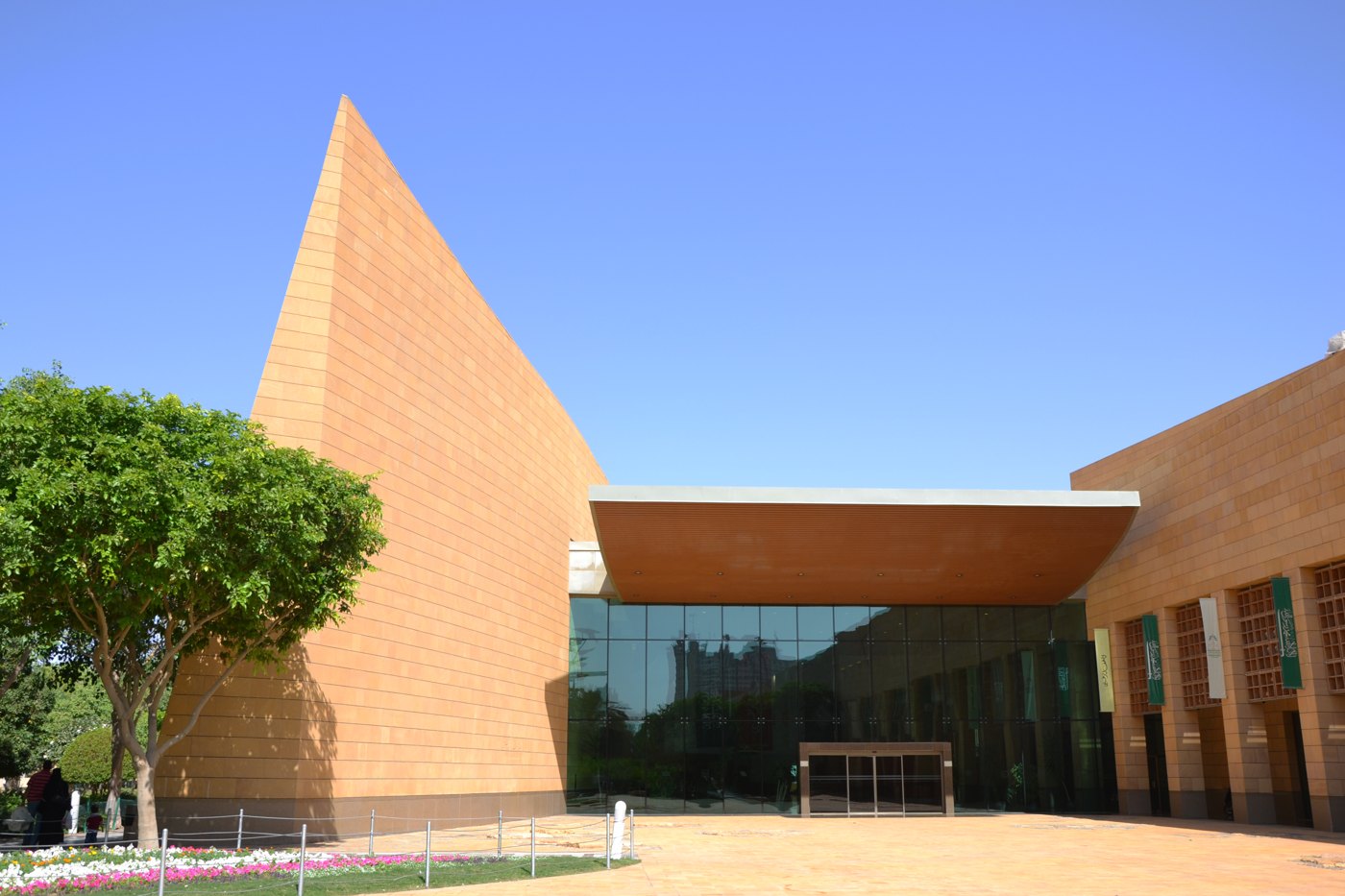
Riyadh already has established museum destinations, including the National Museum. The archive photograph accompanying this article shows that existing institution as cultural context; it is not a picture or rendering of the newly financed museum. Keeping that distinction visible is essential when a project announcement contains few public visual details. Readers planning an immediate visit should use the published information of venues that are already operating. A future development can be followed with interest without being added to a current itinerary, and a financing story should not create an impression that admission or guided visits are already available.
What would make the next update meaningful
The most useful future disclosures would identify the museum's operator, location, collection or interpretive scope, development timetable and plans for public access. Information about education, accessibility and long-term stewardship would also help readers judge its likely contribution. For now, the verified development is the financing agreement and its connection to the earlier SAB–CDF cooperation framework. The wider discussion in this article is analysis of what successful implementation would require. That boundary allows the announcement to be taken seriously without presenting ambitions as completed outcomes, and gives readers a concrete set of details to check when the project returns to the news.
Gabriel Nicolaev – CyGuru