Oman / Latest News
Oman and Zanzibar Sign Heritage and Tourism Agreement With Conservation at Its Core
Oman and Zanzibar signed a heritage and tourism memorandum on 13 November, opening a framework for restoration expertise, museums, tourism promotion and investment. Zanzibar’s presidency highlighted implementation during a meeting with Oman’s heritage and tourism minister the same day.
A new sector-specific agreement
Oman’s Minister of Heritage and Tourism, Ibrahim bin Said Al Busaidi, and Zanzibar’s Minister of Tourism and Heritage, Nasra Nasser Omar, signed the memorandum during the Omani minister’s visit. Reporting on the agreement identifies heritage preservation and tourism development as its connected priorities. This is a new sector-specific framework, distinct from the wider Oman–Tanzania diplomatic and economic discussions held earlier in the week. The practical focus is cooperation between institutions and professionals responsible for heritage and visitor experiences.
Zanzibar’s President Hussein Ali Mwinyi received the Omani minister on 13 November and stressed the importance of implementing the memorandum, according to the presidency’s official account. It identifies tourism marketing, historic-site rehabilitation, museums, research and digital technologies as areas of opportunity. The emphasis on implementation is the key next-stage question: which activities will be selected, who will deliver them and how their results will be documented after the signing ceremony.
Restoration and tourism are connected responsibilities
The memorandum’s reported scope includes restoration, maintenance and management of historic sites, alongside exchanges in museum practice and heritage documentation. It also provides for professional exchanges and research. These categories matter because a heritage destination is not maintained through promotion alone. The visitor-facing story depends on work that often remains less visible: recording what exists, understanding its condition and deciding how an intervention can preserve the qualities that make a place important.
The agreement also addresses tourism promotion and investment, including engagement between relevant institutions and private-sector companies. Such a framework can help potential partners identify one another, but it does not by itself announce a financed hotel, a completed restoration or a new opening date. Those would be separate project decisions. Readers and prospective participants should therefore watch for named activities and published delivery arrangements rather than converting the memorandum’s general scope into a list of confirmed developments.
Stone Town gives the cooperation a wider context
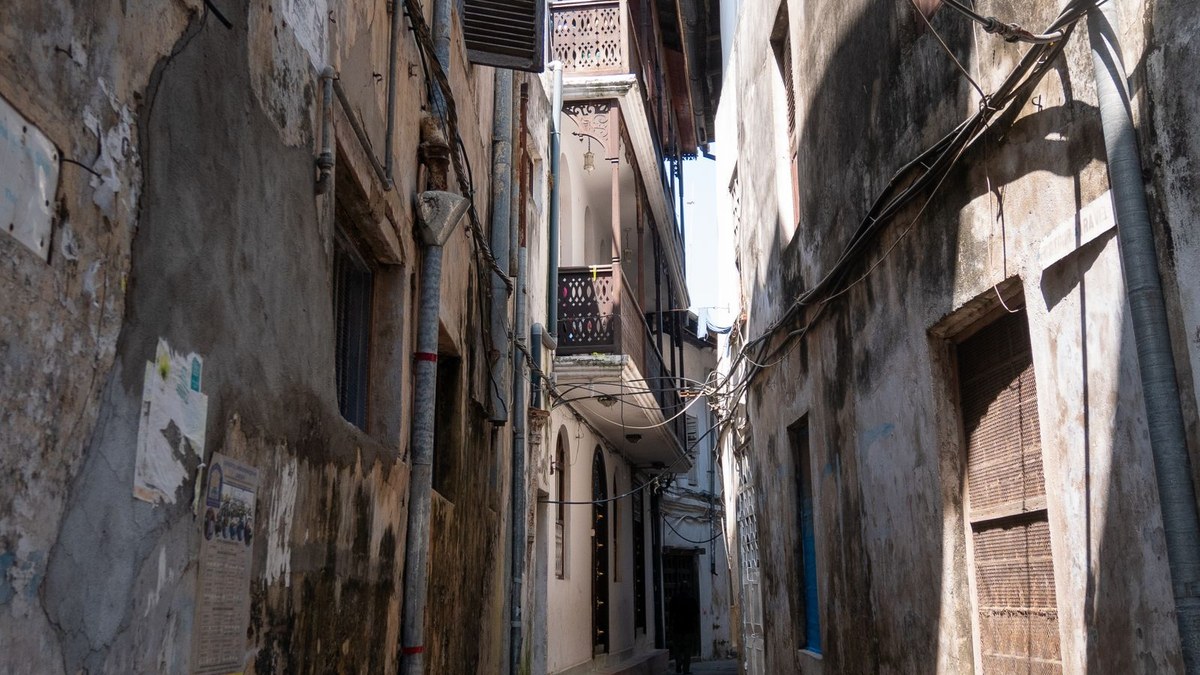
UNESCO describes Stone Town of Zanzibar as a Swahili trading town shaped by exchanges among African, Arab, Indian and European cultures. Its significance rests on the urban ensemble as well as individual monuments. Streets, buildings, open spaces and the relationship with the sea contribute to its character. That account is useful background to the new cooperation: shared Omani connections form part of a wider historical setting rather than the whole explanation of Zanzibar’s cultural identity.
The UNESCO description also makes clear that Stone Town remains a living commercial and social centre. Heritage management therefore involves the way people use a place, not only the appearance of its most photographed buildings. A restoration programme and a tourism initiative can affect the same urban space from different directions. A useful assessment asks how they fit together, particularly where visitors, residents, businesses and conservation responsibilities meet in a single neighbourhood.
An existing relationship gains another framework
The November memorandum follows an established pattern of heritage engagement. Oman’s Foreign Ministry recorded a September 2024 discussion covering historic-site restoration, museums and tourism. A May 2025 consular meeting then addressed restoration, museums and documentary archives. These dated records show that the subject is not newly discovered by either side. The present announcement adds a formal cooperation framework to a relationship in which heritage has already been a recurring practical concern.
That continuity helps readers distinguish novelty from background. Historical ties explain why cooperation is plausible; the new memorandum identifies an instrument for pursuing it. Neither guarantees a particular outcome. The next evidence should come from activities undertaken under the framework, such as a defined professional exchange or an identified conservation project. Reporting those steps separately would allow the public to see what the new agreement adds to work and dialogue that preceded it.
What implementation would make clearer
For cultural institutions, the useful details will be the subjects of exchanges, the participating teams and the outputs they are expected to produce. For businesses, opportunities need a defined project, a responsible counterpart and the appropriate commercial process. For travellers, any change in access or interpretation should come from the relevant operator’s current information. The memorandum is relevant to all three audiences, but it answers different questions for each and should not be mistaken for a visitor booking notice.
The same distinction applies to digital technologies. The presidency mentions them as an opportunity, not as a launched platform. Digital documentation, interpretation and promotion could serve different needs, and the future choice would require its own explanation. Keeping the language precise leaves room for useful innovation without presenting a possible application as an existing service. It also makes later announcements easier to evaluate against what was actually agreed and subsequently delivered.
The agreement’s immediate significance is that conservation expertise and tourism development are being discussed together. Its longer-term value will depend on the projects and professional relationships that follow. For Oman and Zanzibar, the strongest next chapter would preserve the depth of their connections while making concrete progress visible to institutions, residents and visitors. Gabriel Nicolaev – CyGuru.
Gabriel Nicolaev – CyGuru
Sources & further reading
Zanzibar presidency: 13 November meeting and implementation
GCC Business News: scope and signatories of the memorandum
UNESCO: Stone Town of Zanzibar
Oman Foreign Ministry: September 2024 heritage talks
Oman Foreign Ministry: May 2025 heritage cooperation