
UAE / Living
Dubai Students Digitally Reconstruct Five Buildings to Preserve the UAE’s Urban Memory
Canadian University Dubai students and graduates have helped turn archival records of five Dubai buildings into architectural drawings and three-dimensional models. A 4 November report details the Digital Modern UAE project’s progress, linking university research with a national heritage-grants programme and plans for further public presentations. The work documents buildings that have been demolished or changed, rather than proposing their physical reconstruction.
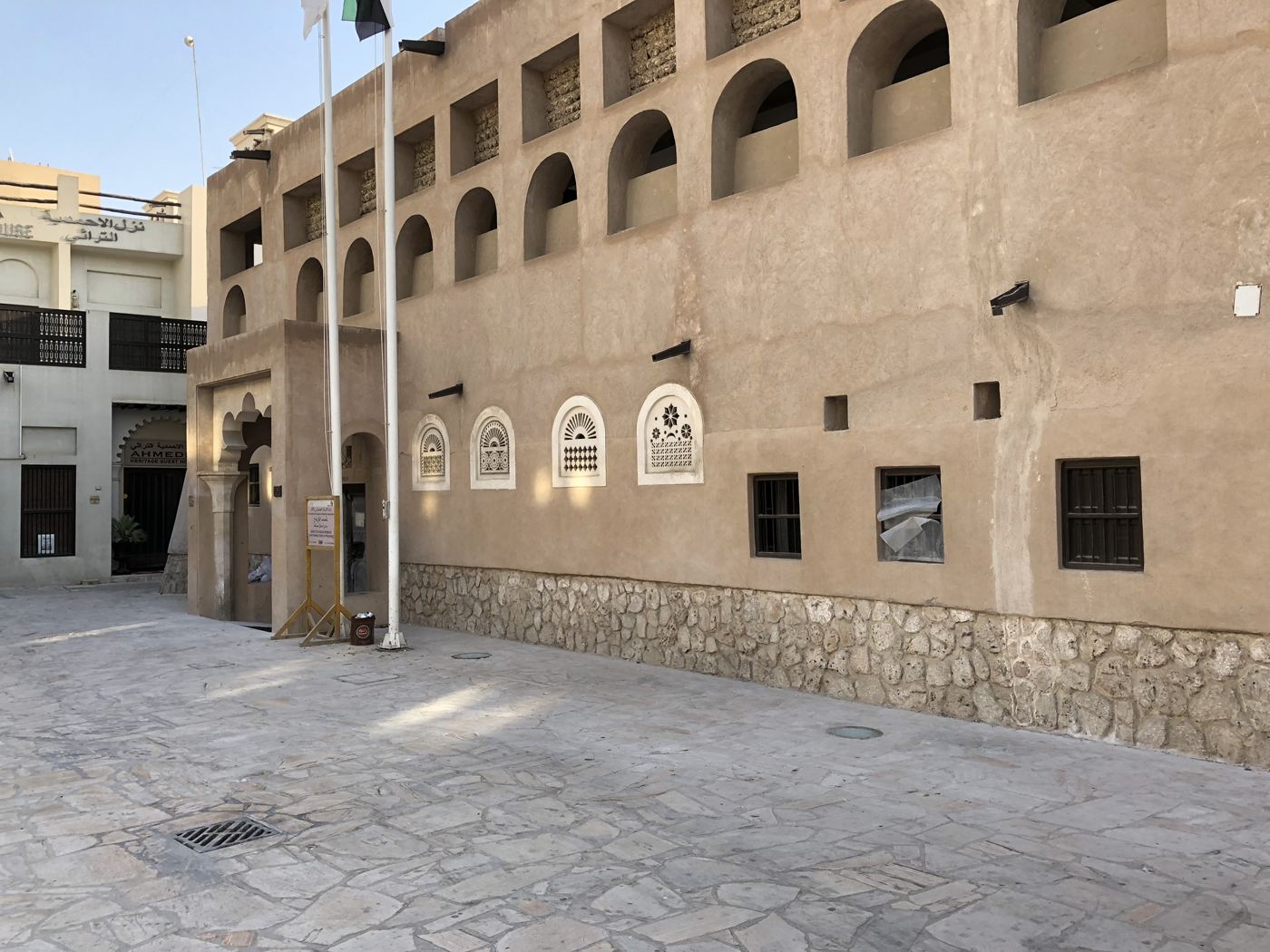
Five cases from different kinds of urban life
The selected cases span hospitality, finance, education, worship and residential development: the Ramada Hotel in Mankhool, the former National Bank of Dubai beside the Creek, Al Ahmadiya School, a church building in Al Ras and the Chicago Beach Hotel residential complex. Gulf Today’s account identifies Dr Serkan Gunay, an assistant professor of architecture, as the project leader. The selection brings different building types into one study rather than treating architectural heritage as a collection of monuments with a single function or style.
That range matters to the historical questions the work can address. A bank helps locate commercial activity; a school records a place of learning; a hotel connects the city to visitors and changing forms of accommodation. Reading them together can show how different parts of daily life occupied the evolving city. The project’s description covers buildings that were demolished or substantially altered, so inclusion in the study should not be taken to mean that every named building has disappeared completely from today’s Dubai.
From scattered records to a spatial account
The Ministry of Culture’s project page describes a research proposal combining archives, oral histories and critical documentation, with digital and physical reconstructions placed in their historical surroundings. It also sets out ambitions for augmented-reality visualisations, an interactive online archive and educational material. These are the project’s stated aims. The current reporting confirms work on drawings, mapping and models; it does not establish that every proposed public platform is already available or that a complete online archive has been launched.
A digital reconstruction begins with evidence rather than a blank design brief. Photographs may show a façade but conceal the depth of a building; a map can establish location while offering little information about an interior. Bringing different records together allows researchers to test whether their interpretation is spatially consistent. It also creates an obligation to distinguish documented features from informed reconstruction. A convincing image can communicate history effectively, but its visual polish alone cannot tell a viewer which details are supported by surviving records.
Research becomes part of architectural education
The published project account names Dana Al Bastaki, Maya Al Hajali, Saghar Kazemian and Karishma Premarajan as research assistants. It describes Al Hajali’s contribution to modelling and Kazemian’s work on research and visual documentation. Their involvement places students and recent graduates inside a live research process, where source selection and interpretation affect the result. The educational value extends beyond learning a modelling tool: the team must decide what a record can support and how to translate that evidence into an intelligible architectural representation.
This differs from a design exercise in which the student can freely invent a building to satisfy a brief. Historical modelling places limits on invention. If two photographs appear inconsistent, the difference may reflect an alteration, a different date or an uncertain identification. Resolving such questions is part of the research, not a distraction from making the final image. For students, that process connects technical drawing, geographic reasoning and historical argument in a way that a finished rendering on its own would not reveal.
A national programme behind the project
The Ministry of Culture identifies Digital Modern UAE among the recipients of its first Modern Heritage Research Grants cycle, developed with Zayed University and MAJRA, the National CSR Fund. Its February announcement describes a five-year programme with total funding of AED800,000. That is a programme-level figure, not a disclosed award of AED800,000 to this individual project. The initiative addresses modern architectural heritage and links research and creative practice to the wider national policy for preserving that part of the built environment.
The ministry’s portfolio shows that the programme is broader than digital reconstruction. Other proposals investigate materials, civic buildings, markets and the history of planned communities. Those subjects help place the Dubai study within a larger effort to explain how urban change happened and what it meant for residents. The significance of Digital Modern UAE is therefore both practical and comparative: it develops representations of selected buildings while testing methods that could be used to document additional cases, including places with less complete archival records.
Public presentation is the next step
Reporting on the project says the research has already been presented at the University of Salford and exhibited at GeoHUB Day with Dubai Municipality. A December presentation in New Zealand and a future display at the Mohammed bin Rashid Library are described as planned. These stages should be kept distinct: an academic presentation, a previous exhibition and a proposed public display offer different forms of access. No opening date for the library display is specified in the current account, so it should not yet be treated as a scheduled visitor attraction.
For residents, the strongest contribution would be an accessible record that connects a model with the photographs, maps and explanations behind it. Such a presentation can help people recognise a place remembered by one generation but unfamiliar to another. The project’s current progress provides material for that exchange, while its proposed expansion could extend the geographic reach beyond the first Dubai cases. Its immediate achievement is to make aspects of urban history easier to examine and discuss, preserving evidence of change through research and teaching as well as through images.
Gabriel Nicolaev – CyGuru