
Bahrain / Business
Beyon Plans Third Renewable-Powered Data Centre Through New Solar Phase
Beyon’s BD 544,500 solar expansion is designed to support a third renewable-powered data centre. As fresh 3–4 November coverage revisits the 1 November announcement, the key distinctions are between installed capacity, forecast annual production and the evidence that will follow commissioning.
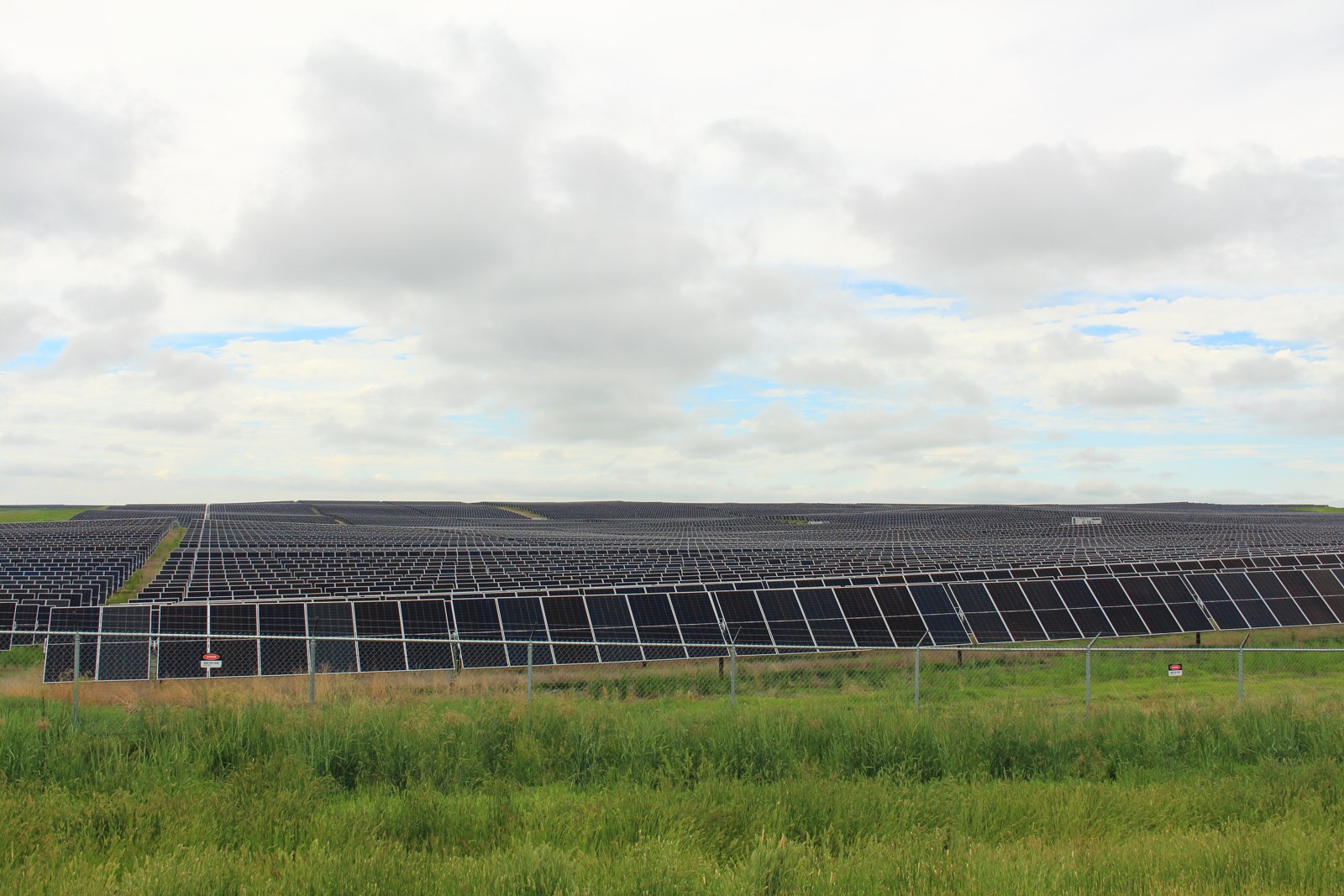
A third centre depends on the next solar phase
Beyon plans to bring a third data centre into its renewable-powered portfolio after completing Phase 5 of its Solar Park programme. The company announced the project on 1 November at Gateway Gulf; further reporting on 3–4 November has focused on the investment and planned output. The development is forward-looking. Beyon says completion is expected in the coming months, so the third centre should not be described as already operating under the new arrangement.
The phase is being developed with Almoayyed Solar at an investment of approximately BD544,500. Its stated design includes 2,292 panels across 14,000 square metres, with a capacity of 1.5 megawatts peak. Beyon expects annual generation of about 2.5 gigawatt-hours and avoided carbon dioxide emissions above 1,585 tonnes a year. These are company forecasts for the completed installation, rather than measured operating results from Phase 5.
Capacity and annual production answer different questions
Megawatts peak describe the rated capacity of a solar installation under specified conditions. Gigawatt-hours describe energy produced over time. The distinction matters because a data centre’s electricity requirement continues outside peak sunshine hours. A 1.5 MWp project therefore cannot be interpreted as delivering 1.5 megawatts continuously throughout the year. The reported annual forecast is the more useful starting point for understanding the scale of energy contribution, while actual output will only be known after operation.
Using the disclosed figures, 2.5 GWh spread evenly over a year is equivalent to an average of roughly 285 kilowatts. This is an arithmetic illustration, not a statement about the data centre’s actual demand or the solar system’s hourly output. It helps separate installed capacity from delivered energy. The announcement does not provide the third centre’s load profile, so it cannot independently establish the facility’s size, utilisation or year-round electricity balance.
What renewable-powered means needs an accounting boundary
Beyon describes the third centre as set to be fully powered by renewable energy. That is the company’s stated outcome for the completed programme. The release does not explain the detailed treatment of grid imports, surplus generation, energy attributes or time matching. It also does not specify a battery installation in this phase. Readers should therefore avoid extending the statement into an unsupported claim that the centre will be physically isolated from the grid or run only on direct sunlight around the clock.
The GHG Protocol’s electricity guidance distinguishes how organisations account for purchased electricity and associated attributes. That wider framework is relevant context, not an assessment of Beyon’s compliance. For customers seeking emissions information, the useful follow-up is documentation that connects facility electricity consumption with the renewable generation or procurement claim. A renewable-energy label is most informative when the reporting boundary, calculation method and period are explicit.
The project extends a multi-year programme
Beyon says Phase 3 enabled its Tier III certified Hamala data centre to operate on renewable energy, a milestone announced during Gateway Gulf 2025. Phase 4, completed during 2026, extended the programme to Total CX’s customer contact centre. Phase 5 therefore builds on a sequence of investments across more than one type of operation. The latest announcement is about energy infrastructure and the third data centre, rather than the group’s separately reported quarterly financial performance.
The company’s sustainability page describes an existing renewable programme spanning Data Oasis and Hamala and wider business investments. Such portfolio-level reporting provides context, but figures with different boundaries should not automatically be added together. Annual output from a particular phase, the electricity needs of a specific centre and generation across the whole group are separate measures. Clear boundaries will be important when the new phase is incorporated into future sustainability disclosures.
Why this matters to digital-service customers
Data centre customers purchase dependable computing infrastructure, while electricity use increasingly forms part of their procurement and reporting decisions. The commercial relevance of the new phase is that energy sourcing can be considered alongside location, connectivity, resilience and service performance. Solar investment does not by itself establish any of those other characteristics. A customer still needs the relevant technical and contractual evidence for the facility and service it intends to use.
The announcement does not publish a new customer tariff, a guaranteed reduction in hosting costs or a change to service availability. It also does not state that the investment creates a newly opened data centre building. Its precise claim is the extension of renewable power to a third centre after the solar phase is completed. Maintaining that distinction makes the news useful to buyers without turning an infrastructure investment into an unsupported sales promise.
The evidence to look for after commissioning
Once Phase 5 is operating, the strongest evidence will be measured annual generation, the method behind reported emissions reductions and the connection between output and the third centre’s electricity use. The published carbon forecast depends on a comparison with an alternative electricity supply; the announcement does not supply the full calculation. Reporting actual performance against the forecast would show how the installation is contributing over time and whether assumptions require adjustment.
For Bahrain’s digital economy, the project illustrates a concrete investment in the energy side of infrastructure growth. It has a named partner, an investment amount, a panel count and an output forecast, making it more specific than a general sustainability pledge. The next step is delivery and transparent operating evidence. Until then, the accurate description is a planned solar expansion intended to support a third renewable-powered data centre, with completion and measured results still ahead.
Gabriel Nicolaev – CyGuru