
GCC / Business
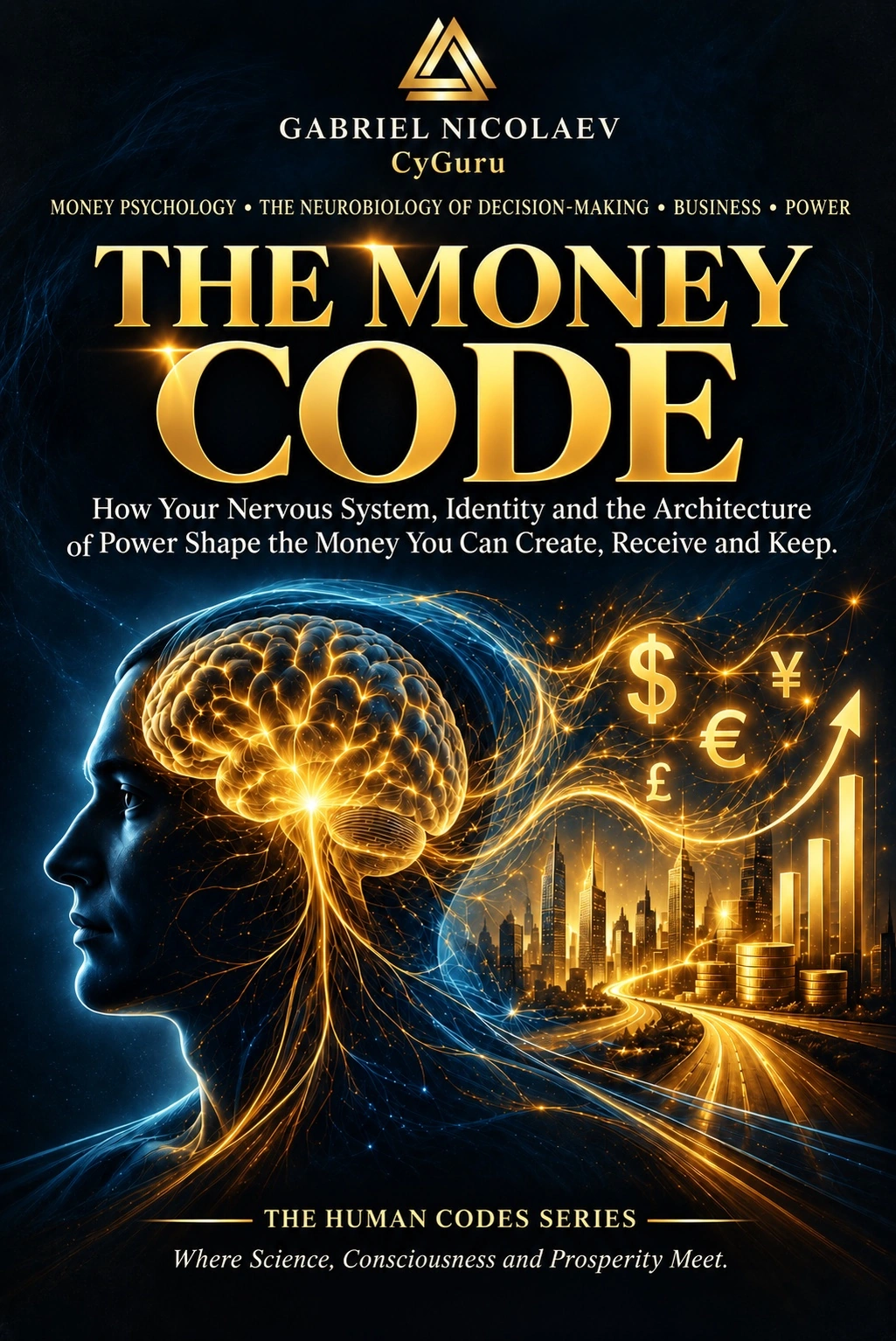
The Money Code Goes Multilingual: Gabriel Nicolaev–CyGuru Examines Money, Identity and Power in Six Languages
Available in English, Arabic, Romanian, Spanish, Russian and Chinese, the 40-chapter book explores the decisions and economic arrangements that shape people’s ability to create value, negotiate its price and retain its rewards.
When earning more leaves the underlying arrangement unchanged
Financial progress is often described through visible milestones: a higher salary, a larger contract, increased revenue or a growing business. Each can represent a genuine achievement. Yet none tells the complete story of the obligations attached to it. A business owner may increase sales while becoming more dependent on personal involvement. A professional may secure better compensation while accepting demands that leave less control over time.
The useful question is what additional income changes. Does it create a reserve, reduce dependence on a single customer or make an unsuitable contract easier to refuse? Does it allow more deliberate choices about work and family? Or does it mainly finance a structure that requires the same intensity to continue? The Money Code places the relationship between income and actual room to live at the centre of its discussion.
Being valuable does not automatically create negotiating power
Expertise can coexist with weak pricing. Reliability can become an expectation rather than a recognised commercial advantage. A person may contribute significantly while holding little influence over the conditions under which that contribution is purchased. This is where the book’s emphasis on value creation, pricing and negotiation becomes especially relevant.
Creating something useful answers one question: why should someone want it? Negotiating its price answers another: how will rewards and responsibilities be distributed? Those questions become blurred when professionals assume excellent work will automatically produce appropriate compensation. Customers may appreciate a service while continuing to accept terms that favour them. Recognising the distinction allows a more precise examination of performance. Revenue shows activity; the terms surrounding it help determine whether that activity strengthens the business or continually consumes its capacity.
The personal meaning of financial decisions
The subtitle, How Your Nervous System, Identity and the Architecture of Power Shape the Money You Can Create, Receive and Keep, sets out the author’s framework. Financial behaviour is examined alongside pressure and the identities people develop through work, responsibility and recognition. The framework is the book’s interpretive approach, rather than a guarantee that one mechanism explains every financial outcome.
A person may understand the arithmetic of a situation while finding the necessary conversation difficult. Asking for payment, revising a fee or declining an arrangement can challenge a familiar role: the accommodating professional, the endlessly available founder or the family member who feels responsible for every request. Spending can also carry a need for recognition or belonging. These examples illustrate why examining behaviour can add something that reviewing balances alone cannot: a clearer account of how a decision becomes repeated. They do not remove the importance of actual income, contractual terms or access to opportunity.
Six languages give the conversation a wider audience
The multilingual release is a defining feature of The Money Code. Its six editions offer English, Arabic, Romanian, Spanish, Russian and Chinese entry points. English and Arabic give the book particular relevance to Gulf audiences, while the other editions broaden access across further linguistic communities. The official book page links each edition to Apple Books; Amazon links are currently labelled as forthcoming.
That matters where commercial life routinely crosses languages. A professional may work within an international team, negotiate across borders and manage family responsibilities in a different cultural setting. Money moves through those relationships, but so do expectations about responsibility, success and acceptable behaviour. Reading in a familiar language can make those expectations easier to examine precisely. The significance is more than distribution: readers can engage directly with the same questions without approaching every personal distinction through a second language.
From recognition to practical decisions
According to its official description, the English edition spans 40 chapters and includes diagnostic questions, exercises and structured protocols for examining earning, negotiation, allocation and the protection of resources. The important transition is from identifying a pattern to deciding what needs to change.
If the difficulty is pricing, the next step concerns the offer and its terms. If income repeatedly disappears into expanding commitments, those commitments require attention. If a business cannot function without constant intervention from its owner, its operating arrangement deserves examination alongside revenue. A useful framework makes these distinctions clearer. It helps prevent every problem from receiving the same answer—more effort, another customer or a higher income target—when the actual constraint sits elsewhere. Reading cannot guarantee an outcome; its practical value depends on the quality of the questions and decisions it supports.
Explore the six editions
The strongest starting point is a specific question. What would financial improvement need to change? Which obligation most sharply limits choice? Where is significant value being created without corresponding influence over the terms? Which repeated decision has become so familiar that it no longer feels like a decision?
Explore The Money Code on the official CyGuru book page and choose your preferred language through its Apple Books edition links. Readers can also explore the dedicated book website at www.cyguru.money. For a Gulf audience navigating careers, enterprise and cross-border responsibilities, the central question is concrete: what does your money system make possible, and what does it keep requiring you to repeat?
Gabriel Nicolaev – CyGuru
Gabriel Nicolaev – CyGuru