
UAE / Latest News
Louvre Abu Dhabi Opens Confluences With Six Artists Exploring Indian Ocean Connections
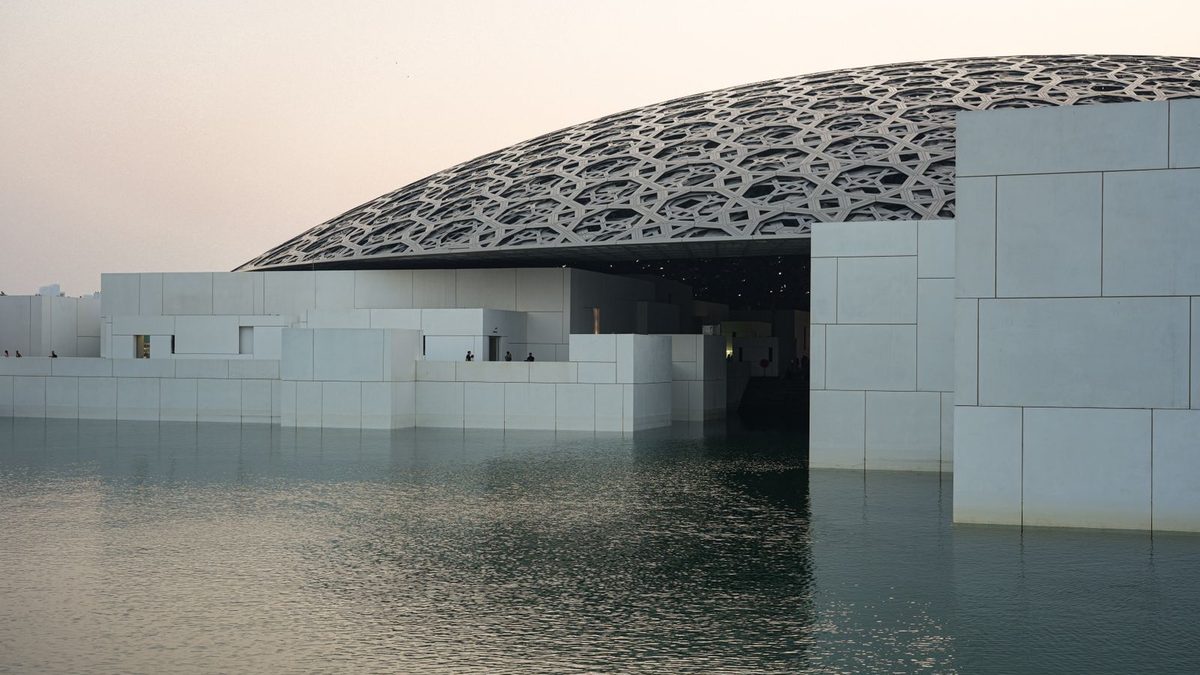
Louvre Abu Dhabi’s sixth Art Here exhibition opens beneath the museum dome on 11 November 2026. Confluences brings together six contemporary artists to explore how travel, migration and cultural exchange across the Indian Ocean have shaped life in the Gulf and beyond.
Six practices under the dome
Guest curator Kamini Sawhney has placed the exhibition in the museum’s central plaza, where visitors encounter the works in the space beneath the dome. The museum gives 28 February 2027 as the closing date. The six artists are Ahaad Alamoudi from Saudi Arabia, Almaha Jaralla from the UAE, Dubai-based Malaysian artist Shamin Sharum, and Indian artists Ravikumar Kashi, Reena Saini Kallat and Vivek Vilasini. The exhibition accompanies the Richard Mille Art Prize, whose jury selected the shortlist from more than 300 proposals.
Bringing these practices together puts personal accounts alongside histories that are often told through shipping routes and trade. A journey can connect two ports and divide a family’s time between two homes. Materials, patterns and photographs can carry traces of that experience through generations. Sawhney’s curatorial text gives particular attention to people who moved from India to the Gulf for work, and to the changes those journeys brought to families and places on both sides of the water. The contemporary works approach those connections through distinct experiences and forms.
What material can reveal
Jaralla’s practice offers a starting point for an Emirati visitor interested in how family and regional histories are carried forward. The shortlist announcement describes her work with textiles and pigment and its attention to movement and inherited memory. A viewer can ask what a surface preserves and what changes when a familiar material is taken into a new setting. Cloth can be folded, worn, packed or passed to another person. Each of those actions suggests a different way that material culture can move through a household.
Kallat’s stated interest in borders opens a related question about who can move, which routes become available and how those routes change over time. Sharum’s attention to ordinary urban life brings the question closer to streets and shared spaces in a city such as Dubai. A comparison between their practices can start with scale. A border can be read across a map, while repeated encounters between neighbours or colleagues become visible through everyday detail. The exhibition’s common theme provides room for both perspectives and for the differences between them.
A wider shortlist
The 2026 edition widened the initiative’s reach to include artists from India alongside those from the GCC. That change gives a concrete shape to the theme, with three artists from India on the shortlist and three other practices connected to the Gulf. The selection also includes different artistic methods. The media office describes Kashi’s work as interdisciplinary, Vilasini’s as incorporating digital and sculptural media, and Alamoudi’s as concerned with representation and the visual language of a rapidly changing Saudi Arabia. Visitors can follow one question across several works and see how each artist approaches it.
The prize adds a later milestone to the exhibition’s calendar. According to the media office, the winner will receive US$60,000 when announced later in the season. The opening makes the shortlist available to audiences, who can spend time with six approaches before the jury’s announcement. For artists considering future editions, the 300-plus submissions also indicate how broad the selection pool was this year. The exhibition gives those proposals a public setting where visitors can see how the selected artists have developed ideas into work.
How the plaza changes the viewing experience
The setting changes how a visitor can approach the exhibition. The central plaza puts contemporary work into a shared space where movement, the building and views of the water are part of the visit. Sawhney explicitly connects that architectural setting with the maritime theme. A visitor can pause at one work and look back from another position. The change of distance or surrounding view may draw attention to details that were easy to miss on first approach, especially when a work uses scale, texture or an arrangement of several components.
Families can begin with a direct observation that everyone can make. Ask what the eye notices first, then read the label together and see which detail acquires a new meaning. A child who identifies a familiar texture or shape can offer a starting point for an adult’s question about the artist’s choice. The approach works across languages and lets several people contribute to the same visit. It also gives the exhibition enough time for differences between the works to emerge through looking and conversation.
The Gulf connections behind the exhibition
For UAE residents, the exhibition’s premise is close to ordinary life. People may speak several languages during a workday, share a meal with colleagues from other countries and stay in contact with relatives across the sea. A story of exchange can include those routines and the labour behind them, as well as the moments of arrival that appear more often in public accounts. The museum’s curatorial framing places contemporary journeys alongside earlier Indian Ocean movement and allows audiences to ask which connections have endured and which take new forms.
Louvre Abu Dhabi has an exhibition page with the curator’s text, artist names and booking information. Readers can use it to choose a visit within the run and return to the text after seeing the works. A second look may bring out the differences between a history told through material, a history told through borders and a history told through the rhythms of a city. Those are distinct ways to understand the relationships that the exhibition brings into one place beneath the dome.
Gabriel Nicolaev – CyGuru
Gabriel Nicolaev – CyGuru
Sources & further reading
Louvre Abu Dhabi exhibition and curatorial text
Abu Dhabi Media Office shortlist and prize details