
Saudi Arabia / Business
Jeddah Islamic Port Sets an October Container Record as Saudi Port Measures Move in Different Directions
Jeddah Islamic Port handled a record 582,900 TEUs in October, while container handling across Saudi ports rose 14 percent year on year. The update also reports falling total cargo tonnage, showing why container activity and the wider freight mix need to be read separately.
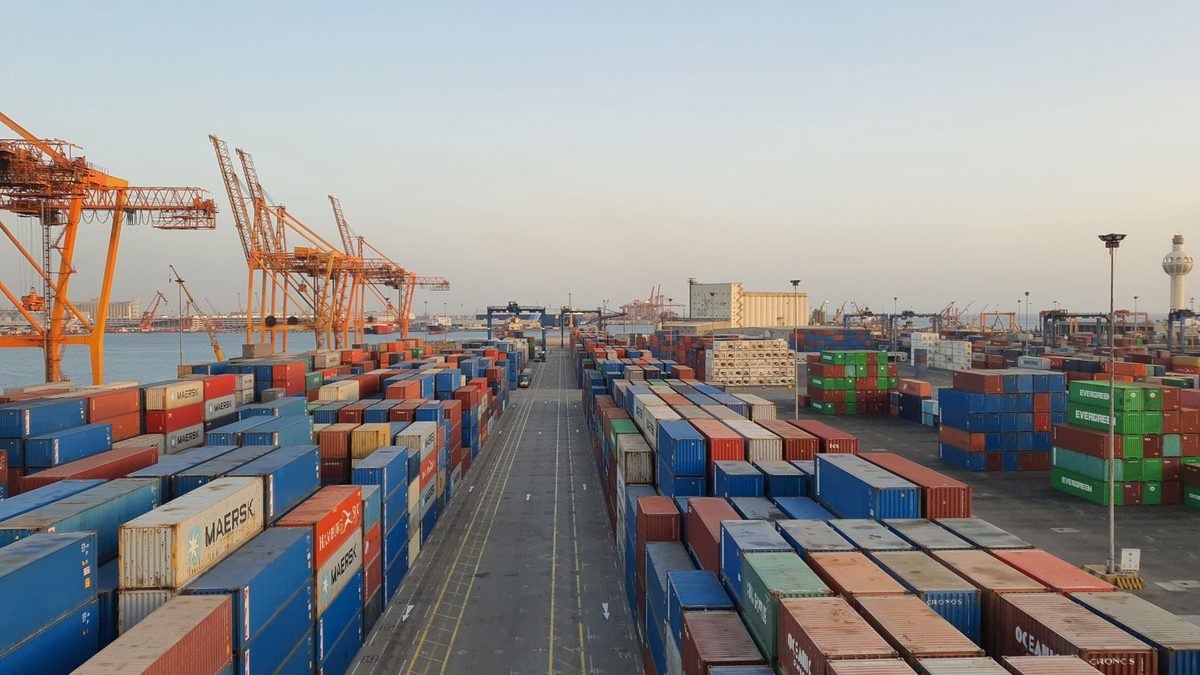
A record at Jeddah, a wider container increase
Jeddah Islamic Port recorded its highest monthly container handling in October 2026 at 582,900 TEUs, according to Saudi Ports Authority spokesman Abdullah Al-Munif in reports published on 9 November. The figure exceeded the previous monthly record, set in June, by 27.45 percent. Across Saudi ports, container handling rose 14 percent year on year to approximately 866,200 TEUs, compared with around 759,800 a year earlier. Asharq Al-Awsat and Saudi Gazette reported the update. The two comparisons describe different things: Jeddah against its previous record, and the national container total against the same month of 2025.
That distinction is necessary before interpreting the headline. A record is a comparison with a previous peak; annual growth is a comparison with a specified year-earlier period. They can appear in the same release without measuring the same change. The reporting month also remains October, although the update was published in November. The figures establish a notable month for container handling, particularly at Jeddah, without by themselves describing the entire condition of maritime trade. The rest of the release shows why a port system needs more than one indicator to make its changing activity understandable.
A TEU measures a different unit from a tonne
The update reports that total cargo tonnage fell 11.7 percent to 22.36 million tonnes from 25.32 million tonnes in October 2025. This can coexist with rising container handling because the units and cargo populations differ. A TEU is a standardized container-capacity measure, while a tonne measures weight. Changes in the mix of cargo can therefore move the indicators differently. The release should not be simplified into a claim that every part of the port economy grew or that the container record is contradicted by lower tonnage. Both can be accurate descriptions of their defined measures.
An illustrative example makes the distinction easier to see. A port could handle more container units while handling less heavy bulk cargo, producing a rise in one activity measure and a decline in another. That example is hypothetical; it is not a reconstruction of the precise cause of the Saudi figures. Establishing the causes would require the relevant cargo and operating detail. Its purpose is to prevent an arithmetic category error. The useful question is what kind of activity changed and in what unit, rather than choosing the single number that creates the most positive or negative overall impression.
The container mix also varies
Saudi Gazette reports inbound containers at approximately 305,600 TEUs, up 8.53 percent, and outbound containers at approximately 282,900 TEUs, up 4.83 percent. It reports transshipment at around 186,400 TEUs, down 10.54 percent, and transit containers at approximately 91,300 TEUs. These categories should retain the labels used in the source. Container movement is not one uniform activity, and a rising total does not establish growth in every category. The data provide a more differentiated picture than a single throughput headline, although they do not explain every underlying commercial or routing decision behind the changes.
For a business following logistics conditions, that differentiation matters because its own cargo may use a particular part of the system. A national increase cannot automatically establish an improvement in every route or service. Conversely, a falling category does not prove a problem for every customer. The analytical task is to connect a relevant operating question with the appropriate measure. This report does not supply a shipment-level service assessment or a prediction about delivery times. It explains the published mix so readers can recognize why an aggregate result and their own transaction experience may answer different questions.
Other traffic measures tell separate stories
The release also reports lower passenger and vehicle traffic alongside an increase in livestock received through the ports. Passenger traffic fell 8.96 percent to approximately 87,600, while vehicles handled declined 41.46 percent to around 65,500. Livestock arrivals rose 30.98 percent to approximately 725,100 head. These figures concern different kinds of movement and should not be combined into a single volume measure. A vehicle, passenger, head of livestock and container unit are not interchangeable counts. Their presence in one port update is useful precisely because ports support several activities whose demand patterns can differ.
The same logic applies to interpreting efficiency. A higher throughput figure can be consistent with strong operating performance, and the spokesman linked Jeddah’s record to its logistics capabilities. But throughput alone does not isolate every contributor to the result. Demand, service patterns and cargo mix can influence the quantity handled. This is a general analytical limit, not a criticism of the port’s reported performance. Readers seeking a fuller operational assessment would need additional defined indicators, where published, rather than treating volume as a complete substitute for service quality or the experience of every vessel and customer.
How to read the next update
The next meaningful comparison should preserve the reporting month, unit and category. A later release can show whether the record month was followed by a sustained pattern, but October alone cannot establish that future trajectory. The same applies to the national increase: it is a measured annual comparison for one month, not a guarantee of the year-end total. Consistent reporting will allow readers to distinguish a changing cargo mix from a broad rise or fall in activity. The present release supplies a benchmark for that work, with the strongest conclusions tied to the figures actually published.
The verified story is therefore both a Jeddah milestone and a mixed national port picture. Container handling increased, Jeddah reached a new monthly peak, and other measures moved differently. That combination is more informative than a uniformly triumphant or uniformly negative account. It shows how a logistics system can change in composition as well as scale. For Gulf businesses, the value lies in understanding the relevant movement rather than relying on a general impression of port performance. The data deserve to be read as a set of distinct indicators, each useful within its own scope and limits. Gabriel Nicolaev – CyGuru
Gabriel Nicolaev – CyGuru
Sources & further reading
Saudi Gazette: October port activity, 9 November
Asharq Al-Awsat: container record and national figures