
Bahrain / Explore
Dilmun Burial Mounds: Read the Pattern Before Looking for a Monument
Bahrain’s Dilmun Burial Mounds are a landscape of repeated structures, social differences and changing settlement around them. Understanding the World Heritage property as a group of sites makes A’ali more intelligible than searching for a single tomb to stand for the whole civilisation.
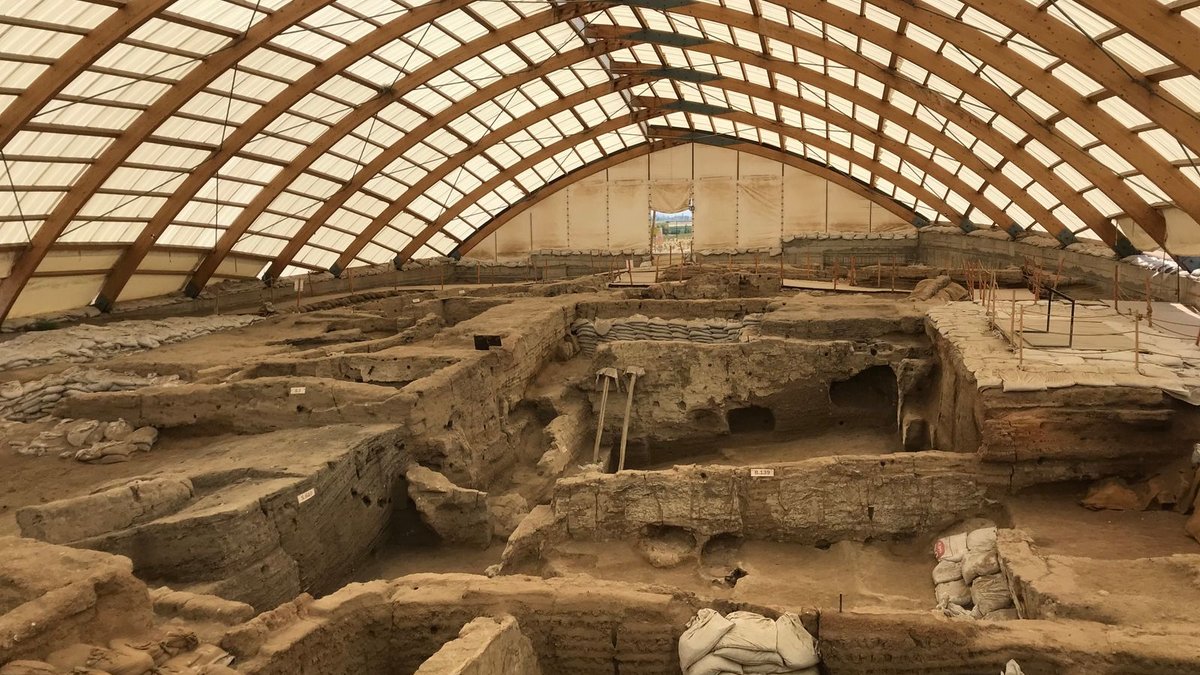
A World Heritage property with many components
The Dilmun Burial Mounds were inscribed on UNESCO’s World Heritage List in 2019. UNESCO describes a serial property of 21 archaeological components in western Bahrain: six mound fields and 15 components containing royal burials. That structure is the first key to understanding the place. It is not a single enclosed monument with one ideal viewpoint. The significance lies partly in distribution: many burial structures across a landscape, alongside a smaller number of exceptional examples. A visitor who arrives expecting one dominant building can miss the scale of the evidence even while looking directly at it.
The UNESCO account places the main construction period approximately between 2200 and 1750 BCE. These dates provide a historical frame rather than a claim that every structure in the surrounding area has an identical history. Bahrain’s culture authority describes particular components in greater detail, including A’ali East. Using the property-level account together with the local descriptions helps distinguish the overall story from an individual site’s archaeology. It also prevents a common misunderstanding: the World Heritage designation covers specified components, not every visible patch of ground that a visitor might casually group under the same place name.
A mound is not the original architectural idea
UNESCO explains that the structures originally took the form of low cylindrical towers rather than the rounded mounds many people recognise today. Erosion and other historical processes changed their appearance. This matters because the present silhouette can conceal the design. The visitor needs to hold two images together: the surviving landscape and the architectural form established through archaeology. Neither should erase the other. The mound visible now is genuine evidence of a long history, while an informed reconstruction helps explain the structure’s initial arrangement. The relationship between the two is a question of interpretation, not a reason to dismiss what survives.
A practical way to look is to begin with the outline and spacing before seeking an imagined interior. Ask what the ground makes visible and what requires an archaeological explanation. A flat photograph can compress differences in scale and distance, so take time to understand the setting from permitted viewing positions. Do not assume that an apparent path is an authorised route or that a visible opening invites entry. The purpose is to observe the structure within its context. Access information and site management instructions should determine where a visitor goes; curiosity does not create permission to climb, disturb or enter archaeological fabric.
Repetition is historical evidence
The repeated presence of burial structures is itself part of the historical argument. UNESCO identifies the number, density and varied forms as evidence of Early Dilmun society. The landscape can therefore be read through relationships among structures, rather than through a search for the most spectacular object. Repetition invites questions about shared practice, available labour and the organisation required to maintain a burial tradition across generations. Those questions are more productive than treating a field of mounds as an empty setting waiting for a single highlight. The pattern is one of the principal reasons the site matters.
At A’ali East, the culture authority records 4,669 tumuli of differing sizes and describes natural dry channels crossing the cemetery. It also notes that mounds can form small groups or chains, while keeping uncertainty visible about the reasons for particular arrangements. That restraint is instructive. A visitor can notice a pattern without claiming to know its cause. The best interpretation connects observations to the research rather than turning every alignment into a confident symbolic story. Keeping a question open preserves the distinction between what is visible, what archaeology supports and what remains a possibility.
Royal burials reveal differences within society
The royal mounds add another scale to the property. UNESCO describes larger, more elaborate constructions and connects differences in burial architecture with a more complex society. The importance is relational: exceptional tombs become meaningful beside the broader burial fields. Looking only at the largest examples can make an entire civilisation appear to consist of rulers. Looking only at repetition can hide differences in status. The property allows both views to be considered together, showing how a shared burial tradition could contain hierarchy rather than requiring a choice between uniformity and difference.
This gives a useful question for a family or small group: which features appear shared, and which indicate distinction? The answer should draw on published interpretation rather than an improvised ranking of visible mounds. Size alone, viewed from a casual position, does not supply a complete biography or identify a person. The archaeological account includes construction and interior evidence unavailable to a quick glance. A visitor can still understand the larger insight: material arrangements reveal social relationships, and the history of a community includes both common practices and unequal access to resources. That insight travels beyond any single tomb.
A’ali is both an archaeological and a living setting
The property is embedded in a modern setting, especially around A’ali. UNESCO’s account discusses the relationship between the surviving archaeology and surrounding development, while the culture authority describes the royal components within the village’s urban fabric. This is a reminder that heritage is not always separated from everyday life by a remote landscape. Roads, homes and present-day movement can sit near evidence of a much older community. The contrast does not make the archaeology less real. It makes conservation and interpretation more demanding, because the visitor is encountering a place with continuing uses as well as historical significance.
Respect for that setting includes ordinary consideration for residents and working routes. A heritage outing should not turn a neighbourhood into an unrestricted viewing platform. Use permitted access and legitimate stopping places, avoid obstructing movement and follow local instructions. The practical aim is to observe without adding pressure to the setting. This also improves the intellectual experience: noticing the relationship between protected areas and living surroundings gives a fuller account of the site than framing a photograph to remove every modern element. The ancient evidence survives within a present landscape, and understanding both is part of a responsible visit.
Build a visit around understanding and restraint
Plan around a manageable component rather than promising to cover the entire serial property. Read UNESCO’s overview and the culture authority’s specific site description first, then confirm current access arrangements through the responsible official channel. The fact that a site is described online does not establish unrestricted entry or a guided service on a chosen day. Allow time for observation and avoid relying on an unverified map pin as the whole plan. If travelling with children or people whose mobility or heat tolerance differs, choose the pace and viewing conditions around the group’s actual needs. Before departure, agree on the specific component you intend to see and the official description you are using. This keeps a place name from becoming a substitute for a defined destination.
A useful finish is to name what the landscape has changed in the visitor’s understanding. Perhaps a mound now reads as transformed architecture rather than a natural hill. Perhaps a repeated field has become evidence of collective practice, or the royal examples have made social difference visible. Those are meaningful outcomes even without entering a chamber or collecting a dramatic image. The Dilmun Burial Mounds reward a shift from monument hunting to reading relationships: between structures, between common and exceptional burials, and between archaeology and the living island around it. The visitor leaves with a more accurate question about the past, not merely another place completed.
Gabriel Nicolaev – CyGuru
Gabriel Nicolaev – CyGuru