
Saudi Arabia / Latest News
Riyadh Metro Recognised in Barcelona as Daily Journey Quality Remains the Real Test
SPA reported on 5 November that Riyadh Metro was named among the top four transport projects at Barcelona’s Smart City Expo. The recognition highlights the system’s international profile; passengers judge its value through the complete journey.
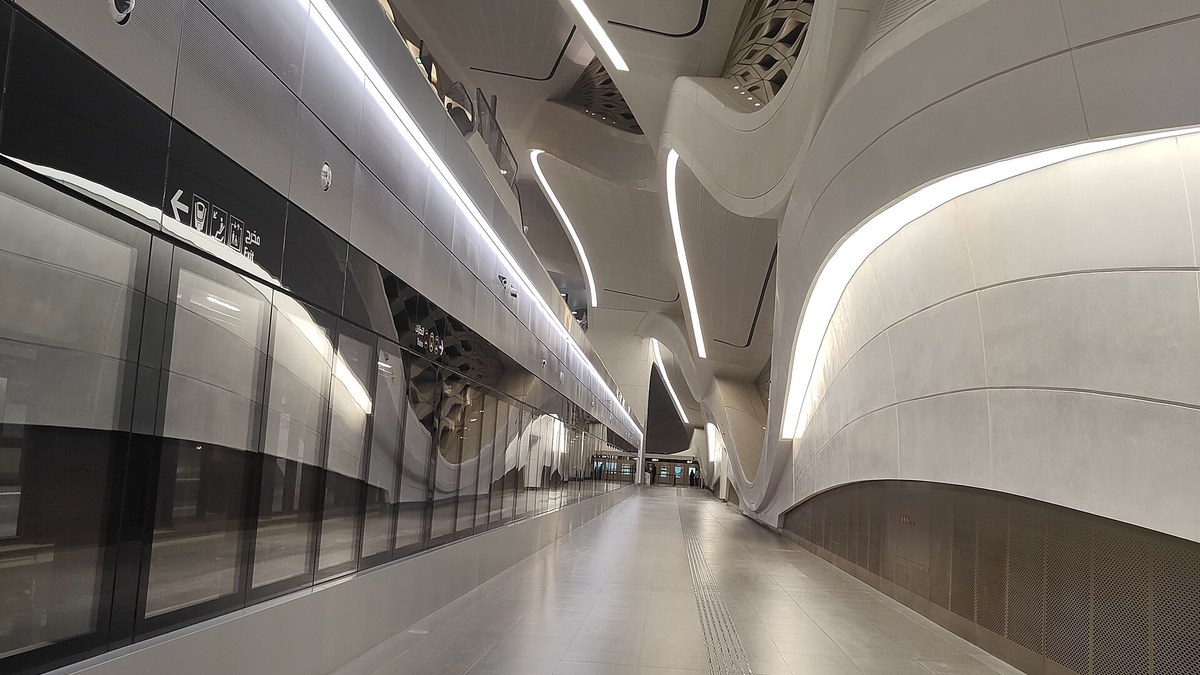
The recognition and its limits
The Saudi Press Agency says the Royal Commission for Riyadh City’s metro project received the recognition at the Smart City Expo World Congress in Barcelona. The report places it within an international competition attracting 533 entries from 68 countries. This is recognition in an urban-development setting, not a universal ranking of every metro system on every passenger measure. That distinction matters because an award and an operating service answer different questions. A judging process may consider technology, design and scale; a traveller needs to complete a journey reliably. The announcement is a useful marker of international visibility, while the continuing assessment of everyday service requires operating information and passenger experience. It should not be read as an announcement of new fares, new lines or a revised timetable.
Analysis: a journey begins before the station
The first question for a commuter is not how impressive a station looks, but how easily it can be reached. A rail journey includes the walk or feeder connection to the entrance, the time needed to reach a platform, any transfer and the final connection to the destination. An efficient train can lose its advantage if these surrounding steps are unpredictable. That is why the most useful comparison is door to door. A resident considering a new commute can test the route at the actual time of travel and note the total duration, rather than estimate from the rail segment alone. This is an evaluation method, not a claim that a particular station has a specific access problem. It keeps the discussion anchored in what passengers need.
Open data can make planning more concrete
The commission’s open-data portal provides station information that can support a more precise understanding of the network. For a reader, the important habit is to check the dataset’s own description and update context before treating a map as current operating advice. A station location dataset does not necessarily tell you whether an entrance is temporarily unavailable or how a service is running today. Its strength is structural: it can help identify possible connections, compare locations and ask better questions before a journey. Businesses considering premises can use the same discipline. Proximity to a station should be assessed by a real walking route, the relevant side of a road and the needs of staff and customers, rather than a simple circle drawn around a point.
A useful benchmark for employers
Employers interested in public transport can look beyond a general encouragement to leave the car at home. Shift start times, the location of a building entrance and the predictability of the last connection may determine whether the option is practical. A useful workplace exercise is to compare several genuine commuting routes and identify which barriers the employer can change. These might include clearer arrival information, a more suitable entrance arrangement or flexibility in an arrival window. They are possible responses, not announced measures by Riyadh employers. The principle is that transport adoption depends partly on how the destination operates. A network creates capacity, while institutions around it influence how easily that capacity becomes a workable daily routine for different groups of passengers.
Technology needs an operating purpose
SPA’s report also describes the commission’s presentation of data and digital technologies in city management. Their practical relevance depends on the decisions they improve. A digital model is useful when it helps a team anticipate a conflict, compare alternatives or respond to a documented problem; its visual sophistication alone does not establish that result. The same applies to transport data. Counting journeys can show demand, but understanding a difficult transfer may require a closer look at timing and passenger movement. This is an analytical distinction between collecting information and using it. The city’s broader opportunity is to connect evidence with service decisions that people can observe, so that investment in digital capability is reflected in a more understandable and dependable urban experience.
Accessibility belongs in the complete journey
A route that works for one passenger may not work equally well for another. Luggage, mobility needs, unfamiliar language or a journey with children can change which connection is practical. A meaningful journey assessment therefore includes understandable signs, the relevant entrance and the time required for transfers, rather than treating all passengers as an average traveller. These are considerations for checking a route, not assertions about a specific station. They help explain why an internationally recognised transport project still needs to be evaluated through several different kinds of ordinary use.
What deserves the next assessment
The next meaningful transport story would connect the system’s international recognition with measurable service developments, using information that is specific about dates and scope. Readers should distinguish a design accolade from a new operating announcement, and a long-term urban objective from a demonstrated change in their own commute. For Riyadh, the recognition gives the metro a stronger platform in international discussions about cities. For passengers, its continuing relevance is more immediate: can the network make a repeated journey easier to plan and complete? Keeping both perspectives together allows the award to be acknowledged without asking it to prove something outside its scope. The lasting value of a transport system is established through use, with every ordinary trip supplying another practical test. Gabriel Nicolaev – CyGuru
Gabriel Nicolaev – CyGuru