
UAE / Living
Abu Dhabi’s outdoor Children’s Biennale opens a month of art, play and family discovery
Families in Abu Dhabi have a new reason to spend time together outdoors. The Children’s Biennale at Umm Al Emarat Park opens to the public from 6 November to 6 December, following its inauguration on 5 November. Eight interactive installations turn a familiar park visit into an encounter with sound, materials, movement and imagination, with children’s own responses placed at the centre.
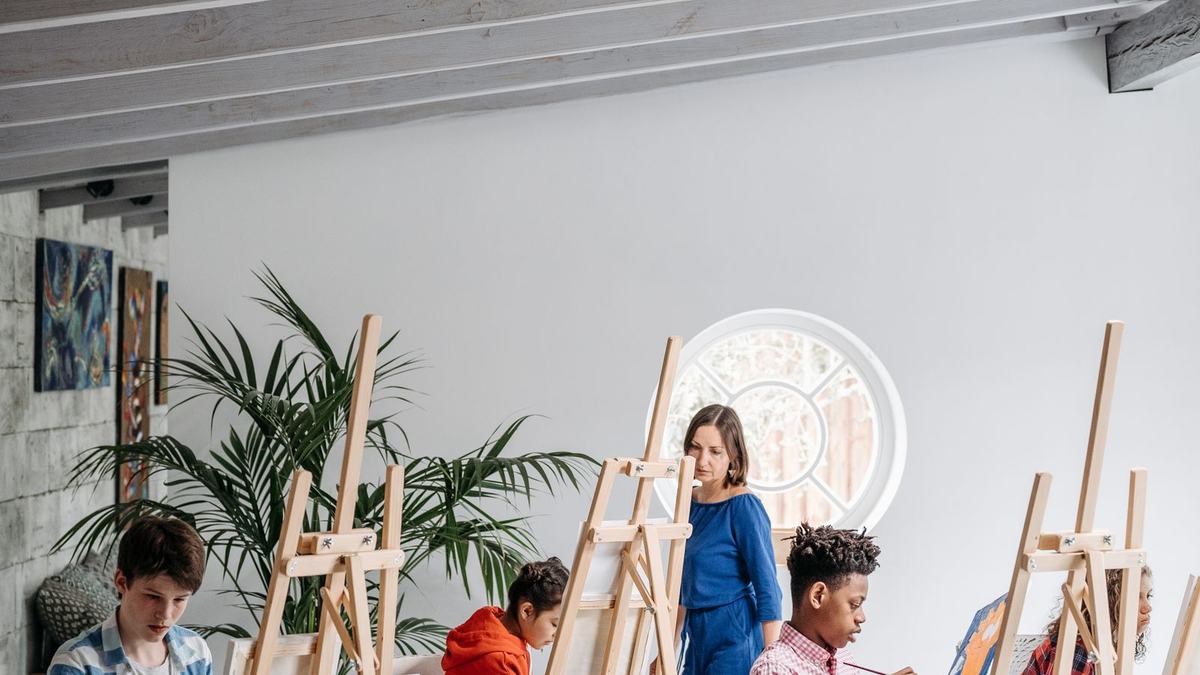
A public park becomes a place to make meaning
Presented within Abu Dhabi Festival, the exhibition is curated by Dana Almazrouei under the theme How the World Feels. Its partners include National Gallery Singapore and Umm Al Emarat Park. WAM’s 6 November opening report identifies seven new commissions by UAE-based artists alongside an existing work by Indonesian artist Eko Nugroho. The combination puts locally developed projects into conversation with an international children’s art programme.
For a household planning the weekend, the useful feature is the range of ways to participate. A child can listen, move, notice a shape or contribute to a changing work, rather than following a single prescribed response. Parents can approach the visit as shared exploration. Leave room for a child to choose the first question and the next stop; a successful visit need not mean completing every installation in a fixed order.
The park setting also allows the family to alternate between concentrated attention and ordinary outdoor time. Rather than turning the route into a lesson at every step, choose one work to explore together and allow another to be encountered more casually. Ask what the child noticed before supplying an adult interpretation. A simple description can reveal which part of an experience actually caught their attention.
Listening, braiding and imagining nature
Several installations provide concrete starting points. Hana El-Sagini’s Common Thread, Common Ground allows visitors to braid and reconnect ropes around sculptural forms. Telephone, by Moza Almazrouei and Meera Almazrooei, changes the experience of listening to the park. A family can compare how the same place feels when attention moves from what is seen to what is heard, while following instructions about how each installation should be used.
Moza Almatrooshi’s Pollinators Play Museum introduces the world of bees, while Alia AlShamsi’s work encourages close observation of animal forms within the landscaping. These are useful openings for a conversation about noticing other living things during an ordinary walk. Let a child describe what they think a form resembles before looking at the explanation together. Their interpretation can become part of the encounter without needing to match an adult’s first answer.
Nugroho’s Memories of Fireflies uses lantern forms inspired by East Java and invites interaction with changing light and sound. It was first commissioned for National Gallery Singapore’s 2019 children’s biennale. A family may want to compare a light-based work with a material or listening activity elsewhere in the park. That contrast gives children different ways to articulate an experience: what changed, what they did and what another person noticed.
Planning the family visit
The festival’s official listing gives the public run as 6 November–6 December and clearly states that the park fee applies. The Biennale’s free-admission wording therefore should be read together with that qualification when budgeting for a family. Use the park and festival’s current information for arrival arrangements and any activity registration. A workshop may have its own conditions even when the installation can be explored during a general park visit.
The programme includes family sessions, workshops and an interactive guide. Before promising a particular making activity to a child, check that it is scheduled for the chosen date and suitable for their age. A useful plan has one confirmed activity and room around it for the installations. This avoids making a family outing depend entirely on a workshop that might require advance booking or have limited places.
School visits form part of the programme as well. The opening announcement says more than 1,275 students from 20 schools will participate in guided tours. Families visiting independently should make their own arrangements rather than assuming a school-tour place is available. For teachers, the practical questions are the group’s confirmed slot, supervision, access needs and which activities are actually included in the organised visit.
Giving the experience a place in everyday life
A useful follow-up is to choose one observation to carry home: an unfamiliar sound, a connection between materials or an animal shape previously overlooked. Invite each family member to describe the same moment. Differences between their accounts can be more interesting than a shared verdict about a favourite work. The aim is to give a child’s perception space in the conversation, while allowing adults to be curious alongside them.
Because the Biennale lasts a month, residents can also choose a shorter first encounter and return to a work that prompted questions. That is a practical advantage of placing art within a familiar public space. The new programme gives Abu Dhabi families a specific occasion to spend time together this November, while its most accessible invitation is an everyday one: notice carefully, ask openly and let another person show you what they have seen.
For a first visit, agree on a comfortable stopping point before the family becomes tired. Leaving with one installation still to explore can create a reason to return. A child’s continuing question is a useful result in itself, even when the whole route remains unfinished.
Gabriel Nicolaev – CyGuru
Gabriel Nicolaev – CyGuru