
Saudi Arabia / Travel
Saudia Reveals Premium Economy Seat, With a Phased Debut Planned for 2027
Saudia has unveiled a Premium Economy seat at World Travel Market London, placing a new cabin between Economy and Business in its planned passenger offering. The announcement, issued on 3 November and reported more widely on 4 November, sets an expected 2027 debut on newly delivered Boeing 787s, followed by selected aircraft retrofits.
The seat and the rollout
The product announced in London includes a seat pitch of up to 43 inches, a 15.5-inch entertainment display, an extendable calf rest and additional personal storage. Saudia describes greater privacy as another feature. The initial introduction is expected on new Boeing 787 deliveries next year. Selected Airbus A330, Boeing 777 and existing Boeing 787 aircraft are also included in a phased refurbishment plan under the airline’s New Saudia Experience programme.
What’s On Saudi Arabia’s 4 November coverage notes that initial routes, prices and the opening of bookings have yet to be revealed. Those missing details are central to a passenger’s decision. A seat displayed at a trade show establishes the proposed onboard product, while a dated flight listing establishes where a traveller can buy it. For travel being booked now, the new cabin should therefore be treated as a future option until Saudia identifies the flights on which it will be sold.
An additional choice between two familiar cabins
The commercial logic of an intermediate cabin is straightforward: it creates another combination of space and price for travellers whose requirements fall between the airline’s existing categories. For a passenger who values room on a long flight but does not need the full Business Class proposition, the new cabin could become relevant. Its actual appeal will depend on the fare difference and the complete service offered. The unveiling alone cannot establish that it will represent good value for every journey.
A family buying several tickets faces a different calculation from a solo passenger. A modest supplement per person becomes a larger amount across a group and a return itinerary. Someone travelling overnight before a working day may place a different value on additional space than someone taking a daytime leisure flight. These comparisons explain why a third cabin can expand choice without making Economy obsolete. The decision remains a trade-off between the budget for the flight and other priorities for the trip.
Compare the cabin with the fare conditions
The announced hardware describes only part of what a traveller may eventually buy. A useful comparison will also need the baggage allowance, seat-selection terms, meal service and rules for changing or cancelling the ticket. None should be inferred merely from the word “Premium”. A fare can offer a more spacious seat while retaining restrictive conditions. Equally, a traveller who needs flexibility may find that the rules attached to a different fare matter more than the cabin’s physical features.
The same applies to airport benefits. Priority services or lounge access are separate elements of a travel product, and the cited unveiling does not establish their inclusion in this new cabin. When sales open, the clearest comparison will put the total price and the included services alongside one another for the same dates and route. That approach avoids paying for an assumption about the category rather than for a benefit explicitly included in the booking.
A phased fleet programme requires flight-level detail
The inclusion of several aircraft families should not be read as an immediate fleet-wide conversion. Saudia’s announcement refers to selected aircraft and a phased programme. During such a rollout, the relevant unit for the passenger is the specific flight rather than the aircraft family in general. A Boeing 787 label on a search result will not, on its own, establish that the new cabin is fitted. The seat map and cabin description attached to the dated itinerary will be more useful.
Connecting passengers will also need to check each sector. If a future itinerary offers the new cabin on one flight and Economy on another, the overall price should be judged against that combination. The longer sector may account for most of the value, but the booking should make the difference clear. This is particularly relevant to a product being introduced gradually: a single cabin label at the top of an itinerary can be less informative than the detail shown against each flight.
The next milestones for travellers
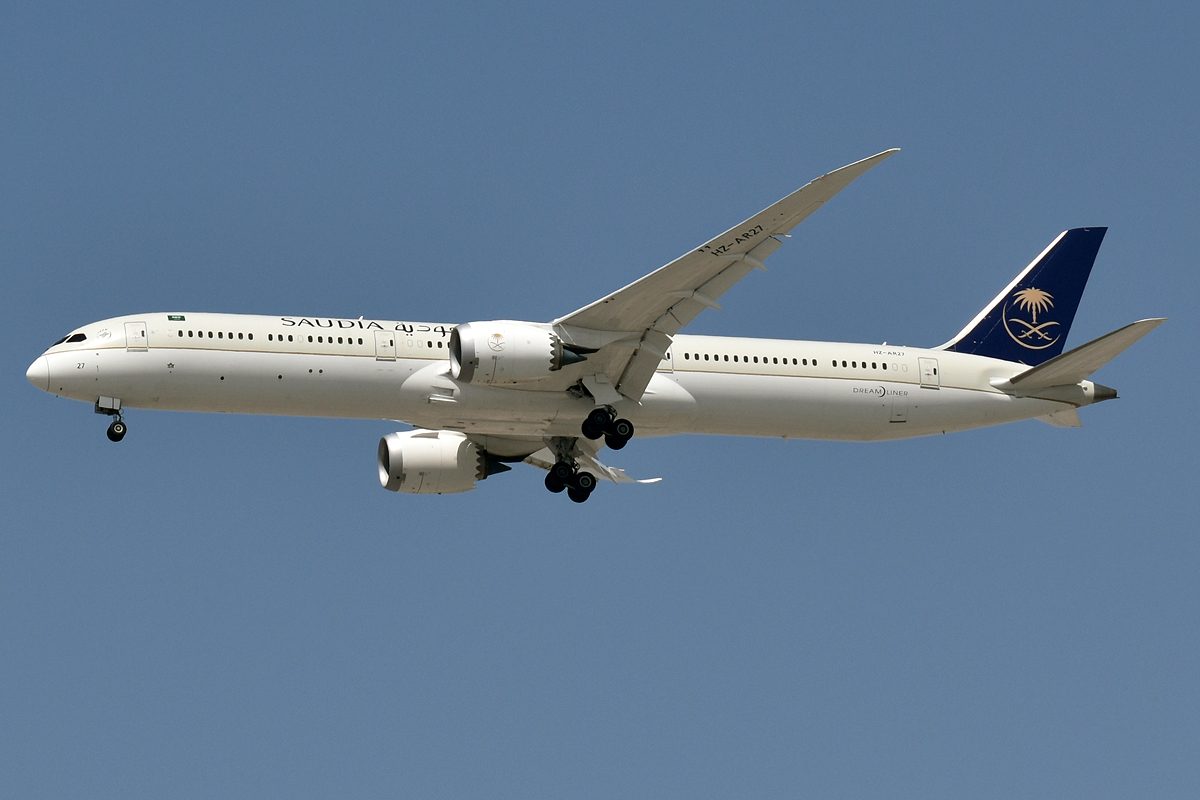
The announcement gives travel sellers time to understand a new category before its expected arrival. Their practical task will be to explain the difference between the seat itself, the onboard service and the ticket conditions, then match those details to a customer’s needs. Clear descriptions will matter as much as attractive cabin photography. The archive aircraft image used here provides airline context; it neither shows the new interior nor identifies an aircraft scheduled to receive it.
The next material announcements will be a first operating date, routes, cabin layouts and fares. Those will turn a product preview into something passengers can evaluate against competing journeys. Until then, Saudia has established a direction for its cabin investment and an expected starting year. The new option is meaningful because it adds a distinct choice to the airline’s planned offering; its effect on an individual traveller’s comfort and spending will become clearer when the details reach the booking screen.
Gabriel Nicolaev – CyGuru