
Saudi Arabia / Business
Taibah AI Conference Reports 142 Accepted Papers From 98 Universities Across 37 Countries
The sixth International Multi-Conference on Artificial Intelligence Technology in Madinah has reported 142 accepted papers, bringing researchers from 98 universities into a Saudi-Malaysian academic partnership. The November 3–5 meeting combines research presentations with practical training, putting the next question on how published work becomes useful collaboration.
What the new research figures show
SPA reported on November 4 that more than 200 papers were submitted and 142 accepted after scientific review. The accepted work spans five tracks, with contributions from 98 universities in 37 countries. The agency said the papers were published in IEEE conference proceedings. These figures establish the breadth of participation and the existence of a reviewed research programme; they do not measure the commercial readiness of every result.
It would also be inaccurate to calculate an exact acceptance rate from the published submission figure. “More than 200” is an open-ended denominator. A precise percentage would require the final submission count and a clear definition of whether withdrawn or incomplete entries were included.
A partnership extending beyond one campus
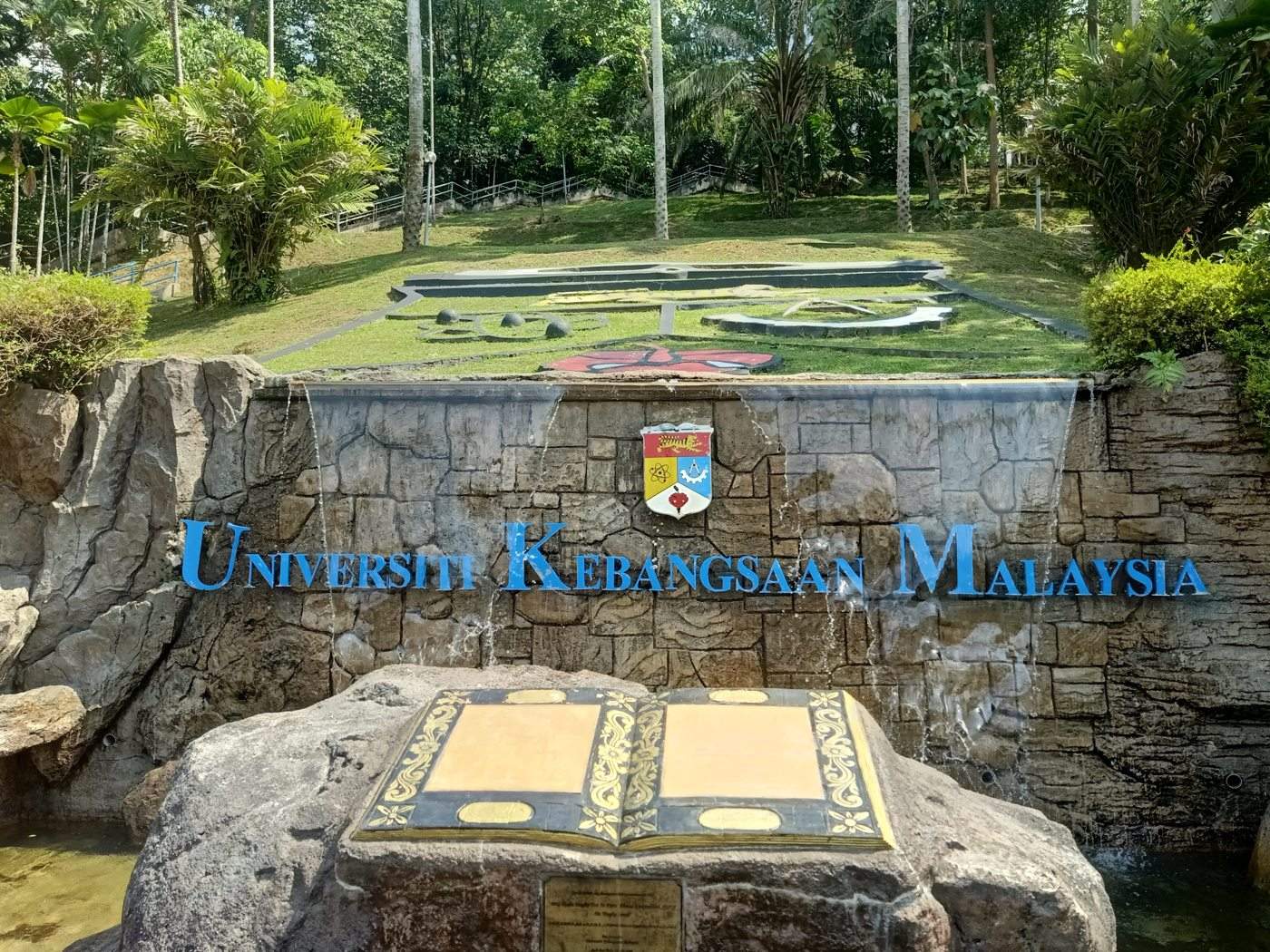
Taibah University is hosting the meeting with Universiti Kebangsaan Malaysia. The opening report on November 3 described this as the first edition held outside Malaysia. Madinah Deputy Governor Prince Saud bin Nahar inaugurated the conference under the patronage of the regional governor. The institutional significance is a shared platform on which researchers from the Gulf and Southeast Asia can work together.
The productive follow-up would be visible joint activity: shared research questions, reproducible experiments, student exchanges or sustained supervision. None should be treated as an announced outcome merely because academics met at the same venue. A conference creates the contact and discussion needed for such projects; an agreement and an execution plan establish the project itself.
Five tracks connect methods with applications
The advance SPA programme listed AI foundations, specialised applications, intelligent systems and cyber technologies, emerging technologies and data, and smart cities. It also set out 25 parallel sessions, six keynote speakers, two workshops and seven hours of practical training. Those are programme arrangements rather than evidence that every research problem covered has been solved.
The mix is valuable because an algorithm and the setting in which it will be used cannot be assessed independently. An apparently strong result may depend on a narrow dataset or a carefully controlled environment. Discussion across tracks gives researchers an opportunity to identify such assumptions before a technique is presented to a company, public body or community as an operational solution.
Practical training has separate arrangements
The organiser website lists a November 5 workshop on building transformer-based natural-language-processing applications, scheduled from 9am to noon at the Taibah University Conference Centre. It states that workshop registration is separate from conference registration. Participants should check the live booking information rather than assume that holding a conference place also secures a workshop seat.
For a student or working professional, the useful preparation is to define a task to explore during the session. Bringing a clear question about data, evaluation or deployment can make hands-on time more productive than simply following a demonstration. Participants should also distinguish an attendance certificate from evidence that they can independently design and validate a complete production system.
How to read a conference result
For businesses scanning the proceedings, the most useful reading starts with the problem, the test data and the comparison method. A claim of better performance is meaningful only when the baseline and conditions are clear. The same percentage improvement can have very different practical value depending on the cost of errors and the workload being tested.
This is an editorial evaluation framework, not a criticism of any accepted paper. Before considering a pilot, ask what information would be needed to reproduce the reported result and what changes when the system encounters local users or different data. A promising research demonstration can justify further investigation while still leaving substantial engineering and governance work to do. Documenting the assumptions at this stage makes later comparisons between a pilot and the original experiment more useful.
What Saudi organisations can take from it
An organisation considering collaboration can arrive with a well-defined operational problem instead of a general request to “use AI.” A narrow question makes it easier to identify the right researchers and agree on evidence of success. It also exposes practical constraints early, including what data can be shared and who will evaluate the work.
A sensible next step would be a scoped research conversation with documented assumptions and responsibilities. The conference does not itself announce procurement awards, investment commitments or products available for purchase. Keeping those categories separate allows useful academic work to receive attention without turning a research meeting into an unsupported claim about immediate market impact.
The next measure is continuity
The meeting is scheduled to conclude on November 5. Its participation figures provide an initial measure of reach, while the longer-term contribution will be easier to judge through follow-up publications, replicated results and collaborations that continue after delegates leave. These are future indicators to watch, not outcomes already established by the announcement.
For Madinah, the immediate news is a substantial international research gathering hosted through a Saudi-Malaysian partnership. For potential users of the research, the next task is selective reading and careful engagement. The most useful outcome is not the largest collection of AI claims, but a clearer connection between a documented scientific result and a problem that someone can responsibly test.
Gabriel Nicolaev – CyGuru