
Qatar / Explore
Qatar Museums schedules Al Zubarah staff cleanup for Environment and Heritage Stewardship Day
Qatar Museums has scheduled a staff volunteer cleanup at Al Zubarah Archaeological Site for 4 November as part of Qatar Sustainability Week. The official listing connects environmental care with heritage protection. It is a programme announcement, not a verified report of completed work: no attendance total, waste figure or completion statement was available in the sources reviewed.
What the official programme establishes
The published plan is aimed at Qatar Museums employees and describes voluntary participation with advance registration and approval from participants' line managers. It provides a morning transport arrangement from the National Museum of Qatar and says cleanup equipment and protective materials will be supplied. These practical details establish the intended audience and organised nature of the activity. They do not establish how many people actually attended or what was collected. Readers should therefore distinguish the date assigned to an event from evidence of its outcome. This report follows the programme as published and does not convert a scheduled activity into an eyewitness account. A subsequent institutional report would be needed before attributing a measurable environmental result to the day.
A landscape with more than one layer of history
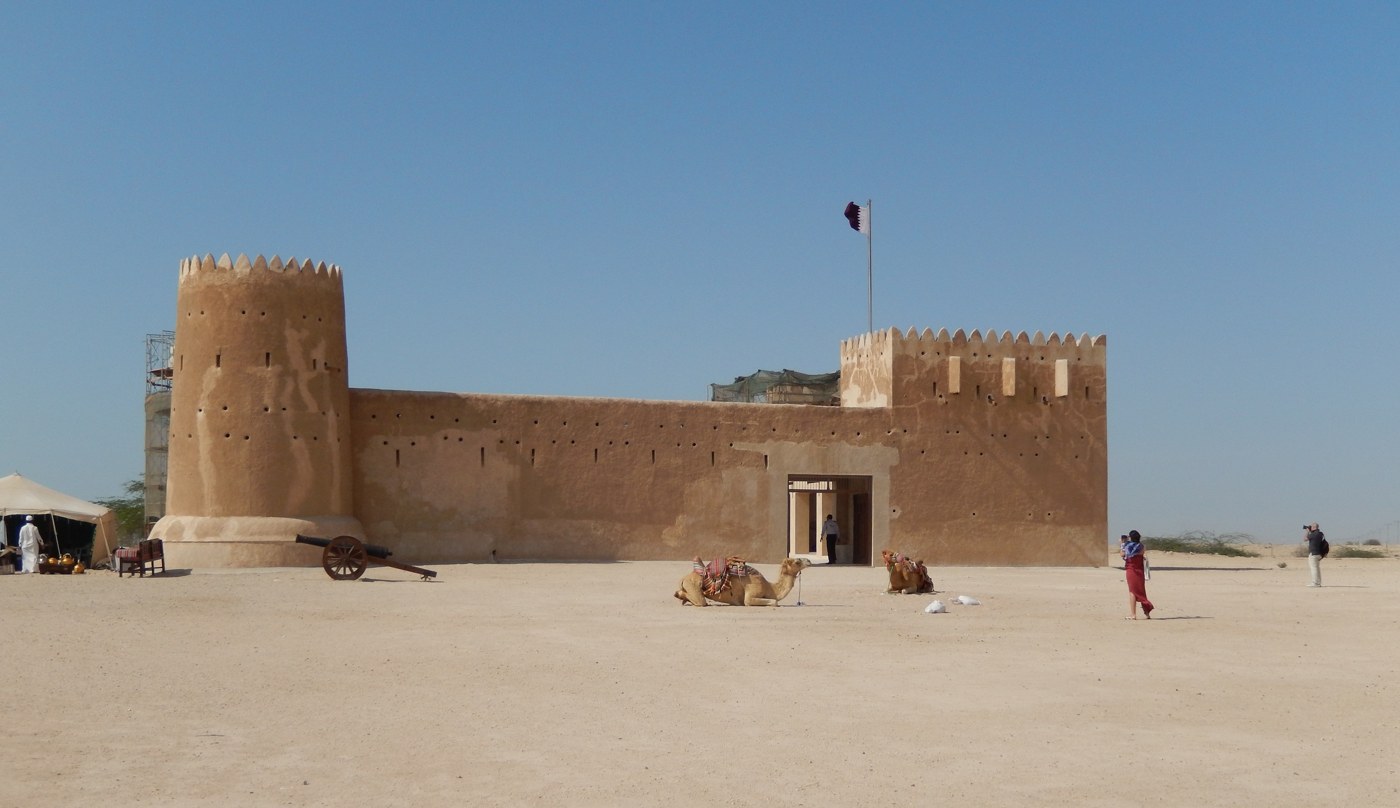
UNESCO describes Al Zubarah as a coastal pearling and trading settlement whose late eighteenth- and early nineteenth-century prosperity connected it with wider regional and Indian Ocean commerce. The archaeological remains include domestic, religious and defensive structures as well as evidence of the harbour and water-management landscape. The familiar fort is part of the area's wider story, but the archaeological town cannot be reduced to that single photographed building. This distinction matters when reporting a cleanup at the site: a photograph of the fort provides geographical context, not proof of the precise area in which volunteers worked. The image accompanying this article was taken in March 2015 and is labelled accordingly. It does not depict the 2026 activity or its participants.
Environmental care needs a conservation boundary
The connection between litter management and heritage care is intuitive, but their working methods should not be assumed to be interchangeable. In our analysis, the essential boundary for any volunteer activity in an archaeological setting is the difference between removing modern waste and disturbing material that may have historical meaning. Volunteers need to follow the site's own instructions about routes, collection areas and what to leave untouched. This is an editorial explanation of the issue, not a claim that the announcement publishes a detailed conservation protocol. An organised cleanup should complement specialist stewardship rather than invite participants to make independent decisions about fragments, stones or deposits. The visible tidiness of a place is only one aspect of protecting the evidence it contains.
Why the site's wider setting matters
Qatar Museums presents Al Zubarah as the country's largest archaeological heritage site, and its visitor information places the fort within a broader heritage experience. That scale encourages a different way of looking at the landscape. A visitor might initially notice walls, views and building shapes; understanding the site also requires attention to how people lived, traded and managed scarce resources. Environmental work can support that understanding when it connects present-day behaviour with the responsibility of caring for shared places. This is an interpretive opportunity rather than an outcome already demonstrated by the scheduled event. The relevant test is whether participants leave with clearer knowledge of the site and more careful habits, alongside any practical work that organisers subsequently confirm.
Reading sustainability claims with useful precision
A cleanup announcement does not by itself establish a reduction in carbon emissions, a permanent improvement in an ecosystem or a completed restoration project. Those are different claims and would require different evidence. For this activity, a useful follow-up could explain the area covered, the kinds of waste encountered and how collected material was handled. If numbers are released, the method and scope would help readers interpret them. These are suggested reporting questions, not missing targets imposed by Qatar Museums. The purpose is to keep a modest, concrete initiative legible on its own terms. A carefully organised morning of environmental work can have value without being presented as proof that every conservation or sustainability challenge at a large heritage landscape has been resolved.
Employee participation and public visits are separate
The event listing should not be read as an unrestricted invitation for the general public to arrive and join the staff activity. Its registration and management-approval requirements identify an internal participation route. Public visitors can instead consult Qatar Museums' current heritage-site information for ordinary access arrangements and any accessibility requirements. The distinction avoids confusion between institutional volunteering and a normal visit. For anyone exploring Al Zubarah, the most constructive approach is to follow the site's instructions, stay within permitted areas and use official interpretation to understand what is being seen. A heritage place can be appreciated without touching or collecting its material. The day's programme offers a timely reminder that appreciation and restraint belong together, particularly where the landscape itself holds historical evidence.
What remains to be confirmed
As of this report, the verified news is the official scheduling of the 4 November activity. Confirmation of completion, participant numbers and collection results would be separate developments. Our assessment is that the programme's strongest potential contribution is the link it draws between everyday environmental responsibility and the institution's heritage mission. Whether that potential becomes a lasting change depends on what participants learn and what follow-up takes place. Those outcomes should be assessed when evidence exists. For now, the announcement places Al Zubarah within the Sustainability Week calendar and gives a specific group of employees a structured opportunity to contribute. That is a concrete development worth reporting accurately, with both the purpose and the limits of the available information visible.
Gabriel Nicolaev – CyGuru