
Qatar / Living
Qatar and South Korea explore air-quality monitoring, emissions data and predictive tools
A Qatar–South Korea seminar reported on 3 November has brought monitoring networks, industrial emissions and predictive tools into the same discussion. The practical issue is how measurements become dependable information and timely action, rather than whether a new technology can produce a more impressive dashboard.
What the seminar actually established
Qatar News Agency reported that Environment and Climate Change Ministry Assistant Undersecretary for Environmental Affairs Youssef Al Hamar highlighted cooperation with South Korea on monitoring and environmental data. The seminar involved South Korean Ambassador Hong Jin-wook, Korean environmental institutions and companies, Earthna, Qatar University and specialists. The discussion included national networks, remote industrial-emissions monitoring, data verification, artificial intelligence and predictive modelling.
The published account describes areas for cooperation and an aspiration to identify practical opportunities. It does not announce a completed procurement, a new nationwide warning service or a measured improvement in pollution. MyGCCNews therefore treats the event as a technical-policy development, with any implementation claim requiring a separately identifiable project, responsible institution and confirmed operating status.
A measurement needs a traceable identity
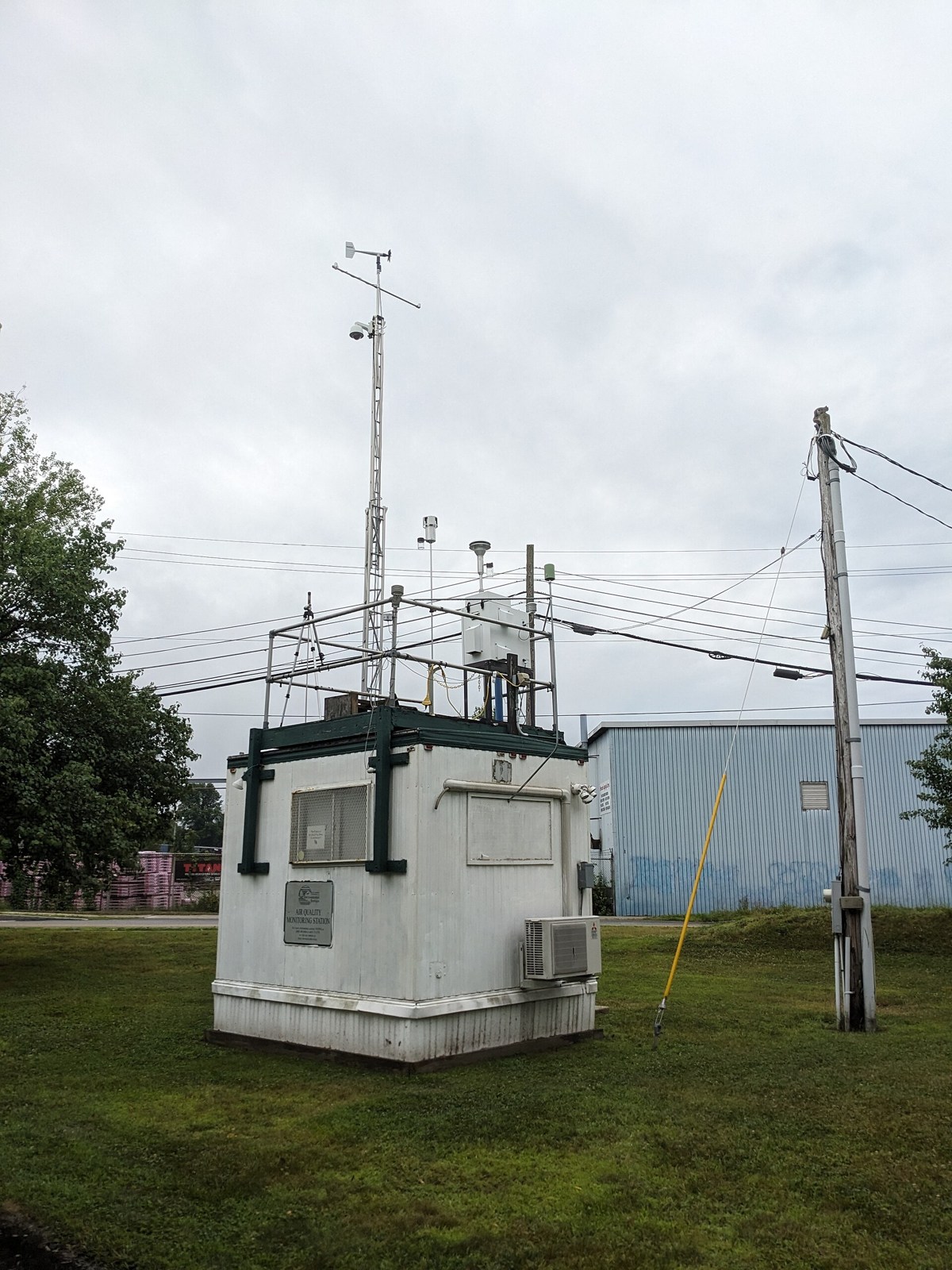
Air-quality information is useful only when its meaning can be established. A reader needs to know what was measured, where the observation was taken and which period it describes. A single number without that context can be difficult to compare with another number, even when both appear under the same broad environmental heading.
For an institution building a monitoring service, a practical record connects the instrument, location, timestamp and review process. That record supports later investigation if a reading appears unusual. This is an analytical description of data governance, not an allegation that Qatar’s existing information lacks those controls. The seminar’s emphasis on verification makes the chain behind a reading a relevant subject to examine.
Coverage and representativeness are different questions
Adding a monitoring point can provide more observations, but it does not automatically answer every geographic question. A reading near an industrial activity, a roadside location and a different neighbourhood may describe different conditions. An effective monitoring design begins by stating what each observation is intended to represent and what it cannot establish on its own.
This matters when information moves from specialists to a public audience. A map can look comprehensive while its points have different purposes or reporting intervals. Clear labels help users avoid treating a local observation as a conclusion about the entire country. The argument is about interpreting evidence carefully; no current concentration, exposure estimate or health outcome is asserted here.
Verification comes before prediction
The reported interest in artificial intelligence and predictive modelling opens a useful technical question: what evidence will be used to test a model’s output? A prediction is an estimate of something not yet observed. Its usefulness depends on comparison with later observations and on understanding where the model performs less reliably, not merely on the sophistication of its presentation.
A practical pilot could define its target, record its forecast before the outcome and compare the two over a stated period. Review should distinguish a warning issued too late, a warning that was unnecessary and an event that was missed. These are proposed evaluation questions, not undisclosed results from the Qatar–Korea seminar or a new official testing protocol.
Industrial monitoring needs clear handovers
Remote monitoring of industrial emissions was among the Korean capabilities highlighted in the account. Such information becomes operationally useful when an unusual observation reaches the person authorised to investigate it. A sensor, a data platform and an oversight institution may each play a different role. Their responsibilities should be understood as a sequence rather than collapsed into a single technology purchase.
For a future project, useful questions would concern data review, escalation, documentation and the confirmation of corrective work where required. A procurement specification can ask who maintains equipment, who checks questionable readings and how the record is retained. This framework does not claim that an enforcement action occurred. It explains the operational work that an announced monitoring ambition would need to support.
Universities can contribute to the testing problem
The participation of Qatar University and Earthna connects the discussion with research and sustainability expertise. That institutional mix creates a potential setting for comparing methods, examining assumptions and training the people who will interpret information. It does not prove that a specific research partnership, course or funded study has already been agreed.
A well-defined collaboration would identify a question that can be answered with available evidence. For example, a team could compare approaches under a declared set of conditions and publish the limits of that comparison. Keeping the question bounded makes the resulting work easier to assess than a broad assertion that research and technology will solve every environmental-management challenge.
Public communication should explain uncertainty
Environmental information can influence daily decisions, so clarity matters alongside technical capability. A public service should make the observation period and relevant official guidance easy to identify. If a reading is provisional or a forecast is uncertain, presenting that status plainly is more informative than allowing visual precision to imply complete certainty.
Residents should use the competent authority’s current information for actual conditions and follow any official instructions relevant to their circumstances. This article offers no personalised medical or outdoor-activity advice. Its focus is the communication standard: a useful warning tells people what has been observed or predicted, what action the authority recommends and where they can check an update.
The next evidence should be a defined deliverable
Al Hamar’s reported remarks place environmental protection within Qatar National Vision 2030 and describe continued development of monitoring systems. The new element is the specific bilateral exchange on air-quality expertise and technical possibilities. Its practical significance will become clearer if follow-up identifies a pilot, a training output, a data-quality method or an operating project with a stated scope.
The strongest assessment will connect that output to the problem it was meant to address. Did the work make a measurement more dependable, an interpretation clearer or an appropriate response faster? Those questions keep the technology discussion grounded. Better environmental intelligence is not simply more numbers on a screen; it is a more credible path from observation to an accountable decision.
Gabriel Nicolaev – CyGuru
Sources & further reading
QNA: Qatar–South Korea monitoring seminar, 3 November 2026
Gulf Times: ministry account of cooperation priorities, 3 November 2026
Archive/context photograph source and attribution