
Qatar / Explore
Design Doha Prepares Its Heritage-House Opening, With Public Access Details Still to Confirm
Design Doha’s 4 November press programme leads into a 5 November launch across Fereej Al Asmakh and Msheireb. Heritage houses, contemporary commissions and material histories shape the route, while opening-day public hours remain subject to confirmation.
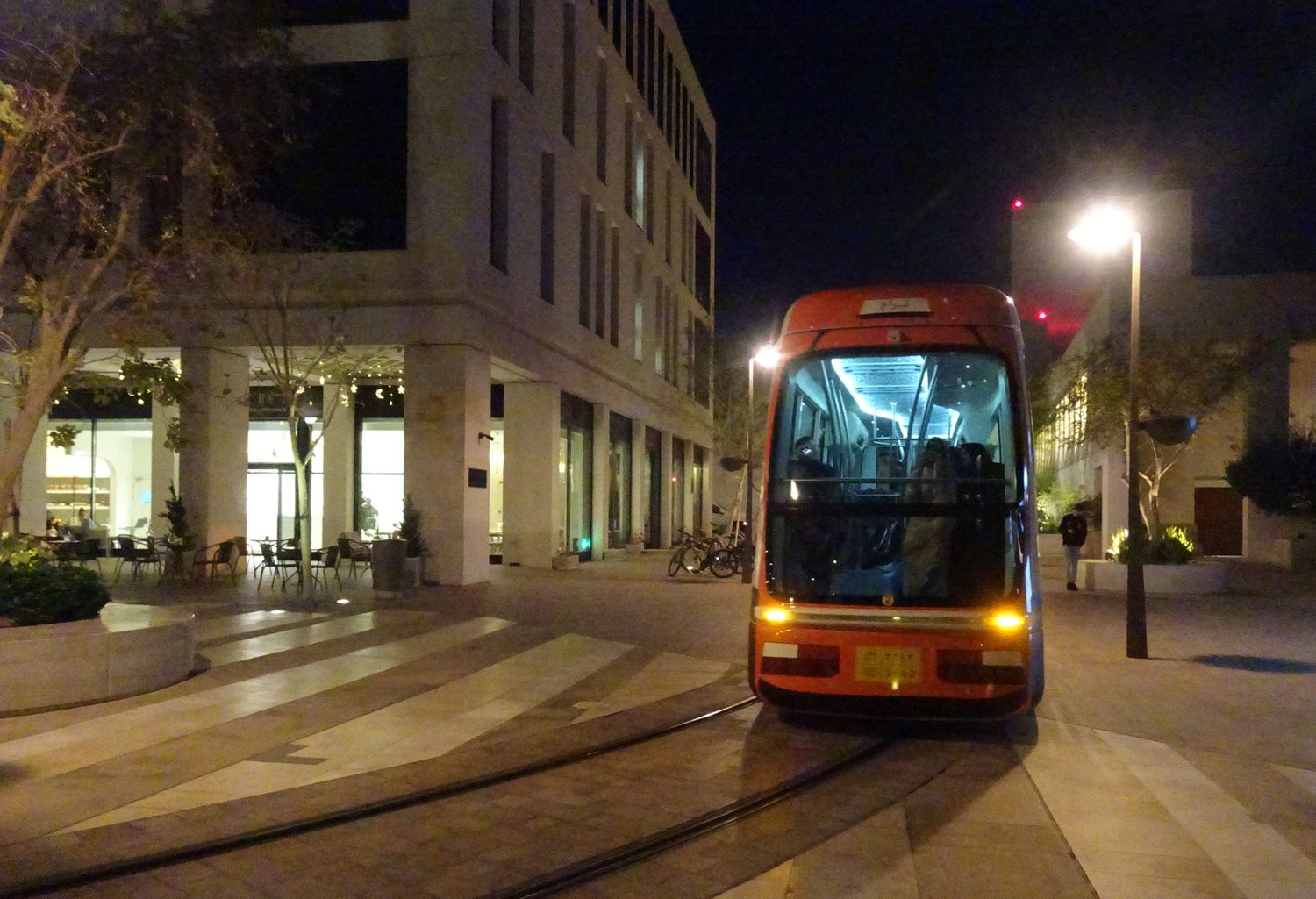
The opening arrives with different kinds of access
Design Doha’s second biennial is preparing to open on 5 November, with a press conference scheduled for 4 November and three opening days running through 7 November. The organiser’s current programme places Fereej Al Asmakh at the centre of the event, using heritage houses, courtyards and public spaces alongside venues in Msheireb Downtown Doha. The immediate cultural news is the activation of this urban setting for exhibitions and public programmes, with some displays continuing into January 2027.
The official opening ceremony on 5 November is by invitation, as is the preceding press conference. The organiser’s hours page says public opening hours for 5 November are still to be confirmed. Guided tours and performances have their own registration arrangements, and the organiser says these require a valid Biennial Day Pass as well as individual booking. Visitors should check the specific session and opening-day update rather than assume that the ceremony date guarantees general public access throughout the day.
A neighbourhood becomes part of the exhibition
The heritage setting gives the programme a particular character. Instead of concentrating everything in one large gallery, the biennial distributes encounters across buildings and outdoor spaces. This makes the journey between works part of the experience. A courtyard, doorway or change in scale can affect how an installation is seen, while moving between venues makes visitors more aware of the urban fabric that surrounds contemporary design.
This is a way to approach the programme, rather than a claim that every venue tells the same historical story. Fereej Al Asmakh and Msheireb should be read as connected but distinct settings. A useful visit can compare the materials and spaces of the host buildings with the objects displayed inside them: what has been retained, what has been adapted, and how a contemporary work responds to the place where it is temporarily installed.
Arab Design Now brings the making process into view
Qatar Museums lists Arab Design Now as the biennial’s principal exhibition, curated by Noura Al Sayeh. Its programme includes work by 81 designers, 78 new commissions and 16 specially produced films. The emphasis extends beyond finished objects to the designers, craftspeople and production environments behind them. The official listing runs from 5 November to 31 December, while the biennial overview identifies Building i22 in Msheireb Downtown Doha as its venue.
That focus gives visitors an alternative to moving quickly from one striking object to the next. Watching a film alongside the work can reveal how a material was sourced, who contributed a skill or why a particular form emerged. In one example described by Qatar Museums, an installation by Abdulrahman Al Muftah is accompanied by a film by Amal Al Muftah about the craftspeople involved. The object and its production story are intended to be encountered together.
Post-Oil asks visitors to read familiar materials differently
Another programme strand, Post-Oil 2026, is scheduled at Fereej Al Asmakh from 5 November to 31 January 2027. Presented by Saudi Modern Initiative and curated by Abdulrahman and Turki Gazzaz, it examines glass, concrete, steel, aluminium and asphalt. Qatar Museums describes these materials as central to the industrial and construction changes that followed the discovery of commercial oil in the region. The exhibition connects material choices to the transformation of the built environment.
For a visitor, the productive question is how an ordinary material becomes a sign of economic and social change. Concrete can be considered through standardisation and building scale; glass through the relationship between an interior and the city outside. These are interpretive starting points, not a description of unreviewed individual works. The exhibition’s premise encourages looking at the everyday city with the same attention usually reserved for objects inside a museum.
Tours and performances extend the route
The published guided-tour programme begins on Thursday 5 November with an evening slot from 18:30 to 21:30. Further slots are listed for 6–8 November, covering Fereej Al Asmakh, Arab Design Now, Doha Design District and Fahad Bin Ali Palace. The organiser labels the tours suitable for all ages, but places are limited and the booking conditions still apply. A listed session is not confirmation that space remains available when a visitor decides to attend.
The Design Doha Hub in Fereej Al Asmakh is also the meeting point for talks and collective activity. Its programme includes Design Doha X Art for Tomorrow on 5–8 November and the Design Ecologist podcast during the opening period. Visitors interested in discussion can build their route around one registered session, leaving enough time for nearby exhibitions. This is more manageable than treating every venue and event as a single continuous programme with identical entry conditions.
Use the exhibition calendar, not one closing date
The overall biennial programme continues into 31 January 2027, but individual exhibitions can close earlier. Arab Design Now’s current Qatar Museums listing ends on 31 December, whereas Post-Oil continues through January. That difference is particularly relevant to anyone visiting after the opening weekend. The official calendar and booking page for each chosen display are the appropriate references for dates, access and any later changes.
The opening gives Doha a cultural route that joins contemporary work to the spaces of an older neighbourhood and the surrounding city. Its strongest invitation is to look at design as a process involving materials, makers and places. For residents and travellers, a focused itinerary with one or two exhibitions and a booked programme event can make that connection clearer than a hurried attempt to cover the entire biennial. The launch is on 5 November; the opportunities to explore it will unfold at different venues over the following weeks.
Gabriel Nicolaev – CyGuru
Sources & further reading
Design Doha: current biennial programme
Design Doha Hub: 4 November press conference and opening ceremony
Design Doha: opening hours and special-date conditions
Design Doha: guided tours and performance registration
Qatar Museums: Arab Design Now programme and dates
MOJEH: 4 November biennial preview