
Qatar / Legislation
Doha arbitration conference examines how court support and procedural fairness fit the AI era
Judges, arbitrators and legal specialists meeting in Doha on 3–4 November are examining a practical tension in dispute resolution: how to make proceedings more efficient while preserving equal treatment and procedural integrity. The sixth World Conference on International Arbitration connects that question with investment protection, institutional rules and artificial intelligence.
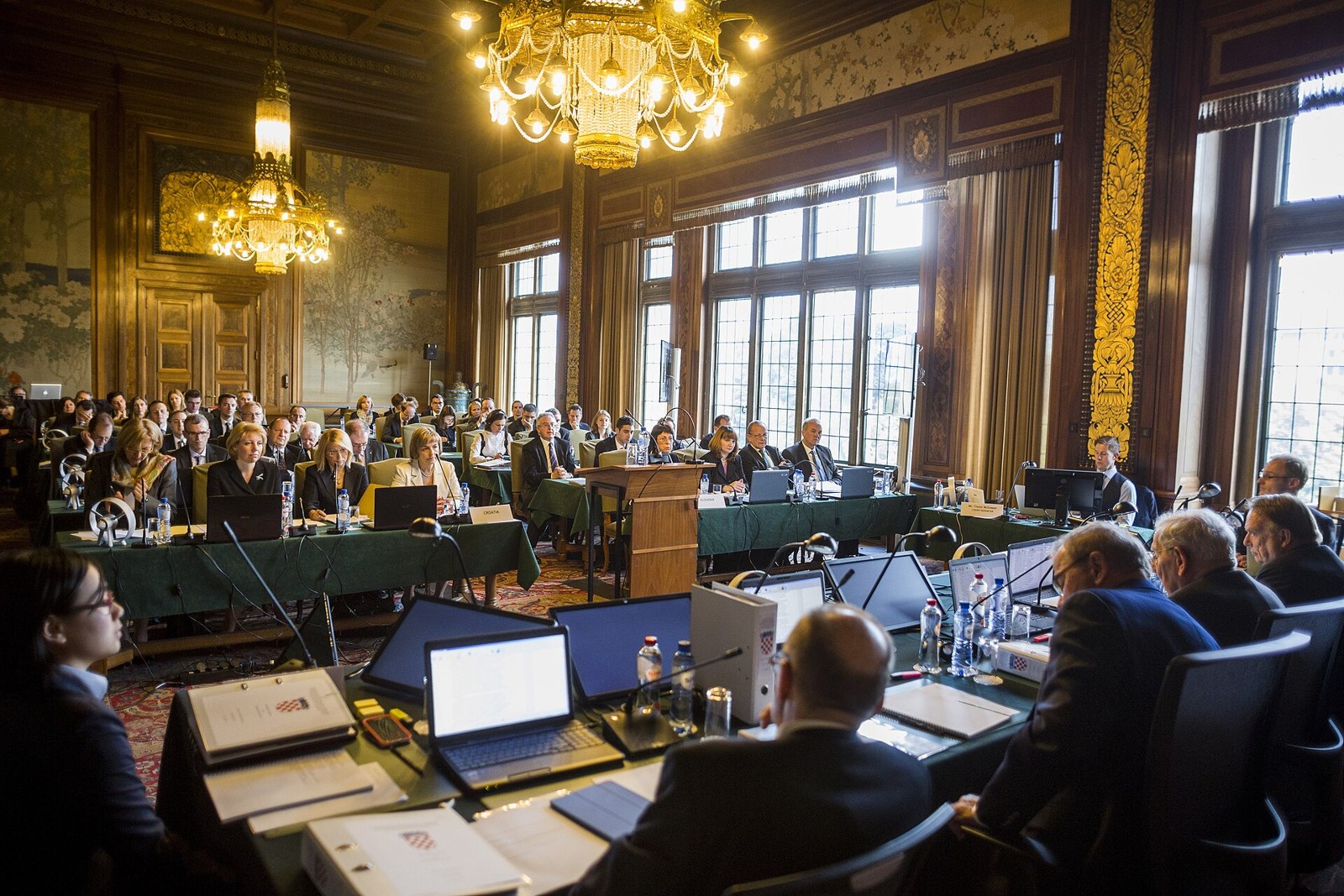
Four sessions put procedure at the centre
Qatar News Agency’s 3 November account identifies four areas discussed at the conference: the relationship between courts and arbitration, the future of proceedings, investment protection and the limits of tribunal discretion. The sessions connect institutional design with the experience of parties trying to resolve a dispute. Their common concern is not simply reaching a result quickly, but doing so through a process whose integrity can be defended.
The Qatar International Centre for Conciliation and Arbitration, part of Qatar Chamber, is organising the event at Fairmont Doha. Its published framework places the 3–4 November conference under a theme moving from judicial oversight to artificial intelligence. The organiser also identifies cooperation with UNCITRAL and participation by international and regional dispute-resolution institutions. This is a professional forum, not a new court or a replacement for an applicable arbitration agreement.
Judicial oversight was discussed as support
The first session examined how judicial oversight can support proceedings and protect procedural integrity, according to QNA. That framing is important because public discussion sometimes presents courts and arbitration as entirely separate alternatives. The conference instead examined their interaction and how that relationship can strengthen confidence in a dispute-resolution system.
For a business reader, the practical question is where its particular agreement and dispute sit within the relevant legal framework. A conference discussion cannot answer that question for an individual contract. Nor should support for arbitration be interpreted as an assurance that every award will survive every challenge. Specific proceedings require the applicable documents, facts and qualified legal assessment rather than a conclusion drawn from the event’s theme.
Institutional rules shape the working process
A second session considered how arbitration centres update their rules, manage disputes and improve service quality. This brings attention to the operating structure around a tribunal. A disagreement does not arrive as a neat legal question alone; it comes with documents, parties, deadlines and decisions about how the case will be organised.
MyGCCNews analysis is that efficiency should be examined at those interfaces. Can parties understand what must be submitted and when? Is the procedural record coherent? Can a change be explained without creating uncertainty about the next step? These questions concern the usability of a process. They do not assert that a particular centre has adopted a new rule or that a case-management change has already produced a measured reduction in cost.
Investment protection brings another set of questions
The investment session addressed legal and practical challenges in disputes and the role of international institutions, QNA reported. That subject deserves its own attention rather than being folded into a general promise of investor confidence. A company’s commercial expectations, the instrument governing a dispute and the forum available to hear it are not interchangeable pieces of information.
For managers, the useful discipline is to keep the actual source of a right or obligation visible. An encouraging description of a jurisdiction is not itself a contractual term. A conference statement about protection is not a finding in a particular dispute. The article makes no determination about jurisdiction, treaty eligibility or the merits of any investor claim; those questions depend on material not established by a conference report.
Discretion has to coexist with equal treatment
The fourth session considered the balance between procedural flexibility and due process, including parties’ rights and equal treatment. The issue is concrete: a tribunal may need to manage a complex record without allowing convenience to become an unexplained advantage for one side. The conference account describes that balance as part of preserving confidence in proceedings and resulting decisions.
A useful way to understand the tension is through a hypothetical scheduling request. Moving a deadline may make the process workable, but the effect on each party must still be considered. The example is an analytical illustration, not a reported Doha case or a statement of the legal test in every jurisdiction. It explains why speed alone is an incomplete measure of procedural quality.
AI puts evidence and responsibility under scrutiny
Artificial intelligence features in the conference’s overall theme. Its relevance is not limited to producing text more quickly. When digital assistance enters a dispute workflow, the institution and professionals involved still need to understand the material being used, how it is checked and who remains responsible for the work presented.
Consider a hypothetical generated case summary. It may be readable while omitting a qualification or attributing a statement to the wrong document. That possibility makes review and source traceability important. This is analysis of a workflow risk, not a claim that a participant misused a tool or that the conference has approved a particular AI product. No confidential case record should be assumed suitable for an external system simply because the technology is convenient.
Professional capacity is part of the institutional story
Regional coverage also reported QICCA’s emphasis on arbitrator qualification, training and academic cooperation, including a specialised master’s programme agreement with Lusail University. Those activities address a different part of institutional development from a single conference session. They concern how expertise is built and renewed, rather than only where a dispute is heard.
For prospective students or practitioners, the relevant follow-up is the programme’s own published information: scope, admission conditions and the qualification actually awarded. A reported agreement should not be expanded into an unverified course timetable or professional entitlement. Training becomes meaningful through the competencies it develops and the standards under which those competencies are assessed.
The conference’s relevance is in the details
The Doha gathering places judicial support, institutional innovation, investor protection and tribunal discretion alongside one another. Taken together, the sessions describe arbitration as a working system whose credibility depends on more than a prestigious venue. The legal framework, the people managing the case and the quality of the record all remain relevant to the parties’ experience.
Businesses following the event should distinguish discussion from an adopted rule and an institutional initiative from a result in their own dispute. The current news is the conference and its documented agenda, not a change to every contract governed by Qatari law. Its most useful contribution to public understanding is a sharper question: how can dispute resolution become more efficient without weakening the procedural safeguards that make the result worth trusting?
Gabriel Nicolaev – CyGuru
Sources & further reading
QNA: four sessions on investment protection and procedural justice, 3 November 2026
QICCA: official conference framework and institutional participation
QICCA: conference opening, 3 November 2026
Gulf Times: QICCA training and academic cooperation, 3 November 2026
Archive/context photograph source and attribution