
Qatar / Travel
Qatar Airways Opens Bogotá–Caracas Route: What the Twice-Weekly Triangle Means for Travellers
Qatar Airways launched its Doha–Bogotá–Caracas service on 4 November, adding a new South American itinerary to its network. The important detail for travellers is the direction of the route: the published schedule runs from Doha to Bogotá, onward to Caracas and then back to Doha, twice a week.
A launch with a directional timetable
The airline’s announcement identifies Wednesday and Sunday departures and Boeing 777-200LR operation. Its timetable lists Doha–Bogotá, Bogotá–Caracas and Caracas–Doha as successive sectors. That structure deserves more attention than the headline claim of connectivity to two cities. A passenger starting in Qatar and travelling to Venezuela has a different journey from someone returning from Caracas to Qatar. The stop shown in the timetable is part of the route itself, not an incidental detail that can be ignored when comparing options.
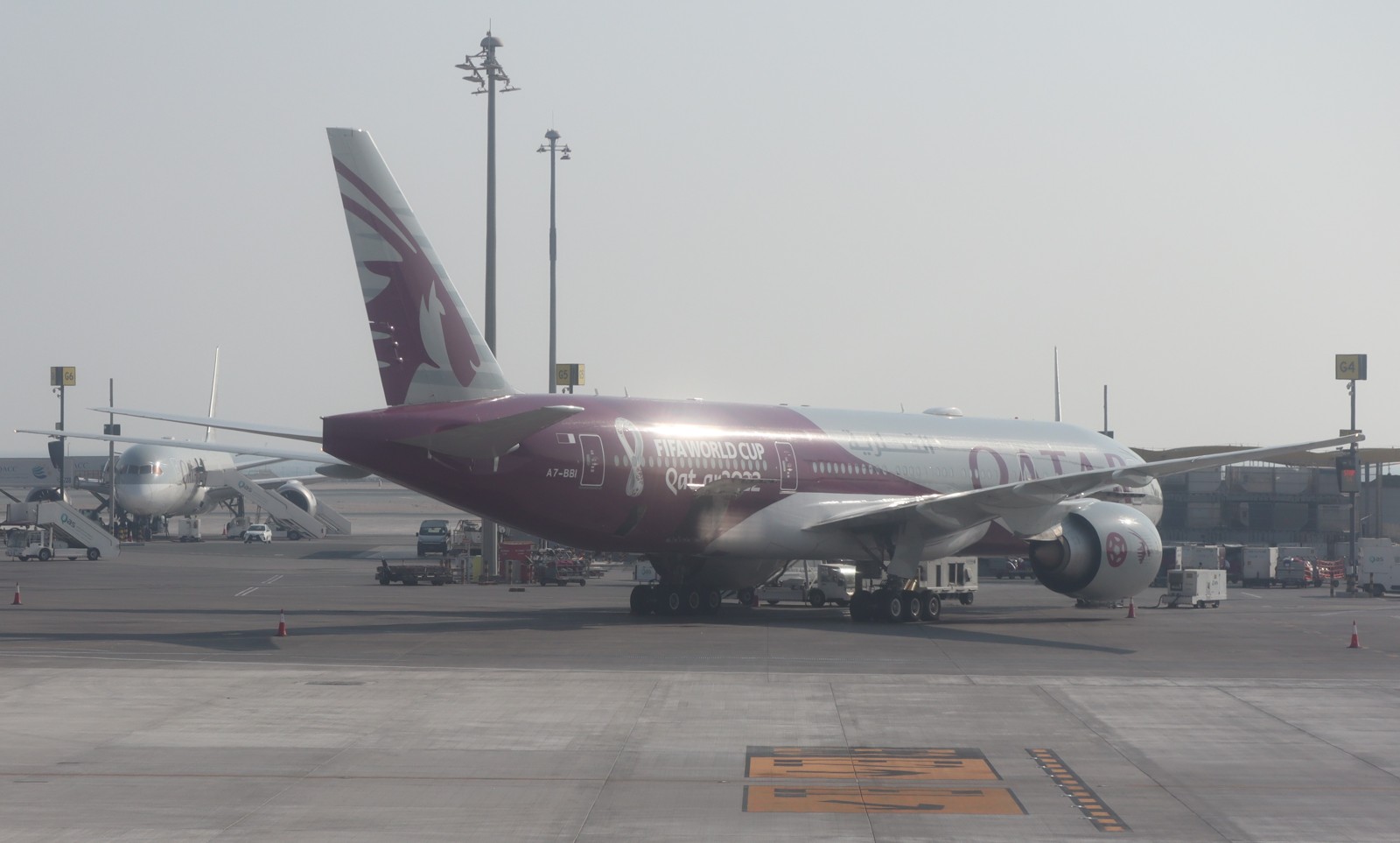
Specialist aviation publication Aviacionline independently reported the first departure on Wednesday and described the same triangular pattern. Its report identifies the inaugural aircraft as A7-BBB. The photograph accompanying this article is a different Qatar Airways aircraft and is used solely as archive context. The distinction between a launch announcement, a scheduled operation and an observed departure matters: today’s development is the beginning of a service, while its future reliability and commercial performance will require evidence over time.
Frequency shapes the practical value
Two departures a week can create a useful new option without offering the flexibility of a daily route. For a resident planning a family visit, the sensible comparison is the complete trip: outbound date, return date, total travel time and any overnight stay needed around a connection. A lower fare can lose part of its advantage if the available return requires several additional days away. Conversely, someone with flexible dates may find a limited-frequency service fits a longer visit quite well.
For business travel, the calendar can be as important as the aircraft or cabin. A meeting that ends shortly after a departure day may leave an awkward gap before the next scheduled service. Companies comparing itineraries should therefore price the employee’s time alongside the ticket. This is an assessment of how a twice-weekly timetable works, not a forecast of demand on the new route. No passenger totals, load factors or financial results for the service were established by the launch reports.
Connections need a whole-journey comparison
Qatar Airways says the service is designed to connect through Doha with markets including the UAE and several Asian and Pacific destinations. Its expanded relationship with LATAM Colombia also adds onward possibilities within Colombia. Those are network opportunities rather than a promise that every city pair has a short connection on every date. Travellers should compare the itinerary generated for their own origin and destination, including which airline operates each leg and how the connection is ticketed.
A single booking and two separately purchased tickets can look similar on a search results page while creating different practical questions. Before paying, ask the seller about baggage transfer, the procedure if an incoming flight is late, and responsibility for any missed onward sector. Keep the answer attached to the booking record. The purpose is to understand the product being bought; this article does not establish a particular protection, refund entitlement or baggage allowance for an individual fare.
Read each sector before committing
The published timetable uses local airport times, so elapsed journey time should be taken from the booking display rather than calculated by simply subtracting one clock reading from another. Check the arrival date as carefully as the departure date. That is particularly relevant when arranging airport collection, accommodation or a connection after a long flight. The final itinerary should also make clear whether a passenger remains on the same aircraft at an intermediate stop and what airport procedures apply.
Entry and transit requirements are separate from an airline’s decision to open a route. A new flight does not itself change the documents a traveller needs. Because the routing passes through more than one country, confirm requirements for the passport and itinerary actually being used through the airline and the relevant official authorities. A resident’s eligibility can differ from that of a travelling companion. Checking those details before a non-refundable purchase is more useful than relying on a broad description of a destination as newly accessible.
A wider network, with results still to come
For Qatar, the route’s significance is the addition of another South American connection through its aviation hub. For passengers, its value will be decided at the level of actual travel choices: a workable departure day, manageable transfer time and a total price they can justify. Those two perspectives should remain distinct. Network expansion is visible immediately; whether it improves a particular family’s or company’s journey depends on the itinerary they can book and the alternatives available on the same dates.
The useful next evidence will be the operation of subsequent flights, any published schedule adjustments and the breadth of onward journeys that can actually be booked. Today’s inaugural departure is a concrete milestone. It is not evidence by itself of cheaper fares, stronger bilateral trade or a permanent increase in frequency. Travellers can use the new service now as an additional option while judging it against their own calendar, documents, budget and tolerance for a journey with an intermediate stop.
Gabriel Nicolaev – CyGuru
Sources & further reading
Qatar Airways: inaugural service and published timetable, 4 November 2026
Aviacionline: first departure and route operation, 4 November 2026