
Oman / Business
Sohar Freezone Highlights Investor Services After Fourth-Place Global Award
Sohar Freezone’s fourth-place finish in fDi Intelligence’s 2026 global free-zone awards received fresh coverage in Oman on 4 November, alongside recognition as the Middle East’s leading industrial zone. The latest account emphasises digital operations and support for established investors. The underlying global ranking was published on 15 October, making this an operational follow-up to that award rather than a newly released league table.
The ranking and its original date
The primary fDi Intelligence ranking places Guangzhou Development District first, Dubai Silicon Oasis second and Costa Rica’s Evolution Free Zone third, followed by Sohar and Jebel Ali Free Zone. Its assessment of Sohar highlights recent investment wins and the strategy of combining industrial activity with logistics. Those are the judges’ stated reasons for recognition. The award does not provide a guarantee of performance for every business locating in the zone, nor does it rank the investment returns of individual tenant companies.
The distinction between the October ranking and November coverage matters because the latest report describes how Omani officials interpret the result. Times of Oman’s 4 November account also records sixth place for AI readiness and tenth place for post-investment services. Together, those categories place attention on what happens after a company chooses a location: the systems it uses, the support available during operation and the ability to resolve issues as a project expands. They broaden the story beyond the initial attraction of an investor.
What the award actually measured
According to fDi Intelligence’s published methodology, 79 submissions were received from investment agencies, operators and government bodies. Internal and external judges assessed responses covering facilities, strategy and related criteria. The overall ranking incorporated changes in occupied space, employee numbers and tenant numbers between 2024 and 2025, alongside judges’ scores. It is therefore a structured assessment of submitted information, with both quantitative and qualitative elements, rather than a census of every industrial or free-zone location in the world.
That scope helps explain how a reader should use the result. A higher position indicates stronger performance within the competition’s framework; it does not answer every location question facing a manufacturer. A company producing bulky materials may place particular weight on berth access and handling arrangements, while another may prioritise reliable utilities, specialist labour or proximity to customers. The award can justify a closer examination of Sohar, but the suitability of a particular site still depends on the operating needs and economics of the proposed project.
Digital tools connect land and port operations
The November report identifies Marasi, a port operations management system, and Makan, an interactive geographic platform that allows prospective investors to examine industrial land remotely. It attributes a 15% reduction in vessel turnaround time to Marasi. That figure is a reported operational claim; the account does not provide the baseline period or a detailed breakdown by vessel type. It is useful evidence of the operator’s priorities, while a fuller performance series would be needed to assess consistency across different traffic and operating conditions.
The two tools address different points in an investment’s life. Remote land information can help a business compare plots before committing to detailed site work. Port management affects the movement of goods once a supply chain is operating. Their shared economic purpose is to reduce uncertainty and avoidable delay. A digital interface is most valuable when the information is current and the process behind it works reliably; the commercial gain comes from better decisions and execution, rather than from the presence of software alone.
A long-established industrial platform
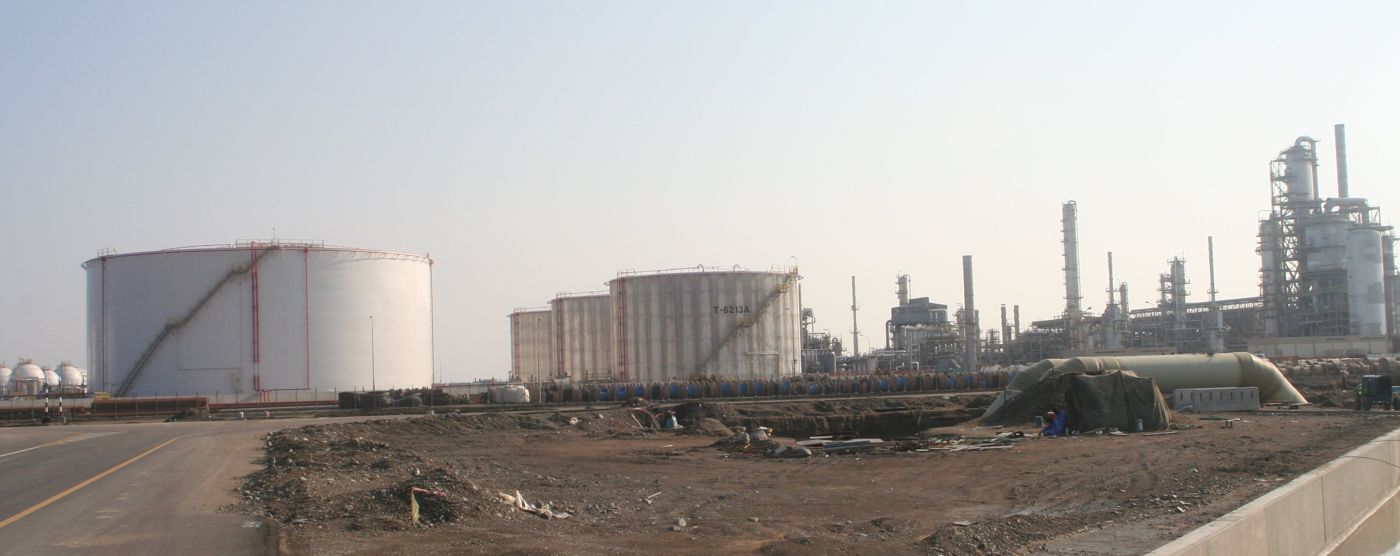
The Public Authority for Special Economic Zones and Free Zones describes Sohar Free Zone as a 45-square-kilometre development established in 2010. Its official profile links the location to shipping routes and access to regional, Indian and East African markets. That geographical and institutional context predates the award. The current recognition builds on an existing industrial platform, with the port and surrounding zone offering different but connected functions for businesses importing inputs, manufacturing products and serving customers through maritime and land transport.
For a factory, those connections matter because production and logistics cannot be evaluated independently. An inexpensive plot may become costly if the movement of inputs is unreliable; a well-connected terminal may offer limited benefit if a project’s utilities or permissions are unresolved. Sohar’s integrated proposition seeks to address those interfaces in one location. The award recognises that strategy, while the investor’s practical test remains whether the required capacity, service arrangements and delivery schedules are available for the specific project being considered.
Aftercare is a test of lasting value
Post-investment support can be economically significant because a company’s needs change after it starts operating. Expansion may require additional land, a new utility connection or coordination with another service provider. A zone that handles those transitions effectively can make reinvestment easier. This gives aftercare a different role from promotion: marketing helps win an initial commitment, while operational support affects whether an established tenant can grow. The tenth-place recognition puts that continuing relationship within the wider assessment of Sohar’s competitiveness.
The next useful evidence will come from completed projects, tenant expansion and sustained operating performance. Those outcomes would show how the recognised industrial and logistics strategy translates into activity on the ground. Today’s coverage adds detail on the services underpinning Sohar’s investment proposition, while the original fDi methodology sets limits on what the ranking proves. For Oman’s industrial economy, the commercial importance lies in converting recognition into productive capacity and reliable trade connections, with awards serving as a signal to examine that performance more closely.
Gabriel Nicolaev – CyGuru
Sources & further reading
Times of Oman: 4 November Sohar award follow-up
fDi Intelligence: original 15 October ranking and methodology
OPAZ: official Sohar Free Zone profile