
Bahrain / Business
Bahrain’s CISOCheck Launch Links Security Reporting With the Work of Fixing Findings
EDXLabs’ CISOCheck cybersecurity-compliance platform was launched at Gateway Gulf and reported on 3 November. The vendor proposes AI-assisted mapping of security reports to control frameworks, but the business question is more concrete: whether a recorded weakness becomes an assigned, evidenced and completed piece of work.
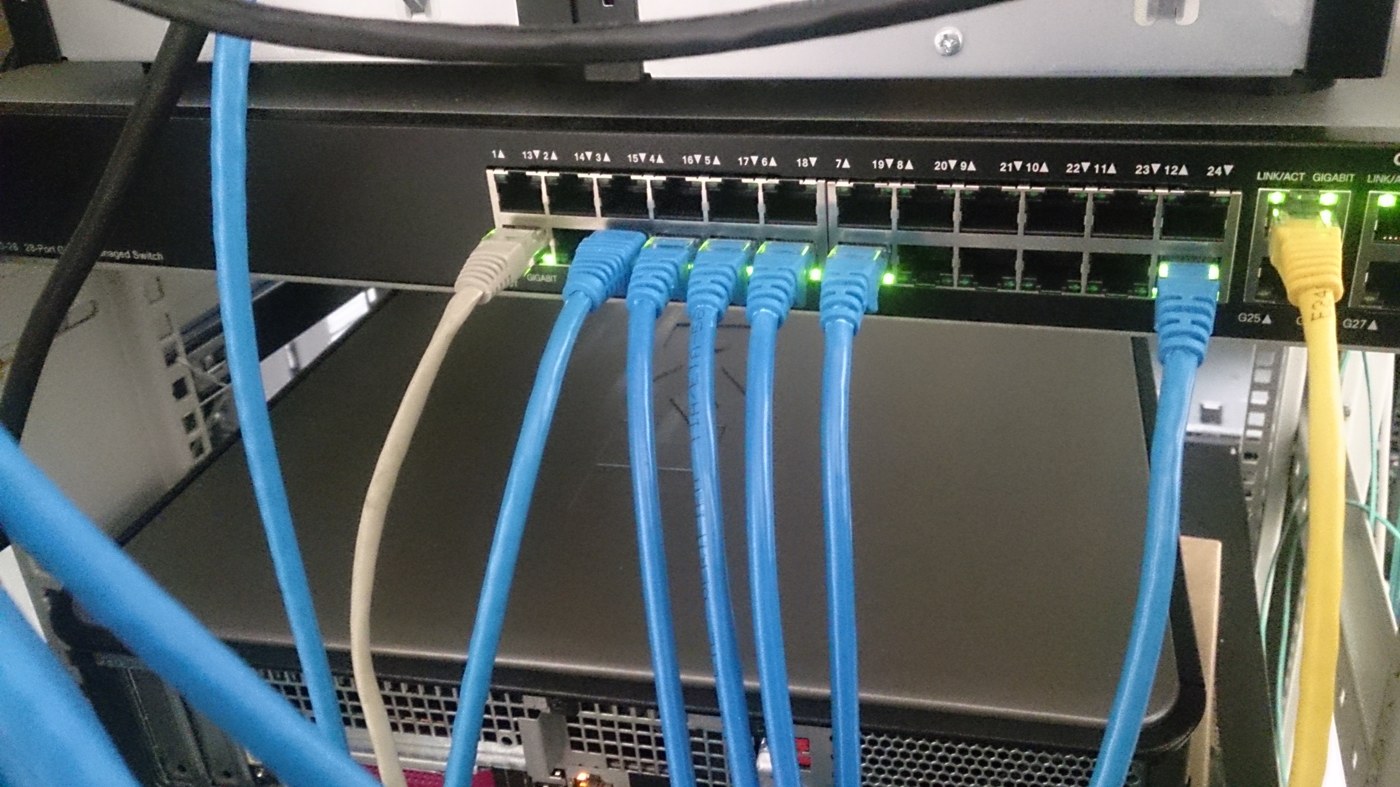
The launch brings a defined workflow into focus
News of Bahrain reported the CISOCheck launch on 3 November following Gateway Gulf, held on 1–2 November. The platform’s own site describes a workflow that takes existing security or compliance reports, maps findings to frameworks and assigns remediation tasks. Those are vendor descriptions of functionality. MyGCCNews has not tested the product or independently audited the accuracy of its automated outputs.
The problem it addresses is recognisable without accepting every marketing claim: an organisation can possess a report describing a weakness while lacking a clear record of who must fix it. Producing another dashboard does not automatically close that gap. The value of a workflow depends on whether people can identify the finding, understand its scope and follow a decision through to evidence that the relevant work has been completed.
Mapping a finding is not the same as satisfying a requirement
CISOCheck says it can map reports to more than 200 compliance frameworks. The number indicates the vendor’s stated coverage, not 200 independent certifications or regulatory approvals. A correspondence between a finding and a control can help organise information, but it does not establish that the organisation meets the requirement or that the source evidence is complete.
A reviewer still needs to understand what the original assessment examined. Which system, business unit and period did it cover? Was the observation confirmed, provisional or dependent on another condition? If those details disappear during extraction, a neatly categorised result can become less informative than the original report. The useful automation preserves the context required to challenge the mapping, rather than making a confident label impossible to inspect.
Ownership has to match the ability to make a change
The vendor’s site places named responsibility, due dates and progress tracking at the centre of its proposition. That is more specific than a promise to make compliance simpler. A finding cannot be resolved merely by assigning it to someone’s inbox if that person lacks the authority, budget or technical access needed to make the relevant change.
For an organisation evaluating the tool, the operating discussion should therefore include escalation and dependencies. A security team may identify a problem that requires a service owner, supplier or management decision. The record needs to show that relationship without disguising a blocked task as active progress. This is an assessment framework for prospective users, not a statement that the newly launched platform has a particular weakness.
The evidence for closure deserves its own standard
An issue marked complete is a claim about work performed. Its meaning depends on what evidence is required and who reviews that evidence. A screenshot, a changed configuration and a repeat assessment can answer different questions. None should be selected automatically because it is the easiest item to attach to a record.
A business should define what would demonstrate that the specific finding has been addressed and whether the response creates another obligation. That makes closure understandable to someone who was not involved in the original conversation. The objective is a defensible history of decisions, not the largest possible percentage of green status indicators. A workflow is valuable when it helps a reviewer reconstruct the reasoning as well as see the final label.
Board reporting should preserve the difference between activity and risk
CISOCheck’s public description includes dashboards, summaries and exports intended to support management reporting. Such outputs can reduce the work of assembling information, but the audience still needs clear definitions. A count of closed tasks measures activity. It does not necessarily show that the most consequential exposure has been reduced, especially if one difficult issue remains unresolved.
The more useful report explains what changed, what is still open and why a decision is needed. Comparisons over time also need consistent scope: adding another business unit can increase findings even while existing controls improve. Leaders should be able to see that change rather than infer deterioration from an unqualified total. The platform’s claims should be evaluated through how well the resulting information supports those distinctions.
Uploaded reports require a deliberate information decision
A security report may contain sensitive details about systems and weaknesses. Before moving it into any new tool, an organisation should establish the actual deployment, access controls and responsibilities that apply to its arrangement. CISOCheck’s published privacy material describes the platform as self-hosted and on-premise and says the vendor does not access or manage platform data. That is the vendor’s stated model, not an independent assessment of a customer installation.
Prospective users still need to verify their own configuration, contracts and permitted handling of the documents. The launch announcement is not permission to upload an employer’s confidential assessment into an unapproved environment. This point follows directly from the type of material involved; it does not imply a breach or allegation against EDXLabs. Information governance belongs in the procurement discussion before an impressive demonstration becomes routine use.
A small evidence-based evaluation is more useful than a feature count
An organisation considering the platform can begin with an authorised, appropriately handled sample and compare the output with the source. The question is whether scope, severity, ownership and supporting evidence remain intelligible. Review a difficult exception as well as an uncomplicated finding. A demonstration that works only on a clean example may not reveal the work required when reports disagree or use different terminology.
The Bahrain launch is important as a specific product development in the country’s cybersecurity ecosystem. Its stated ambition connects assessment with remediation, rather than stopping at report collection. The evidence that will matter to users is how that connection works in their own controlled evaluation. A framework label, an assigned task and a verified resolution are different stages; a credible compliance process keeps all three visible.
Gabriel Nicolaev – CyGuru
Sources & further reading
News of Bahrain: CISOCheck launch, 3 November 2026
CISOCheck: official product workflow and stated framework coverage
CISOCheck: published privacy and self-hosting description
Photograph, attribution and licence: Network cables and switch.jpg
Photograph licence: CC BY-SA 3.0