
Bahrain / Business
Bahrain’s INFINIOS and Mastercard Renew a Travel-Payments Partnership With Reconciliation at Its Core
A renewed multi-year agreement between Mastercard and Bahrain-based INFINIOS, reported on 3 November, targets business-to-business travel payments across MENA. Its significance lies behind the consumer booking screen, where buyers and suppliers need to match money, services and records.
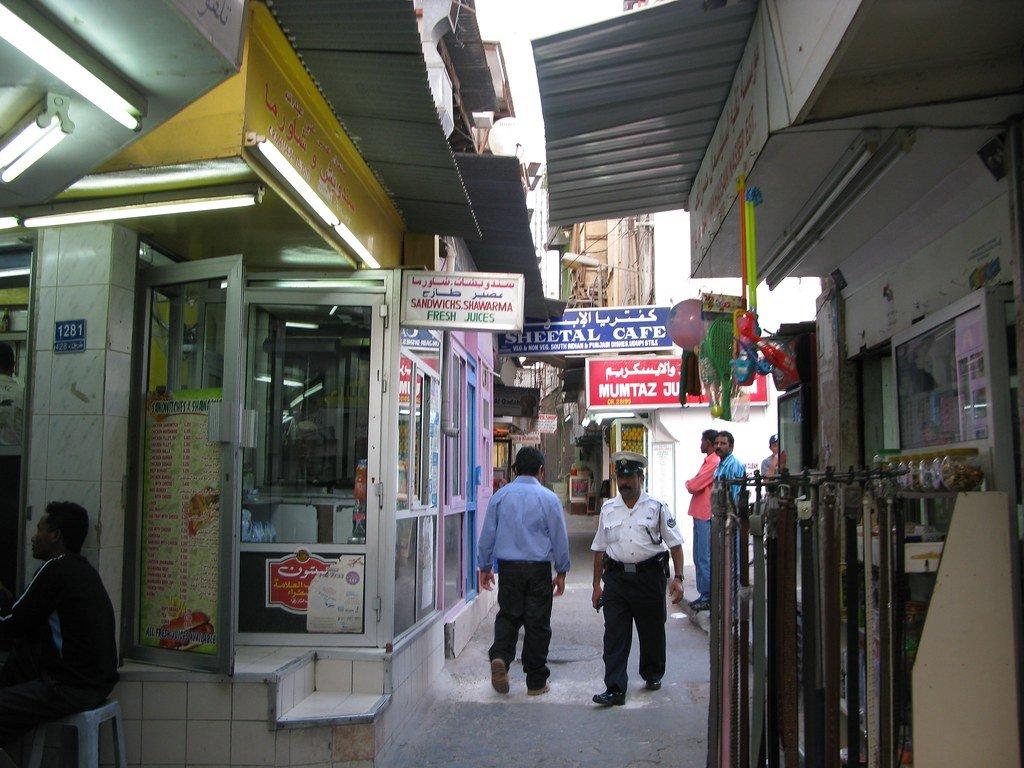
The renewal concerns wholesale travel transactions
Mastercard has renewed a multi-year agreement with INFINIOS to advance business-to-business travel payments across MENA, according to reporting dated 3 November and Bahrain’s official news feed for 2 November. The announcement concerns the Mastercard Wholesale Program and the use of virtual-card technology between travel buyers and suppliers.
This is not the launch of a new retail holiday booking website or a consumer card offer for every traveller. It is an infrastructure and commercial relationship within the travel industry. Understanding that position in the value chain keeps the development distinct from the price a passenger sees for an individual trip or the terms attached to a personal bank card.
An existing collaboration is being expanded, not invented anew
Mastercard’s own March 2023 announcement documented the earlier partnership with Infinios for wholesale travel payments in the region. That background matters because the latest news is a renewal and an ambition to scale an established relationship. It should not be presented as if virtual travel-payment technology first appeared with the November agreement.
A renewal can mark progress, but its value depends on what changes in actual use. The material reviewed does not specify every new market, a complete implementation timetable or an independently verified customer-adoption total for this expansion. Readers should separate the history of the partnership, the current agreement and the future commercial outcomes that its participants intend to achieve.
The booking and the payment are different records
A travel booking creates information about a service and the people or organisations involved. A payment creates another record about money moving under particular terms. The operating challenge is keeping those records connected as a booking is confirmed, changed, fulfilled or cancelled. A transaction can be technically successful while still requiring work to explain what it paid for.
That is why reconciliation is a useful lens for evaluating the announcement. A finance team needs to connect a payment with the relevant booking and understand whether the amount matches the agreed position. The new agreement does not publish a detailed customer workflow, but the underlying problem explains why payment infrastructure is an important part of travel operations rather than merely a final administrative step.
Virtual-card controls are useful when tied to a clear purpose
Mastercard’s product information describes controls over where, when and how much may be spent using a virtual-card number. In an operating environment, the practical value of a control depends on how it is configured and who understands its purpose. A rule that no one can explain may create confusion even when the technology performs exactly as instructed.
Businesses considering such tools should therefore distinguish capability from implementation. A product may support a useful restriction, but someone still has to define the intended transaction and decide what happens when circumstances change. This is an analytical framework rather than a claim about INFINIOS customers’ internal arrangements. The renewal itself does not establish which settings any particular buyer or supplier will use.
Automation works best with information that can be matched
The parties describe an ambition to reduce manual processes. That objective is easier to understand when attention turns to the information surrounding a transaction. If the booking reference, supplier identity or supporting record is unclear, a team may still need to investigate the payment after it has been processed. Digital movement of money does not automatically resolve incomplete commercial information.
A practical implementation therefore needs agreement on which references are carried through the process and which team handles exceptions. Reconciliation becomes more useful when a person can trace the relationship between an instruction and the resulting record. The point is not that every manual step must disappear; it is that human effort should be concentrated on decisions that genuinely require judgement rather than repeated searches for missing context.
Changes and cancellations test the design
A straightforward booking is only one part of the travel business. Changes can create differences between the original service, the updated service and the amount that should ultimately be paid. An operating system needs a comprehensible way to preserve that history, so the people involved can see why the final position differs from the initial instruction.
The announcement does not disclose the handling of every exception, refund or commercial dispute. No guarantee is made here about the result of a particular transaction. Instead, the relevant evaluation question is whether a business can explain a changed booking clearly, identify the responsible party and connect the financial adjustment with the agreed commercial terms. Those details determine how much follow-up work remains after automation.
Liquidity claims need transaction-level context
The release connects the programme with flexibility and liquidity in the travel ecosystem. Those are stated aims, not a universal outcome for every participant. The effect of a payment arrangement depends on the timing, costs and obligations agreed by the parties. A headline about a product cannot establish whether a particular business will hold more usable cash at a given moment.
A careful assessment compares the actual commercial terms with the organisation’s operating needs. The question is not simply whether payment can be digitised, but how the resulting arrangement affects the work and obligations around a booking. This article does not recommend a financial product or estimate savings. Businesses need their own verified terms and transaction information before drawing conclusions about economic benefit.
Scaling across MENA requires more than a regional label
The renewed agreement is presented as a commitment to commercialise and scale the programme across MENA. A regional ambition can be meaningful without implying that every market, buyer and supplier is already connected. The material reviewed does not provide a complete rollout map, so this article does not assign a launch date to countries that have not been individually confirmed.
From an operating perspective, expansion requires relationships that can sustain real transactions. A product description becomes more informative when a prospective customer can establish availability, onboarding responsibilities and the route for support. Those are practical questions to ask as the partnership develops. They also help distinguish the potential size of an opportunity from evidence of a functioning commercial relationship in a particular market.
Keep this agreement separate from stablecoin announcements
INFINIOS has also appeared in recent reporting about other payment developments. That does not mean every initiative uses the same technology or has the same scope. The agreement discussed here concerns the Mastercard Wholesale Program and virtual-card-based travel payments. It should not be merged automatically with a separate regulatory or digital-asset announcement simply because one company appears in both.
This distinction prevents a common reporting error: treating a company’s entire technology agenda as one product. A reader needs to know which development is confirmed, which problem it addresses and which parties are responsible. The current analysis does not claim that the wholesale travel programme requires a customer to use stablecoins, nor does it infer a regulatory permission beyond the scope of the cited travel-payment agreement.
What would make the renewal easier to assess
Useful follow-up information would include defined customer use cases, implementation milestones and a clear explanation of support and exception handling. Where performance claims are made, readers would benefit from knowing what is measured and over what period. A transaction-volume figure alone may not show whether the surrounding operational work has become easier or more accurate.
For Bahrain’s fintech sector, the deeper significance lies in solving a specific business process rather than announcing technology in general terms. A payment relationship can create lasting value when it makes commercial records easier to understand and responsibilities easier to manage. That is a narrower and more useful test than assuming that digitisation is automatically synonymous with lower cost or fewer problems in every case.
The central test remains an understandable financial trail
The November renewal gives an established Bahrain-based payments business and a global network a new public commitment to work together in regional travel payments. Its practical meaning will be demonstrated when the organisations using the service can connect a booking with its payment history and resolve exceptions without losing the underlying commercial context.
That outcome depends on implementation, information and responsibility as well as technology. The announcement establishes the partnership and its intended direction; it does not settle every operational question for prospective users. Readers should follow the specific evidence that comes next, while keeping the business-to-business scope clear. The most valuable progress would be a more dependable process behind the scenes, where the traveller rarely sees it but the supplier must understand it.
Gabriel Nicolaev – CyGuru
Sources & further reading
TradeArabia: renewed INFINIOS–Mastercard agreement, 3 November 2026
Bahrain official news feed: partnership announcement, 2 November 2026
Mastercard: original Infinios wholesale travel partnership, March 2023
Mastercard: wholesale travel programme features
GCC Business News: renewed agreement, 3 November 2026