
Saudi Arabia / Explore
Reading Al-Ahsa: A Thoughtful Guide to Saudi Arabia’s Living Oasis Landscape
Al-Ahsa rewards travellers who look beyond a single landmark. Its palms, water systems, markets and historic buildings form a working cultural landscape. A good visit connects those elements while respecting the people whose everyday lives continue within them.
Begin with a landscape, not a checklist
Al-Ahsa is often introduced through its extraordinary concentration of date palms. Yet a useful visit needs more than a photograph of greenery. The UNESCO-listed property brings together agricultural areas, water-management features, historic buildings and settlement traces. Its significance rests on relationships between human activity and the environment, not simply on the presence of several attractive places within one district.
That distinction changes how to plan. Rather than collecting unrelated stops, build a day around questions: how was water managed, where did people trade, how did settlements relate to cultivated land, and what can a visitor observe today without intruding on work or private life? A guide can help connect those elements, but the questions are valuable even on a self-directed visit. They prevent a cultural landscape from becoming a backdrop with its meaning removed. The route proposed here is an editorial framework, not an official timed tour. Opening arrangements, access permissions and transport should be checked for the actual travel date. Al-Ahsa is a lived place whose heritage becomes clearer when the visitor leaves enough time to understand the connections.
What UNESCO recognition does and does not mean
UNESCO inscribed Al-Ahsa Oasis as an evolving cultural landscape in 2018. The listing describes a serial property with twelve component parts and approximately 2.5 million date palms. Those details establish the scale and the type of heritage being recognised. A serial property is not the same as a single enclosed attraction with one entrance and one visitor route.
For travellers, this means that a general statement that Al-Ahsa is a World Heritage site does not confirm access to every farm, water feature, historic building or archaeological area. Components can have different settings and management arrangements. Nor does an inscription date establish a modern opening time. Use UNESCO to understand significance, then use the relevant local operator or official tourism information to confirm a particular visit. This separation is also useful when evaluating a tour description. Ask which locations are included and what can actually be entered. A responsible operator should be able to distinguish viewing an area, walking through a public market and arranging authorised access to a specific site. Heritage status makes careful questions more valuable; it does not make practical permissions unnecessary.
Water is the organising idea
An oasis is easily romanticised as an exception to the surrounding desert. A more revealing interpretation asks how resources became a workable settlement system. Water supply, distribution and drainage must relate to cultivated land and to the needs of a community. Historic channels, springs and wells can therefore be read as evidence of organisation as well as engineering.
A visitor does not need to become a hydrologist to appreciate that connection. At an authorised interpretation point, look for an explanation of where water came from, how it reached different areas and how the system changed over time. Ask a guide to distinguish a surviving historical feature from a modern intervention or a reconstruction. Those distinctions protect against a picturesque but inaccurate story in which every visible element is assumed to be ancient and unchanged. The phrase evolving landscape is useful precisely because it allows continuity and adaptation to coexist. A working place can retain cultural meaning while changing its equipment and methods. The task is to understand which relationships persist and which practices have developed, rather than treating modern life as an interruption to the heritage.
Palm groves are productive places
A grove can be visually compelling while remaining someone’s workplace or private property. Do not assume that a gap in a wall, an open gate or a photograph on social media creates permission to enter. Use a visitor experience that explicitly offers access, or obtain permission from the person responsible. If access is arranged, ask which paths are available and whether photography is welcome.
Think of the agricultural landscape as a sequence of human decisions. Planting, irrigation, maintenance, harvest, sorting and sale all sit behind the appearance of the palms. A knowledgeable local guide or authorised farm host can help explain that sequence without turning the visit into an intrusive inspection. When buying produce, ask clear questions about origin, variety and packaging rather than assuming every product sold nearby came from the particular grove you saw. The aim is to recognise work, not merely consume an atmosphere. Travellers can support that recognition through respectful purchasing and fair treatment of hosts. A short, well-explained authorised visit is preferable to wandering through a productive area without understanding the boundaries or the activities taking place around you.
Al-Hofuf gives the oasis an urban perspective
An oasis visit becomes more complete when it includes an urban setting. Markets and historic buildings reveal how cultivated land connected with exchange, social life and political organisation. In Al-Hofuf, the visitor can shift from the broad landscape to the scale of streets, entrances, shopfronts and public spaces. That movement helps explain why an agricultural environment should not be understood separately from the settlements around it.
Choose a small number of places and allow time to observe them. A rushed drive past a historic building provides little opportunity to understand its function, use or relationship to the surrounding area. Before setting out, check which attractions are open, which are viewed primarily from outside and which require a booking or a guide. Avoid making firm claims about access based on an old itinerary. Where interpretation is available, pay attention to what a building was used for and how its present visitor role differs. That question offers more substance than counting architectural details alone. Urban heritage is not just a collection of old surfaces; it records the ways people organised movement, commerce, authority and ordinary life.
Visit Al-Qaisariyah as a market
Visit Saudi includes Al-Qaisariyah Souq among the suggested experiences in Al-Ahsa. The most useful attitude is to enter a market as a place of exchange, not as a set built for visitor photographs. Give working shopkeepers space, ask before photographing people and avoid blocking narrow routes while deciding what to buy. A courteous conversation can offer more insight than a hurried sequence of images.
If purchasing food, clothing, gifts or craft items, clarify the actual product, quantity and price before paying. Ask about local production where origin matters to you. A product’s presence in a historic market does not automatically establish how or where it was made. That is not a reason for suspicion; it is a reason to ask ordinary questions accurately. Set a spending limit before browsing so that enthusiasm does not turn into a later budgeting problem. If bargaining is appropriate in a particular shop, keep the exchange respectful and accept that the seller may decline your offer. The wider principle is to participate in the market on human terms, recognising that the people serving visitors are conducting their daily business.
Al-Qarah adds a geological dimension
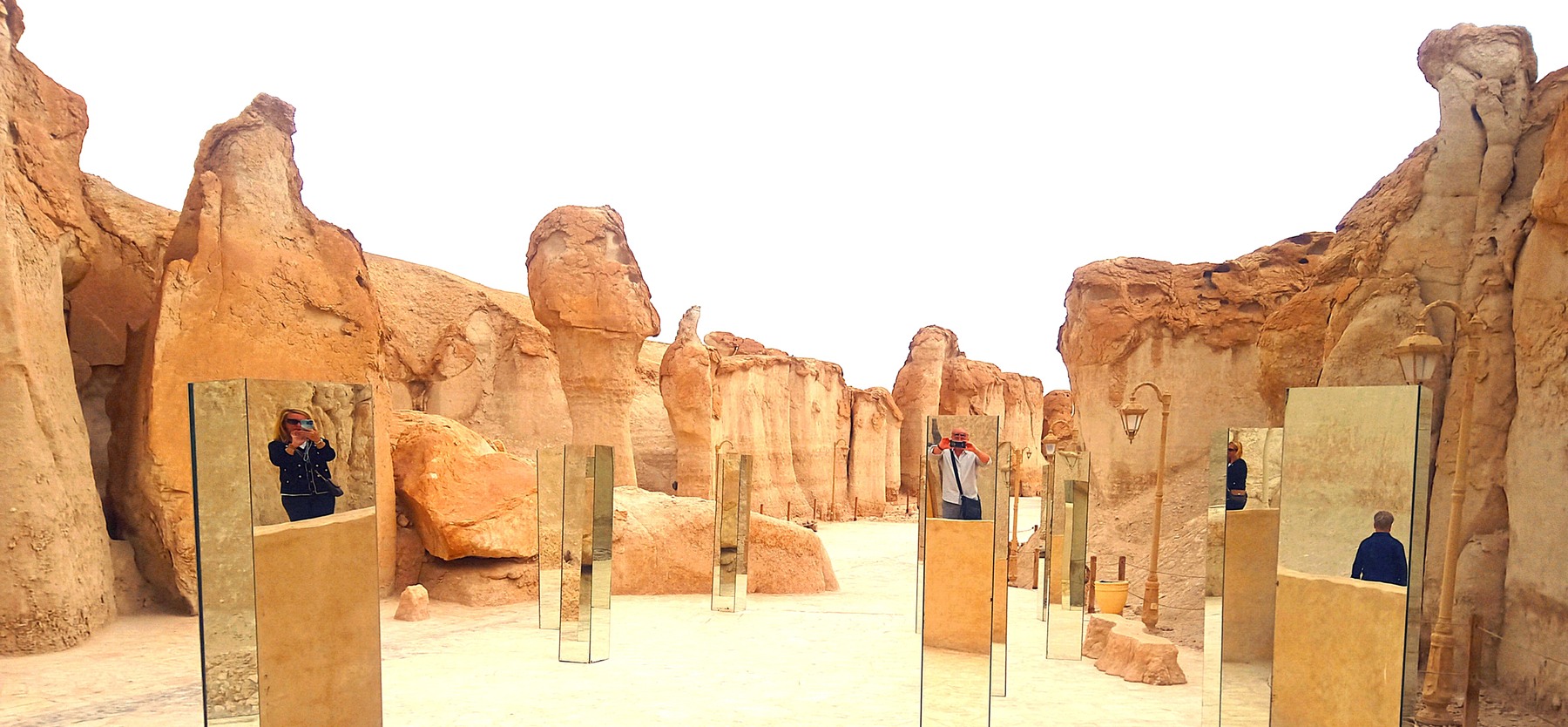
The official Saudi tourism site identifies Al-Qarah Mountain as an Al-Ahsa attraction. Including it can broaden a visit beyond cultivated land and urban heritage, but it should be planned as a distinct stop with its own access conditions. Confirm the visitor entrance, opening arrangements, any ticket requirements and what parts of the experience are suitable for the people travelling with you.
Do not assume that a named mountain attraction is equivalent to an unrestricted hiking area. A managed visitor route, a cave experience and an unmarked outdoor slope involve different practical considerations. Follow the operator’s instructions and stay within authorised routes. Footwear, lighting, changes in surface and the amount of walking may matter more to a family than a promotional description suggests. Ask specific questions if someone has limited mobility or difficulty with confined spaces. The editorial reason to include Al-Qarah is the contrast it brings to the itinerary: it prompts visitors to consider how terrain and settlement interact. The practical reason to avoid overloading the day is that each distinct experience deserves enough time to be understood and enjoyed without turning the journey into a race.
Build one coherent day, with an optional second
For a first day, choose an agricultural or landscape interpretation experience, an urban heritage stop and a market visit. Add Al-Qarah only if the transport, opening arrangements and interests of the group make the day comfortable. This is a suggested structure rather than a promise that every combination is possible on every date. The starting point should be confirmed access, not the number of locations available on a map.
A second day can be used to deepen one theme instead of repeating the same pattern with more stops. A traveller interested in food might seek a properly arranged farm or produce experience; someone drawn to architecture might spend longer with a qualified guide in the historic urban area. Leave an unallocated period for a meal, conversation or an unexpectedly engaging visit. A useful itinerary has room to absorb a delayed departure or a change in opening arrangements. If the day is already full before transport is included, remove a stop. The purpose of travel is to experience a place, and a culturally rich landscape is often understood better through fewer, longer encounters than through an exhaustive list of brief arrivals.
Transport and heat shape the real itinerary
Map the actual entrance to each planned stop, not simply the name of the wider district. A route that looks compact at regional scale can involve several separate transfers. If using a driver, agree pickup points, waiting time and the extent of the service. If using rail to reach the broader area, verify the current service and then plan the final connection separately. The existence of a rail corridor does not establish the door-to-door duration of your chosen visit.
Season and local weather should influence the balance between outdoor time and sheltered stops. Consult the official tourism climate guidance and current conditions rather than relying on a generic label such as winter trip. Build meals, rest and transport into the plan from the outset. Travellers with children or older companions should ask about seating, toilets and the amount of walking before paying for a package. These are practical planning recommendations, not medical advice. A day that is logistically comfortable leaves more attention available for learning. An overextended route can make even an exceptional place feel like a sequence of obstacles.
Choose interpretation that distinguishes evidence from story
Heritage tourism depends on storytelling, but the best interpretation explains the basis of the story. A guide should be able to say when a date is documented, when an account is a local tradition and when a visible feature has been restored. Those distinctions add interest rather than diminishing it. They allow a traveller to appreciate both historical evidence and the ways communities remember their past.
Before booking, explain your interests. A photography-focused outing, a family introduction and a specialist architectural visit are different services. Ask about language, duration, sites entered and what happens if one location is unavailable. If a tour description uses broad claims such as hidden heritage or authentic experience, ask what the wording means operationally. The answer might be entirely reasonable, but it should be concrete. Travellers also have a role: listen without demanding that every conversation become a dramatic historical revelation. Ordinary details about cultivation, market routines or building use can explain a landscape more accurately than a spectacular but unsupported anecdote. A thoughtful visit values specificity over theatrical certainty.
Respect the difference between public heritage and private life
A culturally significant place remains a place where people live, work, worship and move through ordinary routines. Public visibility is not unlimited permission to record or intrude. Ask before photographing identifiable people, respect instructions at religious or managed sites and avoid treating private homes as attractions. When unsure about an entrance or an activity, request guidance rather than testing the boundary.
The same principle applies to environmental behaviour. Stay on authorised paths, take litter away and avoid interfering with water channels, cultivated areas or wildlife. A visitor does not need a detailed conservation manual to recognise that a living landscape has functions beyond tourism. Purchasing from a local business can contribute to the visit’s value, but spending money does not purchase exemption from local expectations. Families can explain this to children before arrival: the grove is someone’s workplace, the market is someone’s shop and the neighbourhood is someone’s home. That simple framing makes respectful behaviour easier. It also produces a richer experience because it invites the traveller to observe the place as a functioning community rather than as a collection of surfaces arranged for a camera.
What to take away from Al-Ahsa
The most lasting impression of Al-Ahsa may be the relationship between elements that initially seem separate: a palm grove, a water feature, a street, a market and a historic building. Together they show that settlement in an arid environment is an organised cultural achievement, not simply a fortunate patch of vegetation. The meaning becomes clearer when a visitor has time to follow those relationships.
Before departure, review the day against the questions that shaped it. Did the visit explain how the landscape works? Did you distinguish an accessible public attraction from private land? Did the purchases and conversations add understanding rather than merely fill time? Those reflections are useful for planning the next journey as well. A good cultural itinerary leaves some things unexplored without making the traveller feel that the destination has been incompletely consumed. Al-Ahsa deserves that kind of patience. Its heritage is not confined to a single moment or a single monument. It is visible in continuing relationships between environment, work, settlement and community, and the traveller’s task is to encounter those relationships with attention and proportion.
Gabriel Nicolaev – CyGuru
Sources & further reading
UNESCO World Heritage Centre: Al-Ahsa Oasis, an Evolving Cultural Landscape
Visit Saudi: a suggested day in Al-Ahsa
Visit Saudi: Al-Qarah Mountain
Visit Saudi: climate and seasons
Saudi Arabia Railways: official passenger service information
Photograph: Dr. Ondřej Havelka (cestovatel) — original file and attribution
Related on MyGCCNews
Culture and destinations across the GCC
US Signs Riyadh Expo 2030 Participation Agreement: What the Milestone Actually Changes