
Oman / Explore
Dhofar Beyond Khareef: Reading Oman’s South Through Frankincense, Ports and the Coast
Dhofar is often introduced through the green landscapes of khareef. Its deeper story is less seasonal: a relationship between inland production, caravan movement, coastal ports and the communities that connected southern Arabia to distant markets.
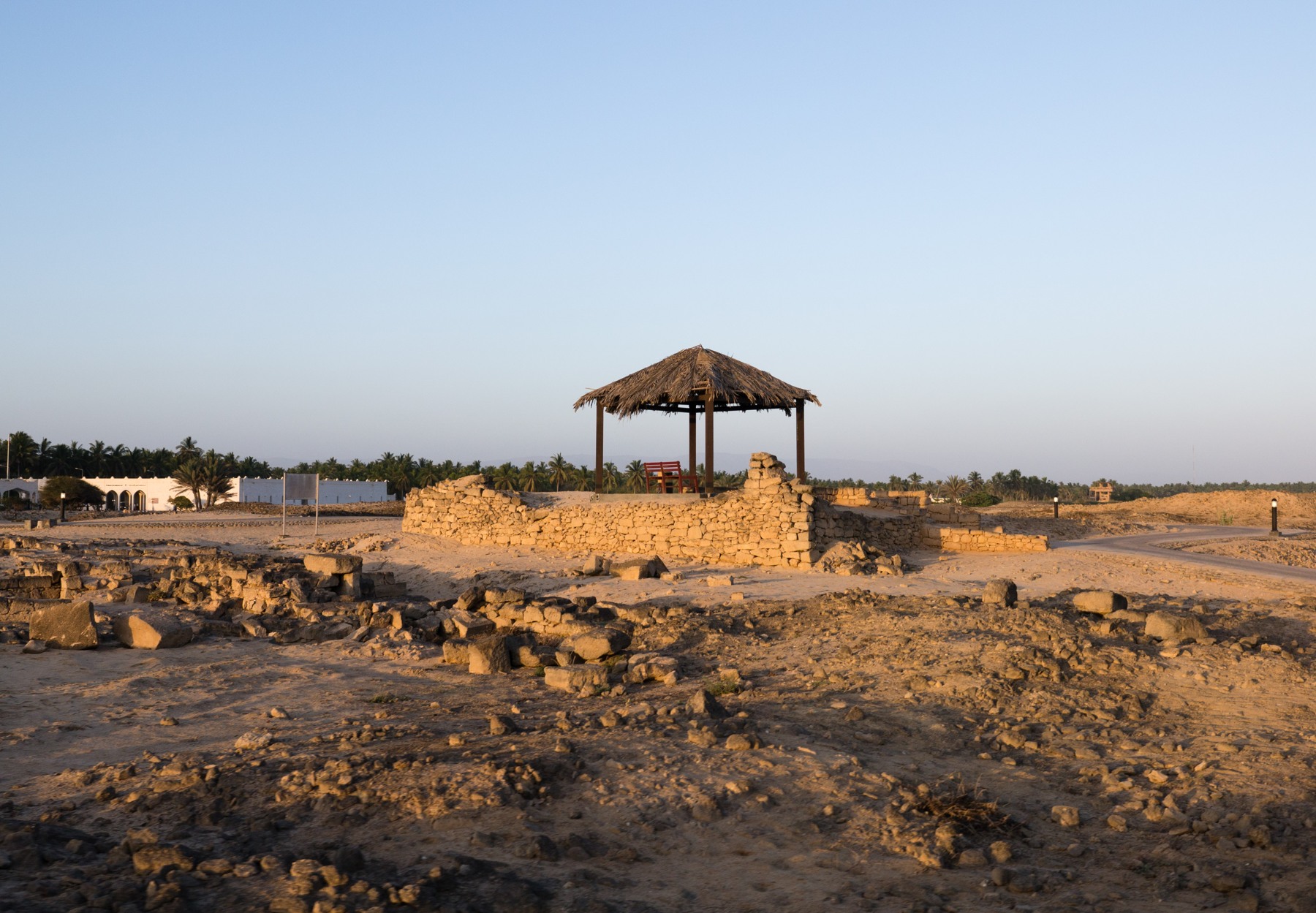
Look beyond a single seasonal image
The familiar photograph of a green hillside can make Dhofar appear to be a destination that exists only during one part of the year. That image captures an aspect of the region, but it is a poor organising principle for understanding it. A visitor interested in history, landscape and trade can ask a broader question: how did this particular combination of coast, mountains and inland routes sustain connections beyond southern Oman?
Start by separating the experience you want from the colour you expect. A heritage journey is not incomplete because the landscape differs from a photograph taken in another season. The coast, archaeological sites, museums and everyday commercial life offer different ways to read the region. Choose dates according to your priorities and current conditions, rather than assuming that a famous seasonal view is the only worthwhile version of the destination.
This approach changes the pace of a visit. Instead of collecting scenic stops, the itinerary follows relationships: a material produced inland, a route that moved it and a port that exchanged it. The landscape becomes easier to understand when each stop answers part of a question. Dhofar is then encountered as a region with an economic and cultural history, rather than as a temporary backdrop.
Understand what the UNESCO property connects
UNESCO's Land of Frankincense brings together four components: the trees of Wadi Dawkah, the caravan oasis of Shisr/Wubar, and the port remains at Khor Rori and Al-Baleed. Their importance lies partly in the system they illustrate. Production, inland movement, water and maritime exchange belong to the same story, even though the individual sites present very different physical experiences to a visitor.
Do not expect four versions of the same attraction. A tree landscape asks different questions from a fortified settlement or a harbour site. One concerns the source of a valuable commodity; another concerns the infrastructure that allowed people and goods to move. The interpretive benefit comes from comparing these functions, not simply ticking off all four names in a compressed day.
A useful visit therefore begins with a small conceptual map. Write down where material originated, where travellers could stop and how goods reached the sea. Add the sites to that diagram as you learn about them. The exercise is deliberately simple: it prevents the scale of individual ruins from determining your estimate of their historical importance. An ordinary-looking connection can be more significant than the most photogenic wall.
Use Salalah as an orientation point
A Salalah base can help organise a heritage-focused visit without forcing constant accommodation changes. Before choosing a property, compare its position with the places you actually intend to see. Access to the coast, an archaeological visit and an inland excursion may create different transport needs. A hotel described as central can still be inconvenient for a particular sequence of days.
Reserve the first day for orientation rather than maximum distance. Understand the relationship between your accommodation, the coast and planned departure routes. Confirm opening arrangements directly with the relevant operator, and ask how long visits generally require. Published descriptions explain the identity of an attraction; they do not guarantee that every facility or entrance arrangement will be unchanged on your chosen date.
A settled base also makes it easier to separate full excursion days from lighter cultural days. This matters when travelling with people who have different interests or energy levels. An itinerary that alternates scale can sustain curiosity longer than one that makes every morning an early departure. The purpose of the base is to support the experience, not merely to provide a room between transfers.
Read Al-Baleed as a place of exchange
At an archaeological port, the temptation is to look for a single spectacular object. A more rewarding method is to consider how a settlement worked. Where would people have moved, what needed protection, and how did the relationship between land and water shape activity? These are observational questions rather than claims about details that cannot be confidently reconstructed from a casual visit.
Use the available interpretation before forming an elaborate personal theory. Museum displays, site information and qualified guides can explain evidence that is not obvious from the ground. Distinguish what an interpretation explicitly states from what you imagine a scene might have looked like. Historical curiosity is strengthened, not diminished, by acknowledging where evidence stops and reconstruction begins.
Give the site enough time for a second look. After reading an explanation, return to the landscape and see whether the relationships become clearer. This simple loop turns a walk among remains into a learning experience. It also discourages the habit of judging a place solely by the quantity of visible architecture or the speed with which a photograph can be taken.
Give Khor Rori its own questions
Khor Rori offers another opportunity to think about the meeting of coast and settlement. Rather than comparing it with Al-Baleed as though one must be the better attraction, ask what each location reveals about a different setting and period. A thoughtful itinerary does not require every visit to produce the same kind of visual excitement.
Consider the landscape around the archaeological remains as part of the experience. Access, the inlet and the position of the site affect how you read it. Avoid treating an attractive shoreline as an invitation to move beyond marked visitor areas. Heritage significance and environmental sensitivity can overlap, and a convenient photographic position is not necessarily an appropriate place to stand.
A guide can be useful if your interest is in context rather than merely transport. Ask prospective operators what interpretive support is actually included. A transfer with free time and a specialist explanation are different services. Pay for the level of expertise you need, and do not assume that every driver has been engaged to provide detailed historical interpretation throughout the day.
Move inland with a purpose
Wadi Dawkah and Shisr/Wubar introduce a different scale of travel. The inland element should be planned around its meaning and practical demands, rather than added because the map makes a connection possible. Confirm the proposed route, current access and suitable transport with an operator familiar with the area. A distant stop can consume more of the day than its name on a list suggests.
The questions also change inland. What does a productive landscape look like, and what would a stopping place mean to people moving through a demanding environment? These questions help explain why water, local knowledge and dependable routes mattered. They do not require inventing a particular caravan journey or presenting a romantic legend as an established historical fact.
If time is limited, choose the inland experience that best supports your interest rather than forcing every component into the trip. A well-interpreted visit to fewer places can provide a stronger understanding than a rushed attempt at completeness. The integrity of a heritage journey comes from the quality of attention it gives, not from the number of kilometres travelled between official site names.
Treat frankincense as more than a souvenir
Frankincense provides a tangible link between the historical story and contemporary commerce. A market visit can prompt questions about origin, grading, intended use and how a seller describes the product. Approach these conversations as an opportunity to learn. A purchase need not become a performance in which either visitor or seller is expected to deliver an idealised version of the region.
Be careful with health claims attached to traditional products. Cultural significance, fragrance and historical trade do not establish that a particular product treats a medical condition. This article does not recommend ingestion or therapeutic use. A responsible heritage purchase can be based on craftsmanship, aroma or interest in the material without borrowing the language of clinical evidence.
Consider how you will transport what you buy, including packaging, airline conditions and any applicable destination import requirements. Ask the seller to identify the material accurately, and retain purchase information where appropriate. The practical work of taking a souvenir home is separate from the historical story that made it interesting. Keeping these questions distinct prevents an enjoyable purchase from turning into an avoidable problem later.
Place the coast in the wider itinerary
Dhofar's coast is not simply the pause between heritage sites. It offers a different perspective on the region's relationship with the sea. Experience Oman's destination material identifies coastal attractions including Al Mughsail west of Salalah. Plan a coastal visit according to current weather, local instructions and the access actually available, rather than assuming that every scenic location is suitable for every activity.
Viewing a shoreline and entering the water are separate decisions. The attractiveness of the scene is not a guide to conditions. Stay within authorised visitor areas and follow local warnings. If an activity requires specialist supervision, choose an operator for that activity rather than relying on the presence of other visitors as evidence that it is appropriate.
The coast can also provide a useful change of rhythm after a concentrated archaeological visit. Leave time for an unstructured meal or a quiet stop where access is permitted. These intervals are part of the destination experience rather than wasted capacity. A travel day benefits from changes in attention: reading, listening, walking and resting do not all draw on the same energy.
Plan a sequence, not a race
A workable heritage visit might divide into an orientation day around Salalah, an eastern archaeological outing, a western coastal day and a separate inland excursion if time allows. This is an analytical pattern, not a claim that each element requires exactly one day. Actual timing depends on the selected stops, accommodation location, opening arrangements and the group's interests.
Build the order around constraints that are difficult to change. An operator's availability or a museum's confirmed opening pattern may shape the week more than a preferred photographic sequence. Leave another day lighter so that an adjustment does not collapse the entire programme. Flexibility is easier to preserve before every hour has been assigned a non-refundable commitment.
Agree what a successful visit looks like before starting. One traveller may want detailed archaeology while another values a balanced introduction to the region. Make these expectations visible and decide where separate activities are practical. The resulting itinerary can be more inclusive without becoming superficial. Depth is created by choosing the right questions, not by making every person spend identical hours at every stop.
Leave with a more connected understanding
The strongest souvenir of a Dhofar journey may be an improved sense of how landscapes and exchange fit together. Trees, water, settlements and ports are easier to remember when they are understood as connected functions. This perspective also makes the region's heritage less dependent on any single ruin, museum display or seasonal photograph being exactly as expected.
Document what you learned as questions answered and questions still open. Note which explanations came from official interpretation and which were suggestions from a guide or your own observations. This habit produces a more honest travel account and avoids the common temptation to turn every engaging story into a certainty. Good cultural writing preserves uncertainty where the evidence requires it.
Dhofar beyond khareef is not a substitute experience for travellers who missed a season. It is a broader way of encountering the south of Oman. Plan around the relationships between coast and hinterland, allow each type of place its own pace, and let the journey reveal a region whose importance cannot be contained in a single familiar image.
Gabriel Nicolaev – CyGuru
Sources & further reading
UNESCO World Heritage Centre: Land of Frankincense
Experience Oman: Dhofar destination overview
Experience Oman: Dhofar Governorate guide
Experience Oman: Rub al Khali and organised excursions
Experience Oman: tour operator directory
Photograph: Juozas Šalna — original file and attribution
Related on MyGCCNews
Explore culture and heritage across the GCC
Read more original reporting and analysis
An Oman Road Trip That Works: Coast, Mountains and the Time Between Them