
Bahrain / Explore
Bahrain Fort Beyond the Walls: How to Read the Layers of Dilmun
Qal’at al-Bahrain can look like one building from a distance. Its deeper importance lies beneath that simple impression: successive layers of settlement, trade and changing uses. A thoughtful visit connects the visible fort to the archaeological site and the museum, rather than allowing the strongest silhouette to stand for the entire history.
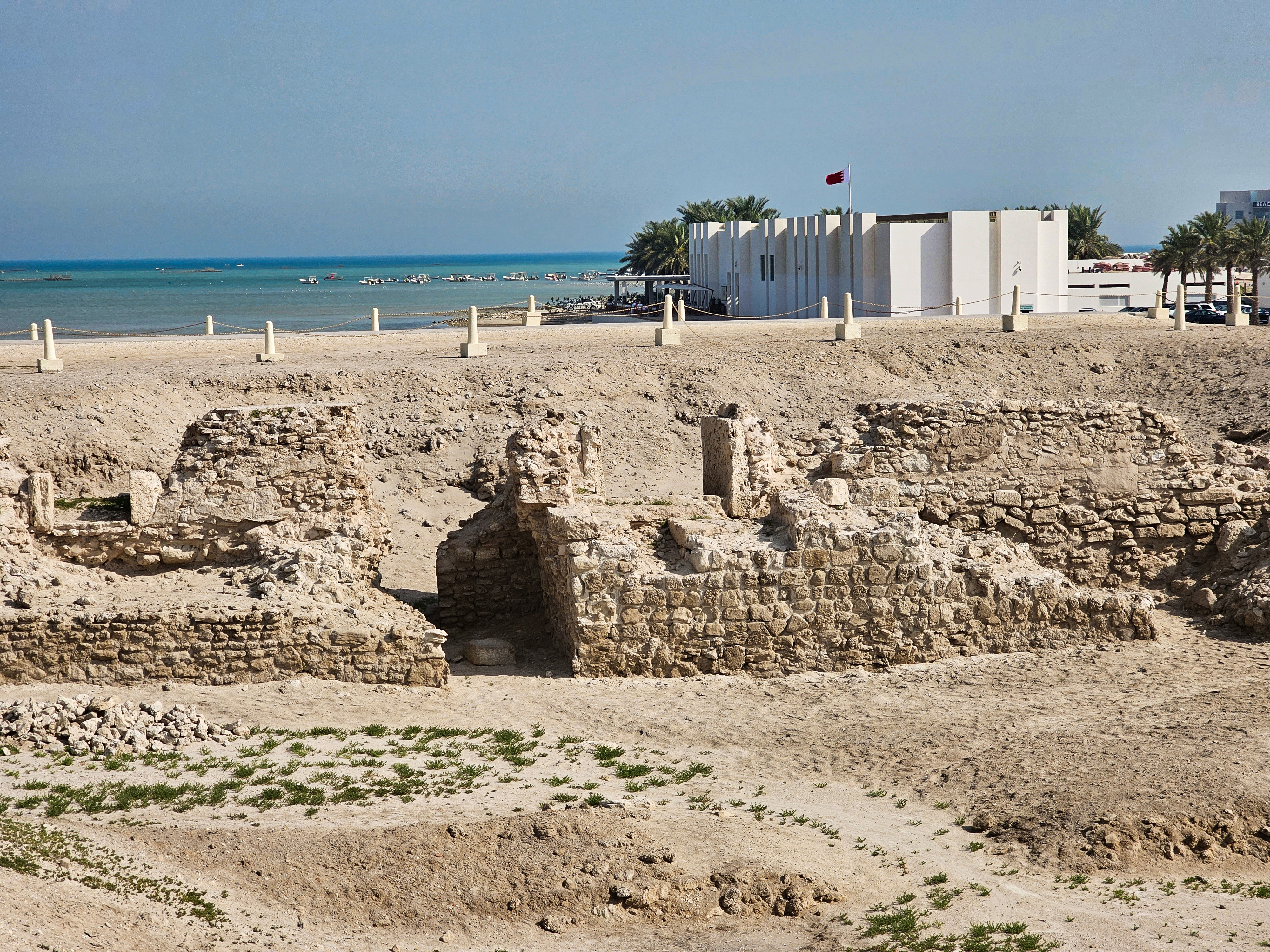
Begin with the difference between a fort and a site
UNESCO identifies Qal’at al-Bahrain as an archaeological property associated with Dilmun and a long sequence of occupation. The prominent fort is one part of that layered landscape. Understanding the distinction prevents a common mistake: assigning every feature and object to a single period because they now appear within one visitor destination.
Use the interpretation to establish a basic timeline before examining individual structures. You do not need to memorise dates. It is more useful to understand that layers represent different people using and reshaping the same place. The site becomes a record of change, rather than an apparently uniform remnant of the past.
Let the museum explain what the ground cannot
Bahrain’s culture authority describes the site museum as presenting discoveries across successive historical periods. A museum can make relationships visible that are difficult to recognise outdoors. An object in a case may help explain a room, an activity or a connection with another region that would otherwise remain abstract.
Choose a small number of objects to examine closely. Ask where each was found, what is known about its use and how that knowledge was established. Distinguish the object itself from a reconstruction or explanatory diagram. They serve complementary roles, but they do not provide the same kind of evidence about the past.
Put maritime exchange back into the picture
UNESCO’s account places the property within a history of trade and maritime connections. That framework changes how the site can be read. A coastal settlement is not isolated simply because modern visitors arrive by road; its historical relationships may have extended far beyond what is visible from a single viewpoint.
Consider what exchange requires: storage, movement, trust, practical knowledge and connections between different kinds of work. These are questions to explore through interpretation, not permission to invent a commercial history for an unidentified room. A useful visit keeps broad context and specific evidence in conversation without confusing them.
Give the exterior and interior different attention
Outdoors, observe the relationship between built forms, open ground and the surrounding landscape. Indoors, use the exhibits to refine the questions raised by that view. Moving between the two can be more illuminating than attempting to complete every panel in a single direction and never returning to the site itself.
Check current access and opening arrangements through the culture authority or venue before travelling. Official sources sometimes differ on historical details or retain older operational information. Where a factual discrepancy matters, prioritise the specialist record for the historical question and the current operator for the practical visiting question.
Make conservation part of the experience
Stay on authorised paths and do not handle material found on the ground. An apparently ordinary fragment can belong to a context that is important to specialists. Removing it as a souvenir destroys that relationship even when the object itself looks insignificant.
The best account of Bahrain Fort is therefore more precise than saying that the country has an old castle. It describes a place where different periods of life overlap and where archaeology makes some of those relationships legible. Giving the museum and the wider site time helps replace a single impressive image with a more substantial understanding of Bahrain’s history.
Gabriel Nicolaev – CyGuru
Sources & further reading
UNESCO — Qal’at al-Bahrain, Ancient Harbour and Capital of Dilmun
Bahrain Authority for Culture and Antiquities — Site and museum
Photograph: Richard Mortel — original file and attribution
Photograph licence: Creative Commons Attribution 2.0 Generic
Related on MyGCCNews
A Bahrain Weekend: Connect Manama, Muharraq and the Island’s History
The Pearling Path: Read Muharraq Through Work, Houses and the Sea
The Gulf Before the Skyline: Read GCC Heritage Through Trade, Water and Settlement