
Oman / Travel
Work begins on Wakan and Al Qurah roads, with drainage and lighting built into the mountain-access project
Works announced on 10 November cover 8.7 kilometres of roads serving Wakan and Al Qurah in Nakhal. The project exceeds OMR6 million and includes lighting and drainage structures, with construction now beginning rather than a completed route opening.
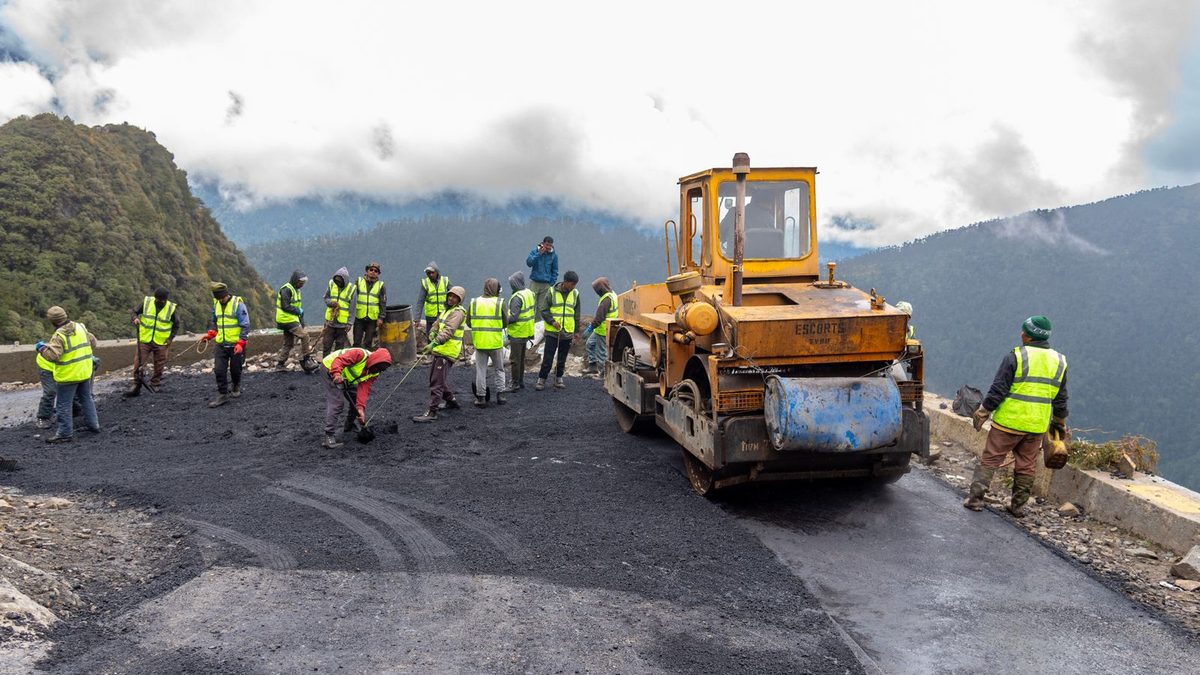
The construction stage begins
Executive works have begun on the roads serving Wakan and Al Qurah in Wadi Mistal, within Nakhal in South Al Batinah Governorate, according to reports published on 10 November 2026. The project comprises a 6.5-kilometre main road and a 2.2-kilometre connecting road, giving a combined length of 8.7 kilometres. Its reported value exceeds OMR6 million. These are the dimensions of a project entering execution, not a notice that a newly completed road is already open to visitors.
That stage distinction should guide how the news is used. Residents can follow a defined infrastructure improvement for their communities, while travellers should keep the future project separate from the arrangements available for a journey now. The reporting does not provide a completion date or a detailed construction traffic plan. It would therefore be premature to assign a finishing month, promise unrestricted movement or advertise a specific new access experience on the strength of the announcement alone. Current conditions remain a separate practical question.
Drainage belongs in the central story
The planned accompanying works include 260 lighting poles and 27 box culverts for wadi and stream drainage. The reports explicitly connect those components with the area’s geographical and mountain conditions. They should not be treated as decorative extras beneath the road-length headline. A road must operate within its terrain, and water management is one part of that relationship. The announcement identifies the planned structures but does not provide a location-by-location engineering assessment, which would be needed for more detailed claims about their performance.
For public understanding, the useful point is that access quality depends on more than a paved surface. The road, its protective features and the way it handles surrounding conditions belong to one service. A project can be explained more accurately when those connections remain visible. This is an analytical interpretation of the reported scope, not an assurance that any future route will be usable in every weather condition. Travellers still need to follow current authoritative directions whenever mountain or wadi conditions affect a planned journey.
Residents are central users
The governorate describes improved movement, access to services and links between communities among the project’s purposes. Those are everyday functions as well as tourism benefits. A resident may use the connection repeatedly for work, an appointment or a household task, while a visitor may encounter it once. Looking at both uses helps explain why the project matters beyond an attractive destination image. The announcement does not quantify travel-time savings or household cost reductions, so those potential benefits should not be converted into invented figures.
A hypothetical household evaluating the future route would ask whether it makes a recurring journey more dependable, not only whether the road looks improved. That question includes the approach, the connection to the destination and the arrangements during construction. The example illustrates a way to assess practical value; it is not a report about the experience of a named family. Later updates could usefully connect completed sections with the movements they enable, giving residents information that is more actionable than a single aggregate completion percentage.
Visitor access and village life
The governorate also links the project with tourism and local economic activity. Better access can make a place easier to include in a trip, but the village remains a lived environment rather than an attraction detached from its residents. The analytical question is how an increase in accessibility fits the community’s ordinary activities. The road announcement does not establish a visitor-management programme or a new capacity figure. Those matters would require their own information and should not be assumed from the construction scope.
For a tourism operator, the useful response is to monitor actual access and maintain accurate guest information. A hypothetical excursion should be built around confirmed conditions and the activities that are genuinely arranged, with enough flexibility if construction changes the approach. A future improvement is not a reason to promise present access that has not been verified. Equally, the project should not be described as a closure notice when the sources merely report work beginning. Accurate distinctions help both the visitor and the community avoid expectations unsupported by the announcement.
Delivery requires several kinds of attention
The governor’s comments emphasise coordination among relevant authorities and implementation to approved technical specifications. That is important because delivery quality depends on how the works fit together, not solely on their individual completion. Lighting, drainage and the connecting road should serve the same overall movement. This article does not audit the design or contractor’s work. It identifies a practical standard for subsequent reporting: explain what has been built, how it connects and whether it has reached the stage at which people can use it.
Maintenance will become another question once the asset operates. A new road’s usefulness continues through attention to its surfaces, lighting and drainage structures over time. This is a general infrastructure consideration rather than an announced maintenance contract for Wakan and Al Qurah. It matters because the public experiences the road as an ongoing service, while construction is a time-limited project. Separating those two perspectives helps explain why a successful opening is an important milestone and also the beginning of a longer responsibility for dependable access.
Follow the route through its real stages
The immediate development is a start of works on a defined route package in Nakhal. The next useful notices would clarify progress, any relevant temporary arrangements and eventual opening details. Each should be assessed on its own date and content rather than inferred from an older travel description. For someone planning a visit, the news is a reason to keep information current. For residents, it provides a concrete project to follow through the stages that turn planned infrastructure into a usable connection.
Wakan and Al Qurah’s road project is significant because it combines access, community connectivity and the features needed to work within a mountain setting. The 10 November announcement establishes its scope and execution stage. Its eventual value will be clearer when the route is delivered and the movements it supports can be observed. Until then, careful reporting can recognise the investment and intended benefits while keeping construction, current travel conditions and future opening information distinct. That gives users a practical understanding rather than a promise the evidence cannot yet support. Gabriel Nicolaev – CyGuru
Gabriel Nicolaev – CyGuru
Sources & further reading
Times of Oman / ONA: start of works and project scope, 10 November 2026
Al Roya: Nakhal road package, drainage and lighting, 10 November 2026