
UAE / Latest News
UAE Says All 22 Rescued From Sea of Oman Cargo-Ship Fire Are in Stable Condition
The National Guard’s 8 November update confirmed first aid and transfer to the relevant authorities. The verified account establishes the rescue outcome; it does not establish the fire’s cause or connect the vessel to other maritime incidents.
The confirmed outcome is a complete rescue
The UAE National Guard said on Sunday, 8 November, that all 22 crew members rescued after a cargo-ship fire in the Sea of Oman were in stable condition. The Coast Guard Division received a report from the vessel’s crew, located the ship and carried out the rescue, according to the update published by Emirates News Agency. Those rescued were of Arab nationalities. They received first aid and were handed over to the relevant authorities. The published account does not identify their individual nationalities.
The update supplies an important distinction between the operation and the condition of the people involved. An initial announcement reported the rescue; the later statement confirmed their stable condition and described the response sequence. MyGCCNews’s analysis below addresses what can responsibly be inferred from that verified sequence. It does not assign a cause to the fire, identify an unnamed vessel or treat events elsewhere in the surrounding waters as evidence about this ship without a confirmed connection from the relevant authorities.
A distress report began the response
The official sequence starts with a report from the ship’s crew. That detail matters because it identifies the link between people experiencing an emergency and responders able to act on it. The account says specialised teams responded, located the vessel and rescued those aboard. It does not publish an exact response time, so phrases suggesting a particular number of minutes would go beyond the available evidence. Nor does it provide coordinates that would allow readers to reconstruct the precise route taken by the response teams.
In general maritime operations, useful emergency information needs to reach the people coordinating assistance clearly enough to support a response. That is a general operational observation, rather than a description of the messages exchanged in this incident. The public statement does not disclose the communications channel, the equipment used or what the crew did before the report. A careful account can recognise the importance of the distress notification without inventing a detailed scene of events on the bridge or aboard the responding craft.
Stable condition is the stated medical position
The National Guard’s later update says the rescued crew received first aid and were in stable condition. That is the medical description provided in the public account. It should not be expanded into a claim that nobody sustained an injury, that no further assessment was needed or that everyone immediately resumed work. Stable condition and absence of all injury are different statements. Readers seeking information about a particular person would need confirmation from a relevant authorised contact rather than relying on a general news report.
The handover to the relevant authorities also marks a point beyond which the published rescue account provides little detail. It does not name a hospital, describe treatment or give a timetable for onward arrangements. Respecting that boundary improves the usefulness of the report: families and employers can distinguish a verified general outcome from information that remains specific to the individuals involved. The announcement is reassuring about condition, but it is not a substitute for an individual welfare update or for subsequent official information.
The cause and the ship’s identity remain separate questions
The verified statements reviewed for this report do not establish what caused the fire. They also do not give the vessel’s name, flag, cargo, exact location or the extent of damage. Those omissions limit what can be concluded. A cargo-ship fire may prompt questions about operations, equipment and emergency procedures, but the existence of those questions is not an answer. Naming a likely cause because it fits a wider narrative would turn an incomplete public record into a misleading explanation of a specific event.
The same discipline applies when other maritime reports circulate on the same day. Similar geography, timing or a matching crew count does not establish that two reports concern the same vessel. A verified connection would require identifying evidence or an authoritative statement. This matters for readers in the UAE’s maritime community because mistaken identification can affect welfare enquiries and commercial decisions. It also matters to the general reader: several different stories can appear together in a search result without forming one continuous incident or sharing a cause.
Why accurate identification has practical value
A ship operator, cargo owner or service company assessing whether an incident affects its activity needs to establish the specific vessel and movement involved. General reporting can alert a business to seek information, but it cannot determine contractual consequences where essential identifiers are absent. The responsible response is to consult the relevant operational channels and records. This is an explanation of information quality, not a finding about losses, disruption or liability in this case; the rescue announcement does not quantify any such commercial effect.
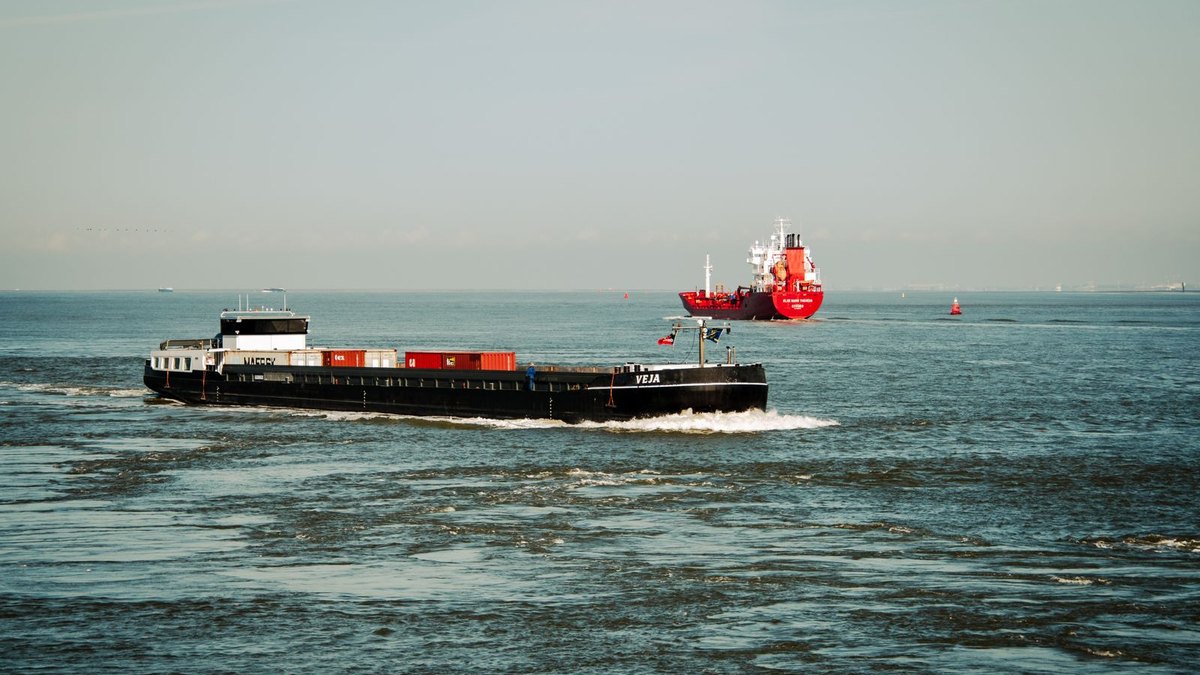
Public readers can apply a simpler version of the same method. Check the date of the statement, the institution issuing it and which facts are actually attached to the incident. Distinguish a rescue image from a file photograph, and a confirmed location from a broad description of a waterway. An illustrative picture may help explain the maritime setting, but it cannot establish what happened aboard an unnamed ship. Clear labels are particularly useful when an older or unrelated image is visually plausible enough to be mistaken for current evidence.
What remains to follow
Further useful information, if released, would clarify the vessel’s identity, the circumstances of the fire and the status of the ship after the people aboard were brought to safety. Those are reporting questions, rather than predictions that a particular authority will issue a specific update. The existing statements already establish the central human outcome: 22 people were rescued, received first aid and were reported stable on 8 November. Any later account should preserve that date and explain clearly what new information has been added.
For the week beginning 9 November, the most accurate headline is therefore the confirmed welfare result. It recognises the Coast Guard’s operation while maintaining a firm boundary around what has not been disclosed. The value of maritime reporting is not only speed; it is keeping people, ships, locations and events correctly identified. In this case, the evidence supports a successful rescue and a stable-condition update. It does not yet support a wider causal account of the fire or its possible consequences. Gabriel Nicolaev – CyGuru
Gabriel Nicolaev – CyGuru