
UAE / Business
DEWA–Dell Agreement Puts Grid Resilience and Recovery Ahead of Technology Claims
A memorandum announced on 8 November explores cyber resilience, smart-grid modernisation and edge computing. The next test is whether reference designs and pilots can improve recovery and monitoring while working with the utility’s existing systems.
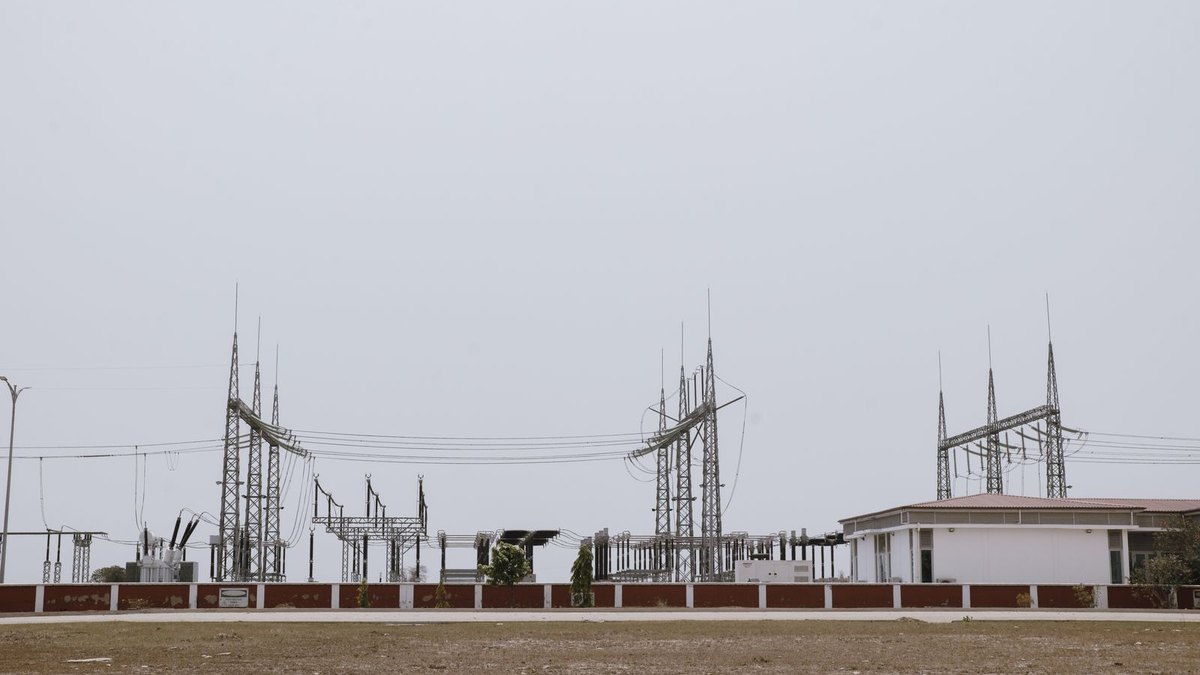
An exploration framework, with operational ambitions
Dubai Electricity and Water Authority has signed a memorandum of understanding with Dell Technologies to explore cooperation on cyber resilience, business continuity and the modernisation of smart-grid infrastructure. Emirates News Agency reported the agreement on Sunday, 8 November. Its stated scope includes artificial intelligence, data management and edge computing. The announcement establishes a framework for exploring cooperation; it does not announce completion of a network-wide deployment or publish measured improvements in the service delivered to Dubai’s electricity and water customers.
The parties intend to explore reference designs and pilot projects involving the grid, substations and operations, including monitoring, control, recovery and compatibility with existing platforms. MyGCCNews’s analysis is that these operational terms provide a better way to judge the initiative than the number of technologies attached to it. The useful question is whether a tested design helps people recognise a problem, retain control and restore a service under defined conditions, while avoiding new dependencies that are difficult to maintain.
Why recovery belongs beside prevention
In infrastructure operations, prevention and recovery answer different questions. Prevention asks how a disruption might be avoided; recovery asks how essential functions can continue or return if that effort is insufficient. A credible programme needs both. The announcement’s emphasis on cyber and operational resilience therefore points towards an evaluation based on actual service processes. This interpretation does not imply that DEWA has suffered a particular incident, nor does the release report a new attack or disclose a specific weakness in its systems.
A useful hypothetical pilot might test how operators retain visibility when a communications link becomes unavailable, or how a replacement component is brought into service without losing trusted information. Such a test would need an agreed baseline and a defined acceptance threshold. Without those, an impressive demonstration can show that a product works in ideal conditions while revealing little about its behaviour during a difficult day. The distinction matters to a utility because success is continuity of a public service, rather than success of a presentation.
The value and responsibility of field computing
The announced scope includes exploring hardened edge-computing infrastructure and centralised management of remote or field sites. At a conceptual level, edge computing places processing closer to the equipment generating information. That can change how an operator handles local data and how much it depends on a distant connection. Whether the change is beneficial depends on the job, the quality of the information and the controls around the equipment. The memorandum alone does not show where any particular design will be deployed.
Moving capability into the field also creates an operational responsibility. Devices need ownership, maintenance, controlled updates and a way to verify that their information can still be trusted. A design that works at one site must be assessed against the conditions of other sites before being repeated. For local technology suppliers, this suggests that practical integration and support may be as important as product features. That is an assessment of what implementation generally requires, rather than an announcement of new tenders or supplier appointments.
Existing systems are part of the problem to solve
Compatibility with existing platforms is specifically included in the published exploration areas. This is significant because infrastructure rarely begins as a blank page. New equipment must fit operating routines, information formats and responsibilities already in use. A modern interface can be attractive while leaving staff to reconcile incompatible records behind it. The strongest pilot would therefore demonstrate not only a new capability but also a workable connection to the systems and people who must rely on that capability during normal operations.
The same principle should guide claims about automation. A team needs to know which action a system may take, what requires human approval and how the action is recorded. If a recommendation is wrong or incomplete, staff need a clear route to question it. These are proposed evaluation questions, not controls confirmed by the release. They help separate the broad ambition to use AI from the narrower evidence required before an automated function can be trusted within an important operating environment.
Measure outcomes that operators can recognise
A practical evaluation could compare detection time, completeness of asset information, the ability to recover a defined function and the workload created for staff. Metrics should be selected for the task rather than added because they are easy to count. For example, gathering more information is not itself an improvement if operators must spend longer finding the signal they need. Any measured gain also needs to be considered alongside maintenance effort, energy use and the cost of keeping the design supported over time.
Customer benefits, if they emerge, would come through the performance of the service rather than through customers needing to understand its technical architecture. Households and businesses are interested in reliable supply, clear information and effective support. The current announcement does not set out a change to customer bills, account procedures or service contracts. Readers should therefore avoid treating the memorandum as a new consumer offer. It is an institutional exploration with possible operational consequences that still require design, testing and implementation evidence.
What the next announcement should establish
The most informative follow-up would identify a pilot’s defined purpose, the operating conditions tested and the evidence used to decide whether it should expand. A named project without these details would show movement but not necessarily effectiveness. It would also help to distinguish a technology trial from a procurement decision and a procurement decision from an operational rollout. None of those stages should automatically be treated as proof of the next, particularly when service continuity depends on careful integration with an existing network.
For Dubai’s business community, the agreement is a signal that utility resilience is being addressed through partnerships spanning digital and physical operations. Its commercial significance will depend on what the exploration produces, how that work is verified and whether useful results can be maintained. The central test is straightforward: can the system help an operator deliver and recover an essential service more reliably under real conditions? The 8 November memorandum opens that question; subsequent evidence must answer it. Gabriel Nicolaev – CyGuru
Gabriel Nicolaev – CyGuru
Sources & further reading
WAM: DEWA–Dell memorandum and exploration areas, 8 November 2026
DEWA official announcement on LinkedIn