
Oman / Living
Ruwi’s Souq Al Mal renewal reaches 40 per cent, combining commercial streets with space to walk and stay
Muscat Municipality’s 8 November update puts the Souq Al Mal neighbourhood project at 40 per cent completion. The planned mix includes planting, lighting, a two-kilometre walkway and a pedestrian bridge, with the full public-space outcome still dependent on delivery.
The progress update
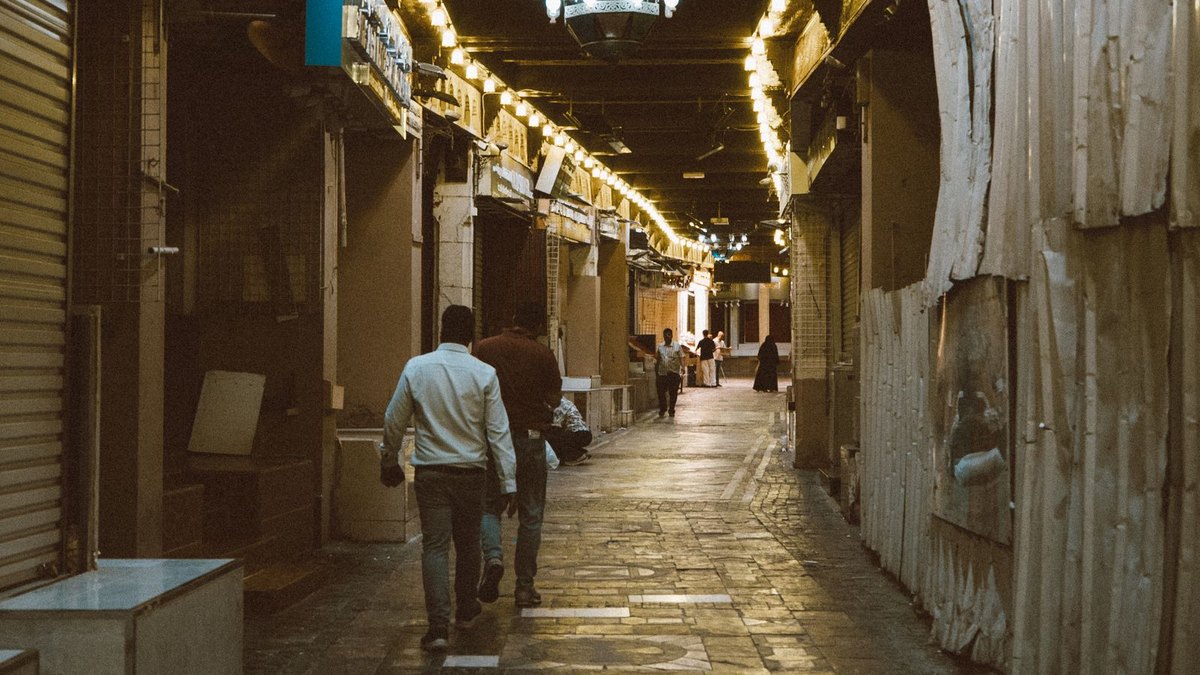
Muscat Municipality is implementing the development and beautification of Souq Al Mal, the business-district neighbourhood in Ruwi within Muttrah wilayat. In reports published on 8 November 2026, project engineer Basma bint Salim Al Yousufi put completion at 40 per cent. The reported scope exceeds 290,000 square metres. The update is about a project in progress: it does not say that the complete set of planned facilities has opened or that every part of the neighbourhood has already been transformed.
That status matters to anyone planning a visit or assessing the project’s wider meaning. A progress figure describes delivery, while the quality of the eventual place will depend on how its components work together. Ruwi’s commercial setting makes the question practical: can a renewal support the everyday movement of people who already use the district while giving others a reason to spend time there? The announcement establishes the proposed ingredients, but the answer will emerge through completion and use rather than through the percentage alone.
A mix of movement and staying
The published plan includes a two-kilometre walkway, a dedicated running and cycling track and a pedestrian bridge connecting the two banks of the wadi. Seating, an outdoor retail kiosk, restrooms and a children’s play area are also described. Together, these elements point to more than a visual treatment of the streetscape. They combine reasons to move through the area with reasons to pause. That mix can be valuable in a business district, provided the connections and day-to-day operation make the elements usable together.
A hypothetical worker using the district at the end of the day may value a direct walking connection and somewhere to sit. A family may care more about the relationship between the play area, seating and restrooms. A person making a quick commercial visit may simply need a clear path to the relevant shop. These are different uses of the same environment. The analytical challenge is to accommodate them without assuming that a single attractive feature will answer every need or that all users will follow the same route.
Planting and lighting need an operational reading
The reports identify more than 260 trees and the installation or replacement of over 290 street-lighting units, alongside pavement and interlock works. Those are useful scope indicators, but they do not by themselves describe the experience at every point along a route. The location of planting, the relationship between lighting and footpaths and the continuity of surfaces all affect how the finished space functions. The announcement does not publish a detailed shade study or a full accessibility audit, and neither should be inferred from the quantities.
This is an important distinction in public-space reporting. A tree count can document what is being supplied; it cannot reveal whether someone can find a comfortable place to wait at the time they need it. Similarly, a lighting count records equipment rather than the clarity of a particular approach after dark. These observations do not identify a defect in the Ruwi design. They provide a more useful set of questions for assessing the completed project than treating the number of installed elements as the final measure of success.
The bridge and the route around it
The planned pedestrian bridge is significant because it addresses a connection between two sides of the wadi rather than adding another isolated destination. In network terms, a crossing can change the usefulness of the paths on either side. Its practical effect will depend on the approaches, the places it connects and the ease with which users understand the route. The current announcement confirms the bridge as part of the scope; it does not provide an opening date or detailed operating instructions for that component.
A useful way to evaluate a future visit is to trace the complete journey, from arrival to the intended activity and back. That includes the point where a person leaves a vehicle or another transport service, the approach to the walkway and the connection to a shop or seating area. A route that looks continuous on a plan can still require attention at its edges. This is a hypothetical evaluation method, not a description of current conditions or a claim that the project has an unresolved crossing problem.
Commercial renewal requires usable public space
The municipality identifies economic and social revitalisation, commercial appeal and improved quality of life as objectives. The causal link should be understood carefully. Better public space can make a district more inviting and easier to use, but it does not establish a guaranteed increase in sales, rents or visitor spending. Those outcomes depend on many factors, including the businesses themselves and the way the area is managed. The announcement reports a public investment programme, not a forecast of financial returns for individual properties.
For a local business, the useful preparation is operational. How can customers find the entrance during works? Does the information supplied match the current route? Once nearby facilities open, is there a practical way to relate the business offer to the people using them? These are examples of business questions prompted by renewal, not instructions issued by the municipality. They shift attention from waiting for beautification to create demand toward understanding how an existing business might serve a changing pattern of movement and time spent in the district.
What the next update should clarify
Future notices will be most useful when they distinguish construction progress from public availability. Readers need to know which elements are complete, which routes can be used and what remains under way. Maintenance and service arrangements will also matter once the facilities operate. A kiosk, restroom or seating area contributes to the neighbourhood only while it remains usable and understandable to visitors. These are analytical priorities for follow-up; the 8 November report does not announce a detailed operating model or a full completion timetable.
The project’s current significance lies in its attempt to combine commercial activity with movement, recreation and places to remain. At 40 per cent completion, it is a developing proposition whose practical outcome can still be followed in detail. For Ruwi, success will mean that the components form a neighbourhood people can use comfortably for different purposes, rather than a collection of attractive objects. The progress report establishes the scale and planned elements. Everyday use after delivery will establish how well those elements become a coherent public place. Gabriel Nicolaev – CyGuru
Gabriel Nicolaev – CyGuru
Sources & further reading
Oman Observer / ONA: Souq Al Mal project update, 8 November 2026
Times of Oman / ONA: scope and 40 per cent completion, 8 November 2026