
Oman / Business
Al Dakhiliyah’s OMR103 million road programme links local access with larger transport projects
An 8 November update describes road and infrastructure works worth more than OMR103 million across Al Dakhiliyah. The programme combines neighbourhood connections and major routes, with different completion stages and several longer projects still ahead.
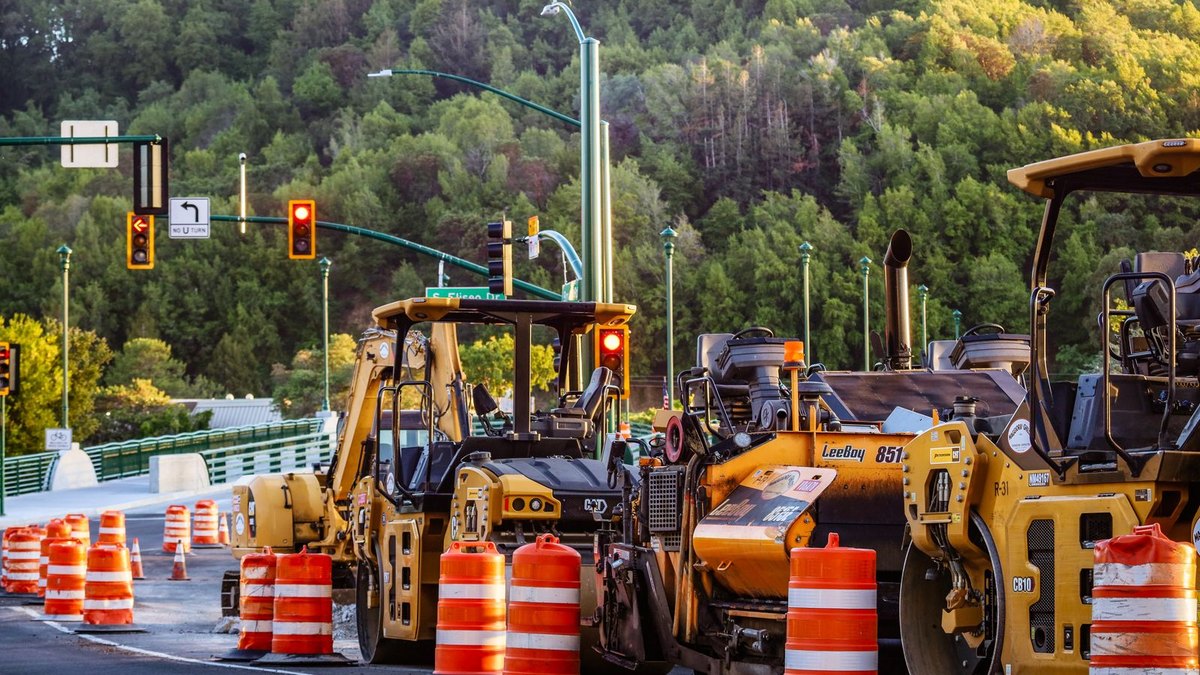
A portfolio rather than one road
An update published on 8 November 2026 puts road and infrastructure projects under implementation across Al Dakhiliyah at more than OMR103 million. The reported portfolio combines works worth more than OMR22.2 million undertaken by the governorate with ministry projects valued at approximately OMR81.6 million. These are different parts of a network, not the price of one new road. Understanding that structure is necessary before drawing conclusions about what residents or visitors can use today and what remains under construction.
The analytical distinction is between expenditure and a usable journey. A transport network becomes more useful when its links work together: the main route, the approach to a community and the final connection to a destination. A large project can improve one part while a smaller junction or internal street remains the limiting factor elsewhere. This is a general network principle, not evidence that a specific bottleneck has been overlooked. It explains why the mix of major and local works deserves attention alongside the headline investment.
Different works solve different problems
The reports describe internal roads, dualisation, mountain-road rehabilitation, improvements to wilayat entrances, maintenance and wadi drainage protection. This variety indicates that the programme is addressing several transport functions. An internal connection serves access close to home; a main-road upgrade supports movement between places; protective works address the relationship between a road and its surrounding terrain. These functions should be judged against their intended purpose rather than placed in a single ranking based only on cost or length.
For a household, a modest local improvement can matter because the same short journey is repeated frequently. For a business, reliable access can affect delivery planning and the ability of staff or customers to reach a site. For a visitor, the final approach may determine whether a destination feels straightforward or difficult to include. These are potential channels of value, not measured benefits reported in the update. They make clear why the geographic distribution and practical connections of the works are as important as their aggregate price.
Completion is not uniform
The detailed account in Times of Oman reports different completion levels across the portfolio. As two examples, it places the Izki–Nizwa dualisation at 36 per cent, with completion scheduled for March 2028, and the Jabal Shams road at 9.3 per cent, with completion expected in January 2028. Those examples establish that important works remain ahead. They should not be interpreted as a statement that the whole programme is nearly finished, or that every listed route has the same timetable.
For readers making a decision now, a percentage is a progress indicator rather than a travel instruction. A project can be partly complete without every component being open for use, and an expected completion date can remain subject to implementation. Current access information should therefore come from the relevant official notices and conditions close to the journey. Investors should apply the same discipline: an announced transport improvement can support a location assessment, but it cannot replace checking the actual access arrangements needed by a proposed operation.
The importance of water and terrain
The inclusion of drainage and protection works is especially relevant to a portfolio that extends into mountain terrain and wadi settings. Infrastructure must work within its physical environment, rather than merely cross a map. From an analytical perspective, an apparently secondary component can determine whether the wider investment remains dependable. A road surface, a retaining structure and the management of water all contribute to the same journey. The news update identifies these categories but does not provide a route-by-route safety assessment.
This is why users should keep construction news separate from assumptions about weather access or vehicle suitability. The existence of an upgrade does not remove the need to follow current directions for a particular route. Equally, the importance of protective works should be discussed without implying that a newly announced project can eliminate every natural disruption. Sound infrastructure planning manages identified conditions and constraints. Public understanding improves when reporting explains that purpose rather than suggesting that higher expenditure makes geography irrelevant.
Economic usefulness depends on connections
The governorate’s stated objectives include access to services, stronger links between communities and support for economic and tourism activity. The mechanism is plausible, but the benefits are not automatic. A tourism business, for example, still needs a workable offer, clear directions and operating arrangements that fit the visitor’s trip. A road can make that activity easier to reach; it does not create demand by itself. This distinction helps businesses use infrastructure news as one input in planning rather than as proof of a guaranteed market.
A hypothetical supplier assessing a site in Al Dakhiliyah should therefore test its own delivery chain. Where do vehicles enter, where can they turn, which connection is available during construction and how does that fit the customer’s requirements? A household would ask a different set of questions about access to daily destinations. Neither exercise needs to dispute the value of the programme. Both simply translate a regional investment announcement into the specific route and timing that determine whether it is useful to a particular user.
What to watch next
The most useful follow-up will distinguish contract announcements, construction progress and actual openings. It should also connect a completed section to the wider journey it serves. A short opening notice can be more actionable than a large portfolio total when it tells users which movement has become possible. For programme assessment, the relevant questions concern delivery quality, coordination and the continuing condition of the assets after completion. Those are analytical priorities for future reporting, not additional commitments established by the current update.
The 8 November account is significant because it presents Al Dakhiliyah’s road development as a connected portfolio extending from local streets to larger routes. Its value should be read through that combination, with careful attention to project stages. The headline establishes the scale of investment. The practical result will emerge through reliable connections between homes, services, workplaces and destinations, supported by maintenance and protection that continue after construction. For residents and businesses, that is the point at which infrastructure spending becomes an improvement in the journeys they actually make. Gabriel Nicolaev – CyGuru
Gabriel Nicolaev – CyGuru
Sources & further reading
Times of Oman: portfolio, project progress and expected completion dates, 8 November 2026
The Arabian Stories / ONA: Al Dakhiliyah road programme, 8 November 2026