
Qatar / Latest News
Doha Opens Diplomatic Training Forum With Independent Judgment at the Centre of the AI Debate
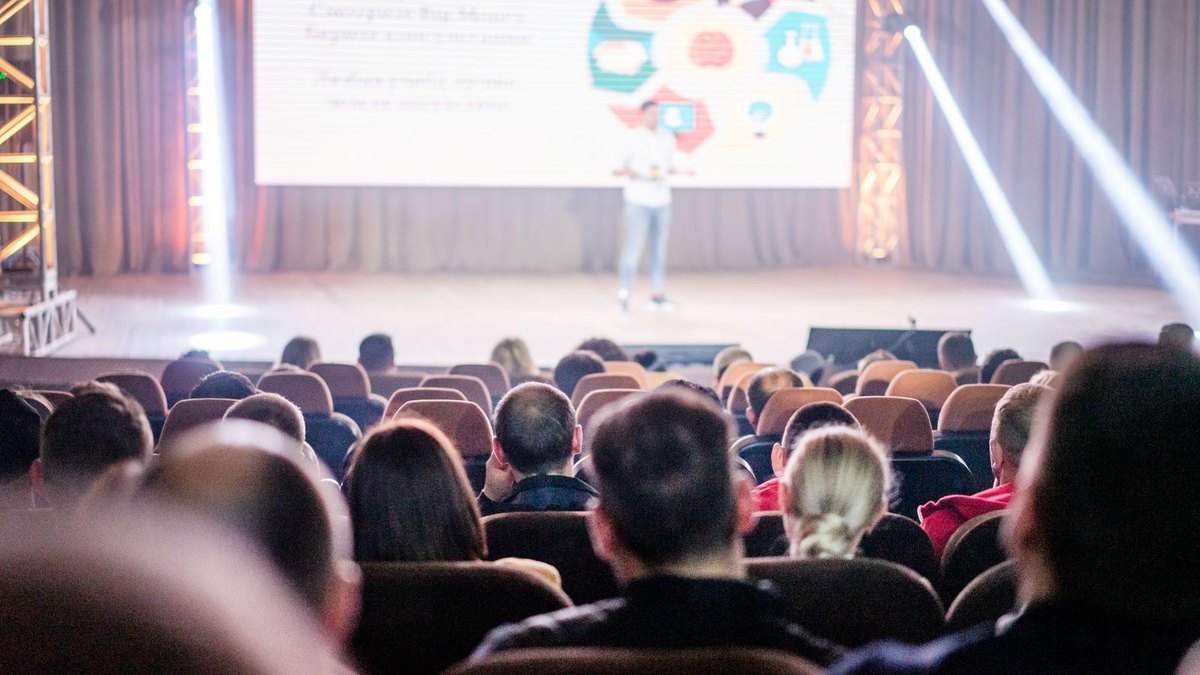
The 52nd International Forum on Diplomatic Training opened its formal proceedings in Doha on 9 November and runs through 11 November. The opening discussion linked simulation, continuous learning and AI use with a diplomat’s responsibility to exercise independent professional judgment.
Formal opening and programme dates
Qatar News Agency dates the opening to Monday, 9 November, and identifies the Ministry of Foreign Affairs’ Diplomatic Institute as organiser. The forum’s own website lists the wider meeting period as 8–11 November. Those dates can coexist: the programme window and the formal opening are not necessarily the same event. The accurate news formulation is that the formal proceedings opened on Monday within a meeting that continues through Wednesday, rather than rewriting the source dates to make them appear identical.
The event brings together leaders of diplomatic academies and training institutions under a theme concerned with preparing diplomats for a changing world. Speakers included the Diplomatic Institute’s director, Abdulaziz bin Mohammed Al Horr, and keynote speaker Hamad bin Abdulaziz Al Kawari. The opening establishes a professional exchange, not an announcement of a new public course that anyone can immediately join. Readers seeking study or employment opportunities need separate information about actual programmes, eligibility and application arrangements.
Knowledge must work under pressure
Al Horr’s opening remarks emphasised knowledge, cognitive flexibility and the ability to assess complex situations. The combination matters because professional preparation is not simply the accumulation of facts about countries or institutions. A diplomat can know a rule yet struggle to decide what it means when information is incomplete, interests conflict and time is limited. Training has to create a bridge between understanding a situation and choosing an action for which the official can explain the reasoning and accept responsibility.
This is why the opening’s attention to experiential learning is more than a teaching preference. A practical exercise can reveal whether participants notice a missing fact, distinguish an instruction from an assumption or recognise when to seek clarification. The value is not that a simulation perfectly predicts a future crisis. It is that a protected learning environment can expose weaknesses before a real decision carries consequences. These are analytical implications of the discussion, not claims about a published evaluation of the forum’s participants.
AI support does not remove accountability
The opening report specifically pairs conscious use of AI with preserving independent professional judgment. That is a useful boundary for any knowledge-intensive public role. A tool can help organise material or suggest a possible interpretation, but an official must still establish whether the source is sound, the context is current and the conclusion fits the task. The fact that an answer is fluent does not establish that the institution can rely on it in a sensitive exchange.
For training institutions, the corresponding challenge is to teach a review process rather than only access to software. Participants need to identify what the tool was asked to do, which evidence supports its output and which parts remain uncertain. Sensitive information also requires the institution’s own handling rules. The forum’s opening does not announce a single technical standard or a licence to use any application. It raises the professional question of how assistance can improve work while responsibility remains clearly assigned.
Cultural understanding is a working capability
The programme includes cultural diplomacy and institutional exchange, according to the opening account. These can be understood as working capabilities rather than ceremonial additions. Negotiation depends partly on recognising how another party understands status, commitment, timing and public language. A technically accurate message may still be misread if the speaker ignores those conditions. Training across institutions offers an opportunity to compare professional habits and expose assumptions that remain invisible within one national system.
That does not require treating every disagreement as a cultural misunderstanding. Interests can be genuinely opposed, and a well-trained official needs to recognise that too. The useful distinction is between a conflict of objectives and an avoidable failure of communication. A forum of training leaders can examine how to prepare people for both. This is especially relevant when future diplomats will move between bilateral talks, multilateral settings and public communication, where the same words may reach very different audiences.
A draft declaration remains a draft
Al Horr expressed hope that a draft Doha Declaration would help shape shared commitments on diplomatic training. The status matters: the opening report does not establish the final adoption of a text, its detailed provisions or an implementation timetable. A reader should therefore distinguish an agenda-setting ambition from a completed institutional decision. The next useful document would be the actual agreed text, if adopted, together with an explanation of which institutions intend to act on it.
Even a final declaration would be a beginning rather than a substitute for delivery. Training changes become visible through revised curricula, joint exercises, professional exchanges and assessment methods that test useful skills. Those outcomes require follow-up beyond a conference report. For observers in Qatar, the value of hosting the forum can therefore be assessed in two stages: the quality of the current professional exchange and the specific working relationships or teaching changes that institutions subsequently develop.
What the meeting adds to Doha
For Qatar’s diplomatic community, the forum creates a concentrated opportunity to examine how other institutions prepare officials for uncertainty. Its practical value lies in the comparison of methods, not the assumption that one model fits every foreign service. A training approach must reflect the role, responsibilities and conditions in which a diplomat works. International exchange can improve those choices when institutions are willing to examine their own weaknesses as carefully as they present their strengths.
The opening’s strongest message is that new tools and changing crises increase the need for professional judgment rather than making it optional. The forum runs through 11 November, with the subsequent record still needed to establish any final commitments. For now, the verified development is a formal gathering of training institutions in Doha, placing simulation, continuous learning and accountable use of technology within the same conversation about the diplomat’s work.
Gabriel Nicolaev – CyGuru
Gabriel Nicolaev – CyGuru
Sources & further reading
QNA: formal opening on 9 November
IFDT: Doha meeting dates and forum background