
Kuwait / Explore
Fifteen Photographs Reach Kuwait’s Al-Baghli Exhibition as Family Care Becomes a Visual Subject
An exhibition held on Sunday brings 15 qualifying photographs from the Al-Baghli Dutiful Son Award competition into view. The collaboration between Kuwait’s photographic society and the charity uses artistic practice to explore filial devotion and community values.
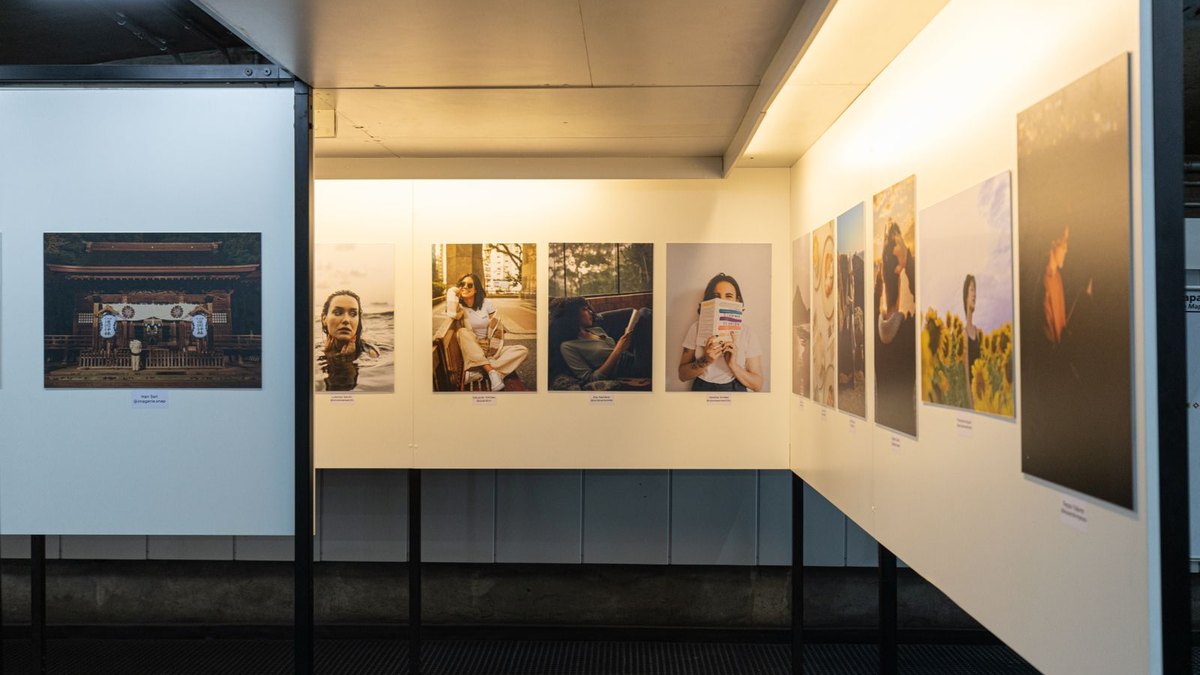
The exhibition followed a selection process
The Kuwait Society for Photographic Arts hosted the Al-Baghli Dutiful Son Award photography exhibition on Sunday, 8 November, according to reports published on 9 November. Twenty-three photographers submitted work, and 15 photographs qualified for the exhibition. These figures describe different things: the number of participating photographers and the number of selected images. They do not establish that precisely 15 people qualified, that every participant submitted one photograph or that the exhibition itself announced a final ranking of award winners.
The event was organised jointly by the society and the Ibrahim Taher Al-Baghli charity, with chairman Ibrahim Al-Baghli attending as patron. The stated purpose combines support for photographic talent with the expression of human and social values, particularly filial devotion and loyalty. The news is therefore both cultural and civic. It records an exhibition that took place on Sunday, rather than an unverified future opening or a published public visiting schedule that readers can assume continues indefinitely after the report appeared.
A social value becomes a question of attention
Photography gives an abstract value a visible form. Family care can be discussed through speeches, but an image asks where attention is directed: towards a gesture, a relationship, a shared space or an expression. That is an editorial reading of why the competition’s subject matters, not a description of any particular photograph that has not been examined. The sources establish the theme and the selection; they do not justify inventing scenes or assigning an emotional story to an unseen image.
For viewers, the useful question is how an image makes the relationship legible. Is meaning carried by the people, their distance from each other, the surrounding environment or the timing of the moment? These are ways to look, not claims about the judges’ scoring criteria. They allow a visitor to engage with the work as photography as well as with its declared message. A socially meaningful subject does not remove the artistic decisions through which the subject becomes something the audience can actually see.
Care is larger than a ceremonial moment
The competition’s focus offers an opportunity to think beyond the most easily photographed expression of affection. In everyday life, care often includes repeated tasks, listening, coordination and the willingness to give time. This observation does not establish which aspects appear among the selected works. It explains why the subject can support a serious artistic inquiry: relationships are made not only through exceptional occasions but also through ordinary actions whose importance may be difficult to communicate in a single frame.
That creates a challenge for any photographer approaching a social theme. An image must be clear enough to communicate while leaving room for the people depicted to remain individuals rather than symbols. A strong viewing conversation can ask what the picture reveals and what remains outside the frame. It need not assume that one moment represents the whole life of a family. The exhibition’s reported civic purpose is compatible with this more careful reading, where appreciation of the theme does not require oversimplifying the experience behind it.
Selection and recognition serve different roles
An exhibition creates visibility for work that has passed a selection stage. A final award, where one is separately announced, would identify another form of recognition. Readers following the competition should keep these stages distinct. The reports reviewed give the number of qualifying photographs and explain the collaboration behind the display; they do not provide a verified winners’ list that this article can responsibly reproduce. The value of reaching an exhibition can still be understood without converting qualification into a prize that has not been established.
For emerging photographers, selection can matter because work enters a shared cultural setting and is encountered beyond the photographer’s own circle. That is a general explanation of the opportunity an exhibition can create, not a promise of commissions, income or future recognition for these participants. The useful local perspective is that a photographic association and a civic institution are collaborating around a defined theme. Any later announcement about winners, further displays or participation would be a fresh development with its own details to verify.
How to discuss the subject without flattening it
Families, teachers and photography groups can use the reported exhibition theme as a starting point for conversation, while avoiding assumptions about households they do not know. A discussion might distinguish an image’s composition from the viewer’s personal response and from the stated purpose of the competition. Those are connected but different levels. A person may be moved by the subject while still asking how the picture was made, or may appreciate visual craft without claiming to understand every relationship shown.
This also keeps the conversation constructive for younger viewers. Instead of treating the theme only as a lesson delivered to them, adults can invite them to identify forms of help they notice in daily life and consider how a photographer might represent them respectfully. This is a suggested educational approach, not an announced school programme associated with the competition. It requires no invented curriculum or public booking arrangement. The point is to move from a broad value towards specific observation while retaining the dignity and complexity of the people involved.
What the local cultural development establishes
The immediate fact is a completed exhibition event with 15 qualifying photographs, supported by a collaboration intended to encourage talent and express community values. Readers wishing to attend any continuing display should verify current arrangements directly with the organisers; the reports do not establish opening hours, an end date or a ticket policy. The date of a news article is not an assurance that an event remains accessible at the time a reader plans to travel. Those practical details need a current source.
The broader significance is the connection between a local artistic community and a subject rooted in everyday social relationships. Its value does not depend on claiming that an exhibition alone changes family behaviour. It creates an occasion to look more carefully at how care is represented and discussed. The next useful information would clarify any continuing access or subsequent competition results. Until then, the reported selection gives a specific cultural development to recognise while leaving the images themselves, rather than invented descriptions, at the centre of the artistic encounter. Gabriel Nicolaev – CyGuru
Gabriel Nicolaev – CyGuru
Sources & further reading
Kuwait Times/KUNA: photography exhibition
Times Kuwait: fifteen qualifying photographs