
Oman / Explore
Birdwatching in Oman works best when the habitat sets the terms of the visit
Oman’s wetlands offer a way to observe how birds use water, feeding grounds and shelter. A rewarding visit begins with verified access and patient observation. This feature explains how to plan around habitat needs, including the current closure of Al Ansab’s visit-booking form.
Watch a place, not just a species list
A birdwatching visit can become a race to collect names, yet the more rewarding question is how birds use a place. Where do they feed, where do they pause and how do they respond to a change around them? Oman’s wetland settings offer a way to observe those relationships without requiring every visitor to become an expert identifier. This is a practical nature feature, not a live sightings bulletin. It does not promise a particular species on a particular day or imply that every wetland is open for unarranged public access.
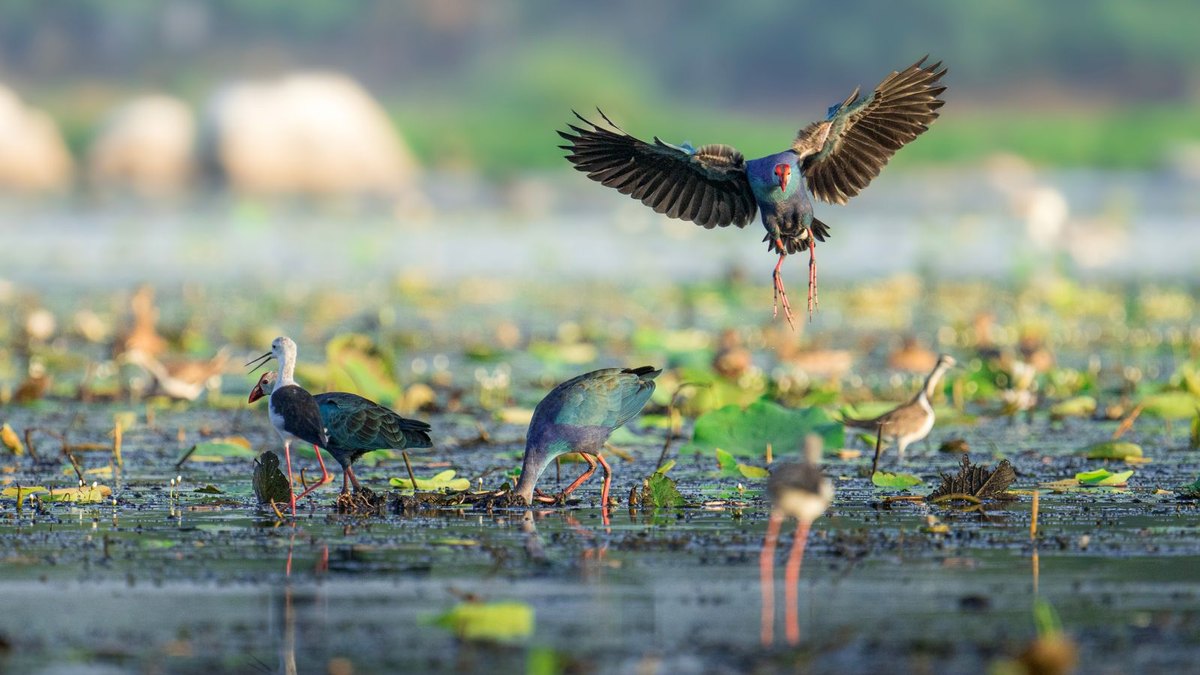
The Convention on Wetlands identifies Al Ansab as a Wetland of International Importance and describes both birdwatching and long-term monitoring among its roles. That primary-source account is useful because it connects a visitor experience with the ecological and educational function of the site. A wetland is not simply a background against which a bird appears. Water, vegetation, feeding opportunities and relative shelter form the environment that makes observation possible. Understanding that relationship changes how a visitor evaluates success and how carefully the visit should be planned.
Access must be checked before departure
A site’s conservation importance does not establish today’s visitor arrangements. At the time of checking for this feature on 9 November 2026, Nama Water Services’ Al Ansab wetland visit form states that appointment booking is closed until further notice. This is a specific current limitation and should not be ignored because an older article recommends the site. The page does not provide a reopening date. Readers should verify any later change directly with the operator rather than assume that a historically visitable place is currently bookable.
The general planning rule is to separate the ecological destination from the permission and practical arrangements needed to visit it. A reserve, an operational site and an unrestricted public viewpoint may have different conditions. A hypothetical visitor who discovers a closed booking form should change the plan or seek authoritative clarification, not look for an informal entrance. The value of the observation never overrides access restrictions. This approach protects the site and also prevents a day’s travel from depending on an assumption copied from a dated recommendation.
Distance is a tool for better observation
The American Birding Association’s ethics code advises restraint around birds, particular caution at nests, roosts and feeding sites, and minimising habitat disturbance. These are professional birding principles, not Omani legal provisions. Their practical logic is straightforward: an observer who changes the bird’s behaviour may be undermining the very observation being sought. A closer image is not necessarily a better record if it is obtained by repeatedly advancing on a feeding bird or driving a group away from the place it was using.
A hypothetical beginner can make the visit more productive by choosing a permitted observation point and waiting rather than continually moving closer. Binoculars or a suitable lens can support that distance, but equipment does not replace judgment. If the visitor is uncertain about the effect of an approach, stepping back is a more defensible choice than testing how close it is possible to get. The aim is to see the bird continue its activity. A record of undisturbed behaviour can teach more than a dramatic image of escape.
The habitat includes what is underfoot
Attention naturally follows a bird above the water, but the observer’s own route also matters. The ABA code encourages minimising habitat disturbance and considering the value of remaining on existing trails. At a managed site, the operator’s routes and instructions should guide the visit. A seemingly empty edge can be part of the habitat rather than unused space available for a shortcut. This feature does not prescribe a universal distance or route for Oman’s different wetlands; those depend on the actual site and its authoritative visitor conditions.
Consider a hypothetical photographer who steps off a designated path to clear vegetation from the foreground. The immediate visual result may improve while the broader impact is negative. A better decision is to accept the view available from the permitted position or choose another authorised viewpoint. The same reasoning applies to leaving litter or rearranging natural material for a photograph. Birdwatching should not require the place to be altered for the observer. Its interest comes from understanding what is there, including the limitations that make a view imperfect.
Patience produces information
A species list can tell a visitor what was identified, but a short field note can preserve much more: where the bird was, what it was doing and the conditions of the observation. The visitor should distinguish a confident identification from a tentative one and avoid filling gaps with a guess. This is a general recording practice, not an invitation to publish sensitive locations. The quality of an observation depends on honesty about what was seen and what remained uncertain, rather than the prestige of the name attached to it.
For a family or a mixed-experience group, watching one bird for several minutes can be more engaging than moving rapidly between many distant sightings. One person may notice feeding, another a change in posture and another the use of a sheltered edge. These hypothetical observations create a shared question rather than a competition over expertise. They also reduce the pressure to chase a particular image. The visit becomes a way to learn how a living place functions, with identification as one part of the experience rather than its sole measure.
A rare sighting is not automatically public content
The ABA’s guidance asks birders to consider potential disturbance before publicising a rare bird and to be particularly careful around sensitive sites. Applied as a responsible observation principle, this means that a precise location should not be shared reflexively just because a photograph is exciting. A managed site may have its own reporting arrangements. A visitor can seek guidance from the operator or a relevant conservation organisation rather than turn uncertainty into a location pin that attracts others to a place unable to accommodate them.
The same restraint improves the accuracy of the story told afterward. A photograph taken in one place does not establish that the species is always present, that access is unrestricted or that another visitor will have the same experience. A useful account gives the date and the limits of the observation while respecting any site guidance. This matters in Oman, where an attractive nature image can be circulated far beyond its original context. The responsibility is to preserve the distinction between an observation, a recommendation and a promise of access.
Build a visit that can change gracefully
A good plan allows the day to remain worthwhile if a site is unavailable or the expected birds are not visible. Confirm access, choose permitted observation opportunities and keep expectations proportionate to a living environment. A hypothetical group might shorten a visit rather than force a closer approach, or replace a closed-site plan with another authorised activity. That is successful decision-making, not a failed nature trip. The point is to make a plan whose quality does not depend on overcoming restrictions or making wildlife perform on schedule.
Oman’s wetlands are most rewarding when approached as functioning habitats whose needs shape the visit. Al Ansab’s current booking closure is a concrete reminder that conservation value and present visitor access are different facts. Verified arrangements, patient distance and honest observation provide a stronger basis for enjoyment than a promised species list. The visitor’s task is not to extract the closest possible image. It is to understand more while leaving the birds and the place able to continue what they were doing before the visitor arrived. Gabriel Nicolaev – CyGuru
Gabriel Nicolaev – CyGuru