
UAE / Explore
Read the Dhow Through Its Making: Timber, Joints and the Skilled Labour Behind UAE Maritime Heritage
A traditional boat becomes more informative when it is examined as a working object rather than a decorative symbol. UAE cultural records offer a route into the knowledge, materials and relationships behind dhow building.
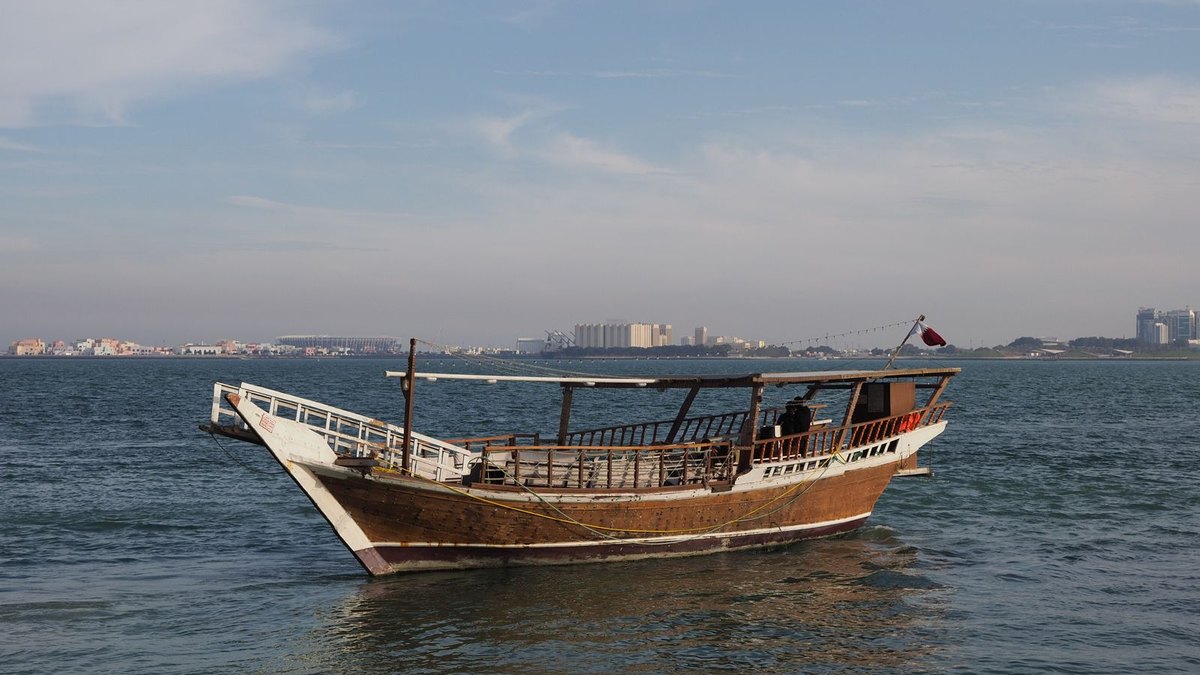
Start with the object rather than the silhouette
A dhow is easily recognised as a maritime symbol, but recognition is only the beginning of understanding. A boat also contains decisions about shape, material, joining and use. Looking for those decisions changes the encounter. Instead of asking only whether the outline is beautiful, ask what the vessel was expected to carry, how people worked aboard it and what knowledge was required to build and maintain it. The object becomes evidence of organised labour and practical judgment rather than a visual shorthand for a pre-oil past that is assumed to have been simple.
Abu Dhabi Culture’s heritage register documents traditional shipbuilding under the craft known as qallafah, pronounced locally as jallafah, and describes the shipbuilder as a qallaf or jallaf. Its maritime-life record connects boat building with fishing, pearling and trade. These official cultural sources provide the historical foundation for this feature. They do not establish that a particular working yard is open for unannounced visits or that every boat displayed today was built for the same task. The aim is a way of reading material culture, not a current access guide or an announcement of a new heritage event.
A material choice is also a practical choice
Timber is more informative when considered as part of a job. A builder must turn pieces into a hull that can perform its intended function, and the relationships between those pieces matter as much as their individual appearance. A viewer can look for the long line of the hull, the arrangement of components and where loads appear to be carried, while leaving technical conclusions to an informed guide or specialist. Observation does not require pretending to diagnose a vessel’s seaworthiness. It requires noticing that the finished form is the result of choices rather than an inevitable shape.
This approach also resists the idea that every wooden boat is materially identical. Historical period, local practice, vessel type, repairs and later adaptation can change what is visible. A museum label or cultural explanation may supply the distinction that a photograph cannot. If the source does not identify the timber or a technique, it is better to record a question than assign a confident name from appearance alone. The value of close looking is not a rapid list of technical vocabulary. It is a more precise understanding of what can be seen and what requires explanation.
Joints carry knowledge that a distant photograph loses
The heritage register explains the historical connection of qallafah with tying or stitching wooden pieces and distinguishes that concept from later use of iron nails. This is an account of changing practice, not a claim that every surviving vessel uses one method throughout. It shows why a joint can open a larger history. The viewer is looking at the meeting of materials, tools and accumulated judgment, including the need to make a structure work in water. A single wide photograph can show the hull’s scale while hiding the parts where much of the craft becomes legible.
Where close viewing is permitted, ask a guide how a particular feature works and whether it is original, repaired or reconstructed. The answer changes what the object can tell you. A reconstruction can be educational without being an untouched historical vessel, and a repair can be evidence of continued use rather than an imperfection to be ignored. These are interpretive distinctions, not an assessment of a named exhibit. They prevent a familiar mistake: treating a heritage object as if authenticity required it never to have been maintained, adapted or explained through a later intervention.
The builder belongs at the centre of the story
A vessel does not emerge from a tradition in the abstract. People select, shape, fit, inspect and correct its parts. The cultural record describes roles within the craft and the importance of careful work and credible dealings. That makes the builder more than a background figure beside an attractive hull. Skill includes the capacity to judge whether a piece is suitable, recognise a problem and make a workable correction. Some of that knowledge can be written down; some becomes clearer through demonstration and supervised practice. A finished object contains the result without automatically revealing the learning that produced it.
For visitors, this suggests a better question than asking only how many years a boat took to build. What did the maker have to learn to do well, and how was that learning assessed? A guide may be able to explain the sequence or identify a tool associated with a task. Where a craftsperson is working, conversation should respect their time and permission. A workshop is a workplace, not an open stage arranged for every camera. The opportunity to observe someone’s expertise does not remove the need to ask before entering, recording or interrupting their work.
Use connects the boat to a wider social world
The official maritime-life account places vessels within trade, fishing and pearling. Each activity involved more than the construction of a hull: people organised labour, supplied equipment and depended on knowledge of the sea. This feature does not reconstruct a particular voyage or assign a universal crew arrangement to every dhow. The analytical point is that a boat is part of a network. Its usefulness depends on people and practices beyond the yard, just as a tool becomes more intelligible when its user and task are known. A display that explains those relationships can give a visitor more than an isolated object name.
A useful museum conversation might ask what work a vessel was designed for, what information survives about its use and which parts of the account are broader historical interpretation. Those questions allow children and adults to separate evidence from imagination without stripping the story of interest. The imagination can help a viewer understand scale or effort, but it should remain labelled as imagination. If a guide describes a typical practice, it should not automatically become the documented biography of the particular boat in front of the group. That distinction keeps the object’s actual history visible.
Preservation includes the ability to explain a repair
Heritage can be preserved as an object, a skill and a body of knowledge, and those are related but different achievements. Keeping a boat on display protects one kind of evidence. Retaining the ability to explain how a component was made preserves another. Supporting practice and transmission addresses something further: whether the knowledge can continue to be used. None should automatically be substituted for the others. A visually impressive display can still leave the labour obscure, while a modest demonstration can reveal a difficult technique that visitors would otherwise fail to notice in a complete vessel.
This is why labels about construction, restoration and purpose matter. They allow the visitor to understand what has been retained and what has changed. Rather than demanding a frozen image of the past, a careful interpretation can show continuity through maintenance and adaptation. That does not mean every alteration is conservation; the responsible institution or specialist must explain its decisions and evidence. For the general visitor, the practical habit is to ask how the object reached its current state. The answer may reveal a richer history than the assumption that everything visible has remained untouched since first construction.
Build a visit around a few answerable questions
Official Abu Dhabi tourism information identifies traditional fishing and boat-building crafts among the heritage that can be explored at House of Artisans in Al Hosn. Visitors should check the institution’s current programme and opening information for the experience available on their date. A heritage reference does not guarantee a live boat-building demonstration at any particular hour. The same restraint applies to working yards elsewhere in the UAE: confirm permission and arrangements rather than treating an online photograph as an invitation to enter. Access and interpretation are part of a respectful encounter, not details to be improvised after arrival.
A thoughtful visit needs only a few connected questions: what was the boat for, how were its parts made and joined, and whose knowledge kept it usable? Those questions turn the dhow from a familiar outline into an account of materials, labour and maritime relationships. They also make room for uncertainty, repair and change without reducing the craft to a nostalgic image. UAE maritime heritage becomes more legible when the people making and maintaining the vessel remain as visible as the vessel itself. The most useful souvenir may be a better question about how something was made. Gabriel Nicolaev – CyGuru
Gabriel Nicolaev – CyGuru