
Saudi Arabia / Business
Saudi microalgae project puts desalination by-products to a commercial test
Saudi Arabia’s Water Technologies Innovation Institute is developing a microalgae project using desalination brine and carbon dioxide, according to a November 2 Saudi Press Agency report. The Rabigh initiative is a research and feasibility step, with proposed outputs still to be tested rather than treated as established production.
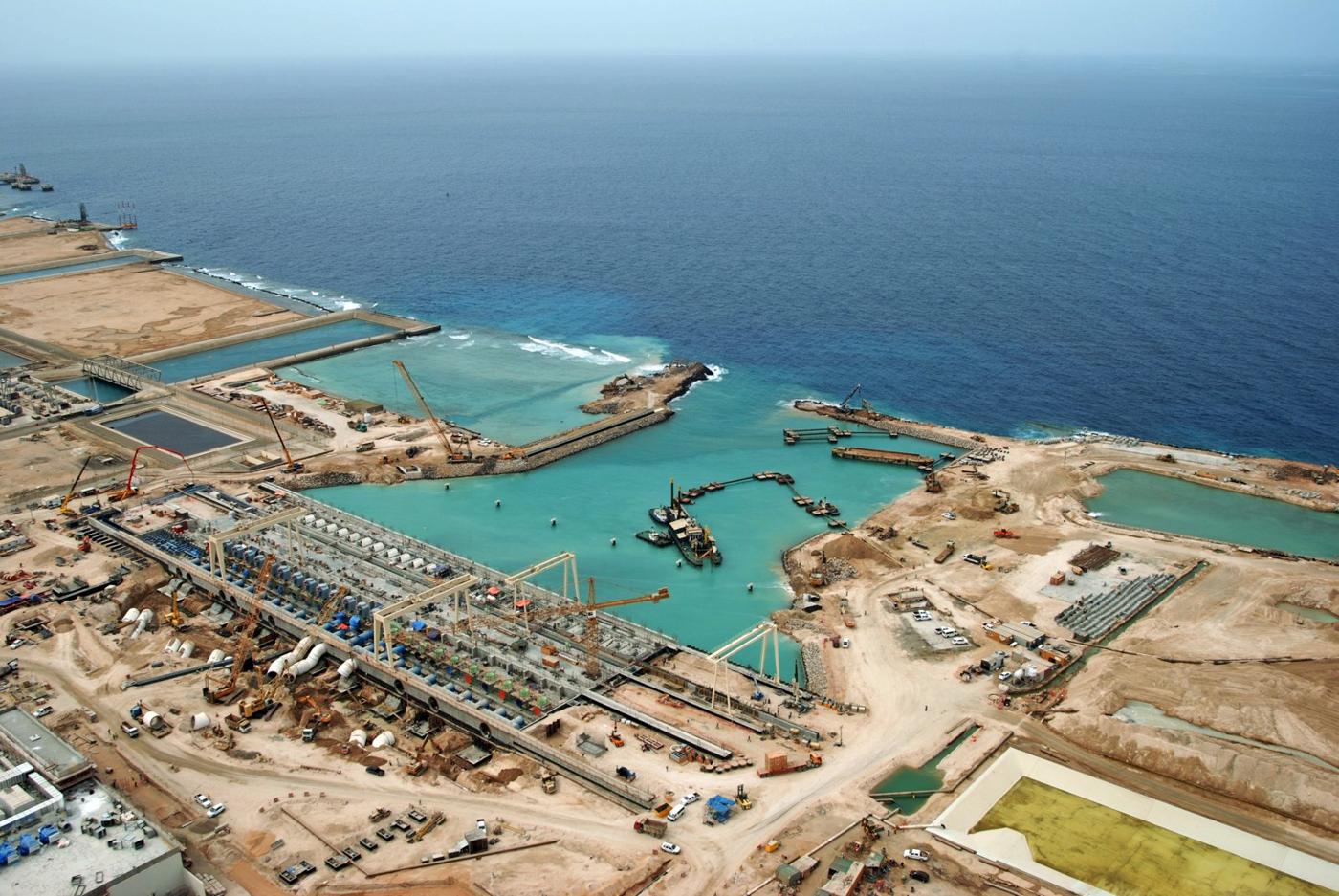
A research project with proposed outputs
The Saudi Water Authority, through its Water Technologies Innovation Institute and Research Advancements, is developing microalgae cultivation using desalination brine and carbon dioxide emissions. SPA reported the project on November 2. Preparations include an integrated cultivation environment at the Water Innovation Oasis in Rabigh, intended to examine technical performance and economic feasibility.
The disclosed annual objectives include 60 tons of microalgae for developing animal and fish feed,8,000 cubic metres of biofertilizer and 20 kilograms of materials for pharmaceutical and cosmetic applications. These figures are project targets. The announcement does not establish a commercial production start date, prove that the outputs have been achieved or confirm sales to customers.
The circular-economy proposition
The project considers whether streams associated with desalination can become useful inputs for a different production process. That is the underlying circular-economy proposition: finding an additional purpose for a material requires a process that can use it consistently, rather than simply assigning value to it in an announcement.
In practical terms, a technically successful cultivation trial would be only one part of that assessment. The resulting material must have an identifiable purpose, a repeatable specification and a plausible route to a buyer. It is the relationship between the incoming stream, the cultivation process and the final product that determines whether the concept can become commercially useful.
Why both open and closed systems matter
SPA says the institute is developing technologies using open and closed cultivation systems and studying their operational efficiency. The report does not declare one approach the winner. Keeping alternatives in the research programme allows the work to examine how different operating arrangements perform under the conditions of the intended site.
The important comparison is broader than how much biomass appears in a demonstration. A useful evaluation accounts for the resources and supervision needed to maintain output, the consistency of the resulting material and the work required after cultivation. Without those elements, two systems can appear comparable while producing very different practical requirements for an operator.
Feasibility comes before a scale-up claim
An integrated test environment can expose connections that are difficult to assess in separate experiments. Cultivation, handling and downstream processing need to function as a sequence. A problem at one stage can change the usefulness of improvements elsewhere. This is why the announcement’s emphasis on technical performance and economic feasibility deserves attention.
Investors and potential industrial partners should seek evidence about repeatability rather than relying on a single successful batch. They also need to understand which costs belong to routine operation and which arise only during research. Those questions do not diminish the project’s ambition. They are the means by which an experimental programme becomes a decision that a commercial organisation can assess.
Different products need different evidence
Feed ingredients, fertilizer and materials intended for pharmaceutical or cosmetic applications should not be treated as one interchangeable market. Each intended use raises its own questions about composition, processing and customer requirements. The announcement identifies potential application areas; it does not say that a finished medical product has been developed or approved.
For that reason, product development should be followed at the level of the actual material and its intended use. A promising result for one application does not automatically validate another. Readers should look for subsequent disclosures that explain what was produced, how it was evaluated and which stage of development it has reached. Precision is particularly valuable when a research story crosses several industries.
A wider Saudi research context
KAUST described broader Saudi algae research in an April 2026 feature, covering work on cultivation, harvesting and processing for several industrial uses. That provides relevant background to the field. It should not be read as confirmation that the university is a partner in this particular Rabigh project, which the SPA announcement attributes to the Water Authority and its institute.
The distinction matters because a developing sector can contain multiple projects with different objectives, organisations and timetables. Linking them as context helps readers understand the research landscape. Combining their results into one implied commercial achievement would be misleading. A credible account preserves the boundaries between a specific announcement and the broader scientific work surrounding it.
What would make the next update meaningful
The next useful updates would describe the establishment of the test environment, observed performance and the findings of feasibility work. Evidence about a particular product stream would be more informative than a general statement that the concept supports sustainability. Environmental benefits also need to be assessed alongside the resources required to operate the complete process.
For now, the confirmed development is a project under development with stated targets and a proposed Rabigh setting. The opportunity lies in testing whether desalination-related streams can support valuable biological production. Keeping that opportunity separate from a claim of proven industrial output gives the research room to succeed on evidence, while helping businesses and readers judge each new milestone accurately.
Gabriel Nicolaev – CyGuru
Sources & further reading
Saudi Press Agency: microalgae project report, November 2, 2026
Saudi Press Agency: Arabic project announcement
KAUST Discovery: wider Saudi algae research context, April 7, 2026
Photo credit: HUTA Group photographer
Photograph licence: CC BY-SA 4.0
Related on MyGCCNews
Saudi Arabia news and country guides