
Saudi Arabia / Business
Aramco and PIF close HUMAIN deal: the industrial test behind Saudi AI expansion
Aramco and the Public Investment Fund announced on November 1 that their HUMAIN transaction had closed. The ownership change brings industrial demand, capital and technology assets into the same AI business; the next test is converting that combination into dependable services.
What the transaction confirms
Aramco’s November 1 announcement says a wholly owned subsidiary has acquired 49% of HUMAIN, while PIF retains 51%. The transaction includes approximatelySAR 9.9 billion, or$2.6 billion, in cash contributions during 2026, alongside AI, compute and digital assets. These are the disclosed deal terms. They should be distinguished from future commercial results, which will depend on deployment and customer demand.
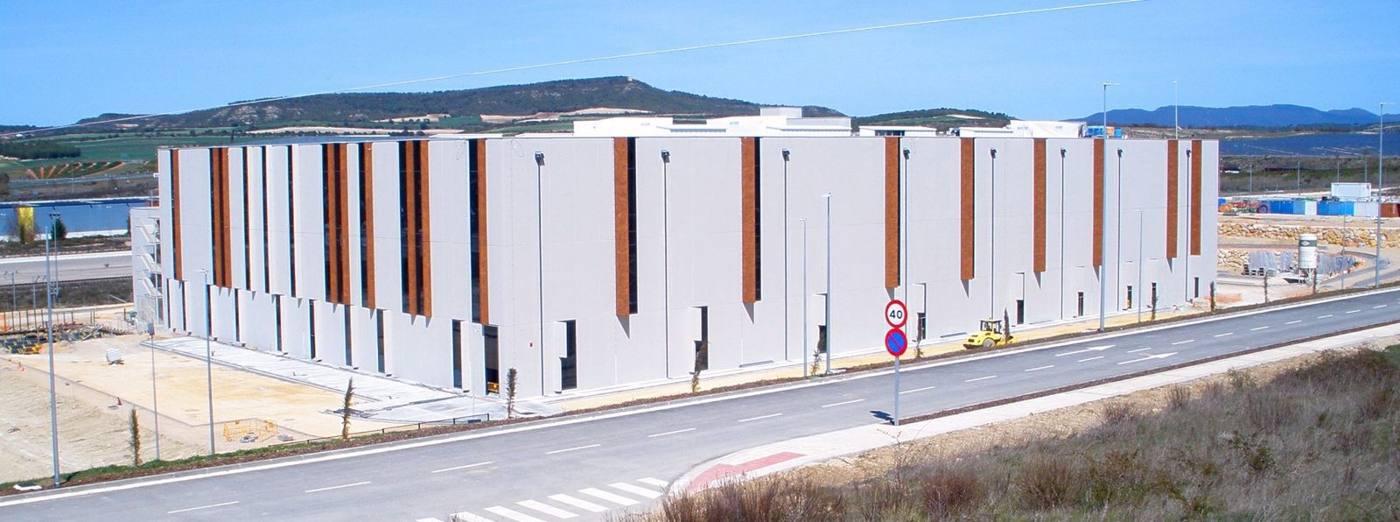
The announcement also sets out a plan for 3 gigawatts of AI data-centre capacity by 2030. That is a forward-looking capacity objective, rather than confirmation that this amount of infrastructure is operating today. For readers assessing the deal, separating a completed ownership transaction from an infrastructure programme still to be delivered is the essential starting point.
Why an industrial shareholder changes the question
A large industrial group brings something different from financial backing alone: operational problems that can become demanding tests for technology. Aramco says it expects to use HUMAIN infrastructure for industrial applications. The analytical question is therefore whether the relationship can shorten the distance between a promising model and a useful process inside a complex operating environment.
That potential should not be confused with guaranteed adoption. Industrial customers must decide where an AI system improves an existing workflow, what information it can access, and how its output will be reviewed. A shareholder relationship can facilitate cooperation, but it does not remove the need to demonstrate accuracy, reliability and a measurable benefit against the previous method.
Capacity is one layer of the commercial offer
Compute availability matters because customers need somewhere to run models, store approved information and maintain applications. Yet infrastructure alone is not a finished product. A buyer still requires suitable software, implementation support and clear responsibility when something fails. The stronger commercial offer connects these elements into a service that a customer can evaluate and operate.
For a Saudi enterprise, a practical comparison begins with the workload. A document assistant, a visual inspection tool and a research system can have different requirements. Procurement teams should specify the task, expected usage, information sensitivity and acceptable response time before comparing providers. That discipline makes a capacity announcement more relevant to an actual business decision.
Delivery depends on more than a completion date
A data-centre expansion involves interdependent decisions about sites, equipment, utilities and customers. The announced 2030 ambition provides a horizon, but it does not replace detailed milestones. Useful evidence would include commissioned facilities, available services and the conditions under which customers can use them. Each milestone answers a different question about execution.
Businesses should also distinguish nominal capacity from capacity suitable for a particular application. Service availability, continuity arrangements and technical support affect the user’s experience. A provider can have a substantial infrastructure footprint while still needing to prove that a specific customer workload can run consistently. Contracts and technical trials are where those distinctions become concrete.
What a credible industrial pilot should measure
A sensible pilot begins with a baseline: how the task is performed now, the resources it consumes and the errors that matter. The trial can then test whether AI improves the result. Measuring only the speed of a demonstration risks overlooking review time, integration work or additional checks required before the output can be used.
The evaluation should include the people who will operate the system, rather than only the team presenting it. Their questions often reveal whether the tool fits the workflow: who corrects an incorrect result, how changes are recorded, and what happens when the service is unavailable. These are implementation questions, not objections to innovation.
A useful opening for suppliers and skills
The combination of infrastructure and industrial applications can create work for specialised suppliers, but a headline investment does not identify every accessible contract. Smaller businesses need to determine where their capabilities fit: integration, maintenance, workflow design or sector-specific software. A focused offer is easier to test than an undifferentiated claim to provide AI solutions.
For professionals, the relevant skills extend beyond familiarity with a model interface. Domain knowledge, data quality and the ability to evaluate outputs can be decisive. Companies considering training should connect it to a real task and a responsible manager. That makes development useful even if a particular technology platform or procurement timetable changes.
The next evidence to watch
The transaction is a confirmed development in Saudi Arabia’s AI industry. Its economic meaning will become clearer through commissioned capacity, customer deployments and evidence that applications improve operations. Those indicators should be tracked separately, because expansion of infrastructure and successful use of technology do not necessarily advance at the same pace.
For readers following the sector, the strongest question is not whether the announcement is large. It is what each subsequent milestone makes possible for an identifiable customer. That approach gives credit to the completed transaction while keeping future performance open to examination. It also turns a broad technology story into a more useful account of industrial execution.
Gabriel Nicolaev – CyGuru