
UAE / Business
UAE asteroid mission moves through integration: what the 2028 launch update means for science and industry
The UAE Space Agency says its asteroid-belt mission remains on track for launch in the first quarter of 2028. Its 2 November update puts assembly, integration and testing at the centre of the next phase, shifting attention from the design of individual components to the performance of a complete spacecraft.
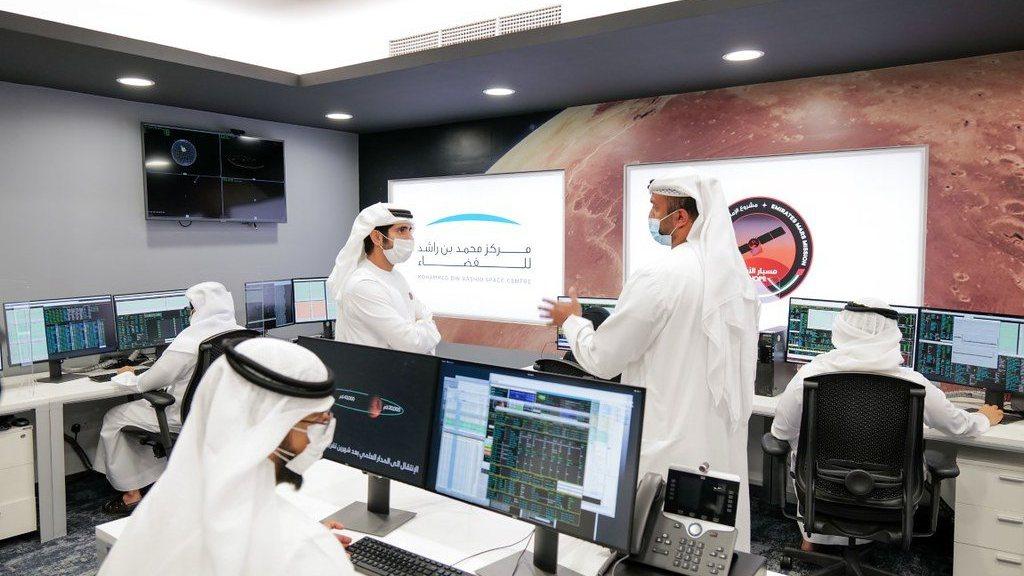
The new information is about readiness
The latest WAM account attributes the schedule update to Mohsen Al Awadhi, Director of the UAE Space Agency’s Space Missions Department. It says the mission has advanced into assembly, integration and testing, with the UAE-developed lander being prepared for integration with the MBR Explorer at the Laboratory for Atmospheric and Space Physics in Colorado. The reported launch target remains the first quarter of 2028. These are progress statements, not a completed launch or a guarantee of a future outcome. Their significance is the type of work now being emphasised: the transition from developed hardware towards a tested, integrated mission. Readers should judge later updates against the milestones they actually describe rather than treating every technical announcement as equivalent evidence of final readiness.
Integration is a separate engineering achievement
A component can meet its own requirements and still need substantial work before it functions as part of a larger system. Interfaces, power demands, communications and the timing of operations all have to be considered together. That general engineering distinction explains why integration is a meaningful phase rather than an administrative pause between construction and launch. It is where teams test their assumptions about how separately developed elements interact. This report does not identify an undisclosed problem in the UAE mission; it explains why progress on a lander and progress on the entire spacecraft are different claims. A credible readiness assessment needs evidence at the level of the system that will fly, not only evidence that individual parts have passed their own tests.
The lander’s role makes precision important
The current update describes a lander intended to separate from the MBR Explorer and approach asteroid 269 Justitia, the mission’s final target, to obtain detailed images. That role differs from simply carrying an instrument on the main spacecraft. Separation creates another operational sequence to prepare and test. In practical terms, the handover between a carrier spacecraft and a deployable payload requires teams to be explicit about the conditions under which each action is expected to happen. The public announcement does not provide the full engineering specification, and it would be misleading to infer one. What can be said is that the lander is a distinct capability whose contribution depends on its successful place within the overall mission architecture, not only on the achievement of building it.
A launch window shapes the project backwards
A deep-space mission’s target date is a planning constraint that reaches into work performed long before launch. The UAE Space Agency’s mission page identifies a March 2028 window, while the latest update uses the broader first-quarter target. Those descriptions can be reported without pretending that every day within the quarter is interchangeable. The practical implication for a project organisation is to work backwards from the required sequence: integration, testing, readiness decisions and transport must fit together. That is an analytical description of schedule discipline, not disclosure of a private mission timetable. As the programme advances, the useful public evidence will be confirmation of the actual milestones completed and the next decisions required, rather than an unsupported assumption that a headline date alone proves the schedule is secure.
Scientific value begins with a question
The UAE Space Agency presents the mission as an investigation of multiple asteroids and what they can reveal about the Solar System’s formation and composition. That purpose is important because a mission is not made scientifically valuable by distance travelled alone. The useful connection is between a question, an observation and the interpretation that observation can support. A reader assessing an update can therefore ask what new information a particular instrument or encounter is designed to obtain. This does not require inventing a discovery before it happens. It requires distinguishing an intended measurement from a result already established. The mission’s scientific contribution will ultimately be assessed through the observations made, the quality of the resulting data and the research that those data can sustain.
The industrial opportunity lies in qualified work
The agency’s mission description also places domestic private-sector participation within the programme’s objectives. The commercial opportunity should be understood as the development of capabilities that can meet demanding specifications, rather than as a general promise that every space-related business will benefit. A supplier’s useful contribution depends on a defined task, demonstrable performance and the ability to work within the project’s assurance processes. For a business examining the sector, that suggests a focused question: what problem can it solve well enough to become a credible participant? This is an interpretation of how an industrial programme can build capability, not an announcement of open contracts. Any procurement opportunity, eligibility condition or partnership must still be verified through the relevant organisation before a company commits resources.
Documentation can be part of the product
Complex engineering creates value through repeatability as well as through invention. A supplier that can explain what was built, how it was tested and what evidence supports the result gives the wider project something it can evaluate and use. That documentation is not merely a presentation after the technical work has finished. It helps people working on different parts of a system understand what they can rely on. In a domestic industrial ecosystem, such habits can matter beyond a single mission because they support cooperation between organisations. This report makes no claim about the documentation quality of any named participant. The point is a general one about capability: a successful prototype and a dependable engineering contribution are related achievements, but they are not automatically the same thing.
International cooperation does not cancel local learning
The planned integration work at LASP illustrates why national capability and international cooperation need not be treated as opposites. The relevant question is what each partner contributes and what knowledge remains usable by the teams involved. The UAE’s October account of the lander’s development names national research and academic participants alongside the agency, while the current update describes the next integration setting abroad. Those facts describe a connected programme. They do not justify claiming that every element is independently produced in one country, nor that domestic participation is only symbolic. A more useful assessment follows the work itself: who develops an element, who verifies it, how interfaces are managed and how the experience can inform later projects. That view is more precise than treating location alone as the measure of capability.
Training is strongest when attached to responsibility
A mission can offer an educational opportunity that differs from classroom exposure to an ambitious project. The deeper learning comes when people are responsible for a defined piece of work, receive technically meaningful feedback and see how their decisions affect the larger system. For students and early-career engineers, that can make the relationship between theory, testing and evidence more concrete. Institutions interested in the mission should still verify the actual programmes and participation routes offered by the relevant organisations; a news announcement does not itself create an internship or admission pathway. The broader implication is that workforce development becomes more credible when linked to demonstrable tasks. A country builds a durable technical base through people who can explain and reproduce the work, not only through people who have witnessed an important event.
Avoid confusing exploration with near-term extraction
The agency’s mission description refers to possible future resource opportunities, but that long-term context should not be converted into a claim that the present mission will create an immediate mining business. Scientific exploration, assessment of potential resources and commercial extraction involve different questions and evidence. A reader should keep those stages separate when evaluating an investment narrative or a promotional claim. The current update concerns spacecraft readiness and mission development. It does not announce a commercially operating asteroid-resource project. This boundary matters because an ambitious scientific programme can attract attention far beyond the detail actually confirmed. Clear reporting should preserve that ambition while resisting the temptation to attach revenues, profits or industrial outcomes that have not been demonstrated by the work being described.
Which milestones should readers follow next?
The strongest next updates will identify completed integration and test activities, the evidence required for readiness decisions and the transition towards the launch site. The latest statement gives a sequence of work still ahead; it does not erase the distinction between a scheduled activity and a verified completion. Readers can use that distinction to assess progress without turning every change into either triumph or failure. As of 3 November, the defensible conclusion is that the UAE mission is reporting progress through its hardware and integration phase while retaining its early-2028 target. Its broader value will be judged in several ways: by the spacecraft’s performance, by the science eventually produced and by the engineering capability that participating teams can carry into future work. Those outcomes deserve separate evidence rather than a single headline.
Gabriel Nicolaev – CyGuru
Sources & further reading
WAM: current mission-readiness update, 2 November 2026
UAE Space Agency: mission objectives and launch window
Abu Dhabi Media Office: UAE-developed probe, 6 October 2026
UAE Space Agency: assembly and integration phase, April 2026
Photograph: UAE Saif / CC0 1.0