
Qatar / Explore
Mexican craft in Doha: a programme that asks visitors to look beyond the finished object
A 2 November update places Mexican craft at the centre of a wider autumn programme in Doha, linking an exhibition at M7 with design and culinary exchanges. The most revealing way to approach the programme is through the work, knowledge and choices behind its objects, rather than treating craft as a decorative category.
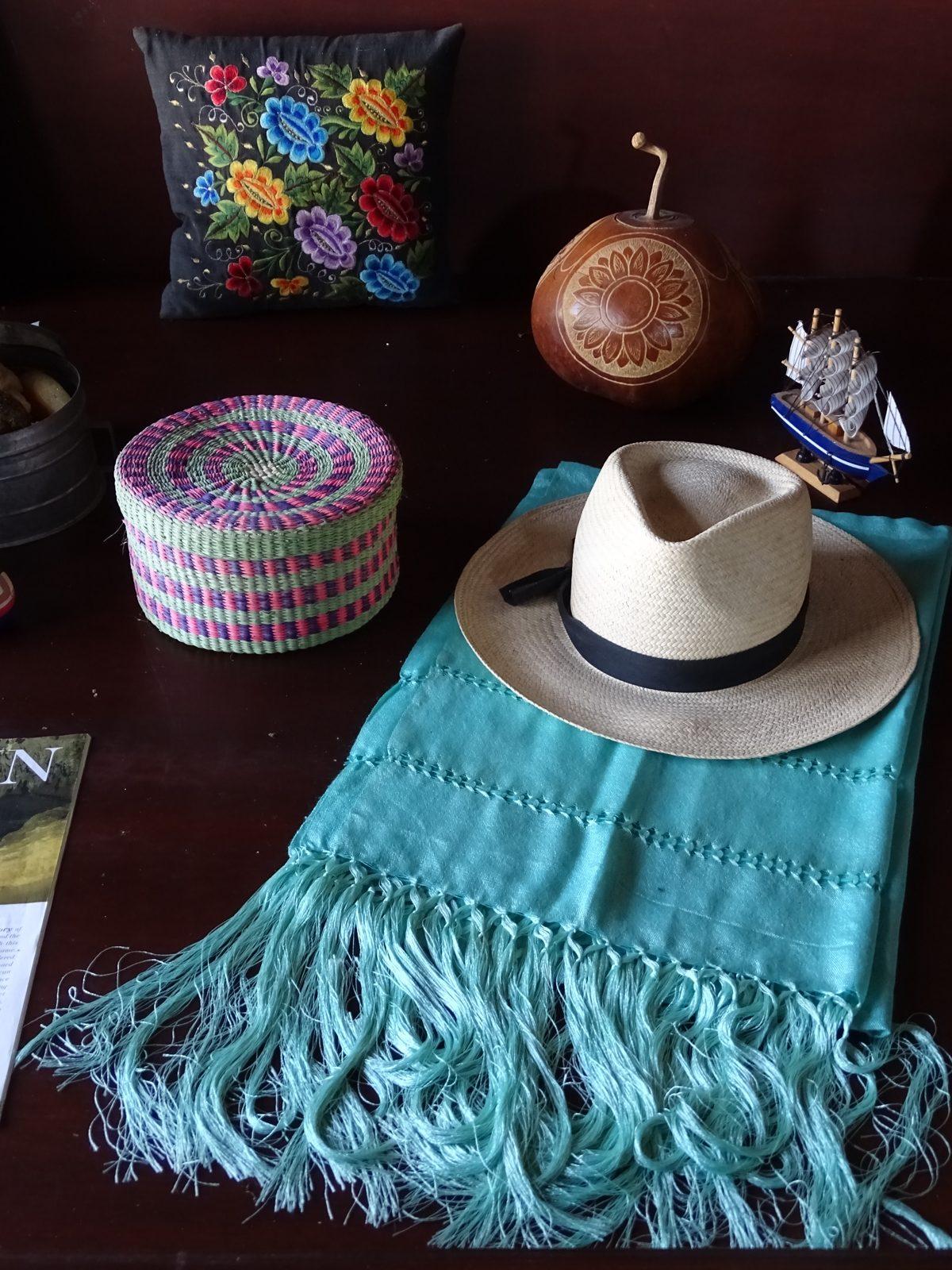
What is happening in Doha
Qatar News Agency’s 2 November report describes exhibitions, design collaborations and culinary experiences presented through the Qatar, Canada and Mexico 2026 Year of Culture. At the centre is Expanded Tradition: Contemporary Craft Practices in Mexico, which opened at M7 on 27 October and is scheduled to remain on view through 26 December. The report identifies 106 works by 26 makers and collectives from 12 Mexican states.
That scale matters because it discourages the idea that Mexican craft is a single style or a narrow set of souvenirs. The exhibition brings different makers into a shared curatorial framework. Visitors can use that framework to compare processes and ideas, while remembering that a selection presented in one exhibition cannot stand for every practice or community across a country.
The exhibition’s stated focus is process
Qatar Museums describes the exhibition as an exploration of inherited knowledge, learning and transformation. Curator Ana Elena Mallet’s approach connects craft with contemporary choices about materials and forms. The official presentation also identifies five thematic sections, moving through transmission, invention, landscape, identity and possible futures. These are the exhibition’s organising ideas, rather than a checklist of objects that visitors must agree to interpret in only one way.
The distinction creates a more useful starting point for a visit. Instead of asking only whether an object is beautiful, a viewer can ask what decisions made it possible. Which elements depend on learned technique? What has been retained, adapted or deliberately changed? Such questions do not require specialist vocabulary, but they do require time and attention beyond an initial photograph.
Why a skilled gesture carries information
A finished object can conceal the sequence of actions that produced it. When a technique is transmitted through practice, the maker learns how a material responds, how much force to apply and when a process has reached the right stage. This is general craft analysis, not a description of an unreported demonstration at M7. It explains why an exhibition concerned with learning may ask viewers to look at process as well as appearance.
For the visitor, that can change the meaning of precision or repetition. Similar forms do not necessarily indicate the absence of thought. They may reveal the disciplined control needed to repeat a demanding action. Conversely, a variation may be an intentional experiment rather than a mistake. The useful question is how the maker’s decisions relate to the material and the purpose of the work.
Tradition is not the same as visual sameness
The official exhibition description treats tradition as something that can be transmitted and reworked. That is different from requiring every new object to look exactly like an earlier one. Continuity may exist in a method, a relationship to a material or a way of teaching, even when the outward result changes. The exhibition’s contemporary focus makes that distinction relevant to how the works are approached.
At the same time, novelty alone does not prove that a practice has become stronger. An adaptation may open a useful direction, or it may obscure what made the original knowledge distinctive. A thoughtful visitor can hold both possibilities in mind. The task is not to declare everything old authentic and everything new superficial, but to examine the relationship between a change and the knowledge it draws upon.
Materials connect objects to places
An object’s material can carry evidence of local conditions, available resources and established ways of working. The exhibition’s attention to landscape invites that broader reading. A visitor should not infer a specific environmental benefit from the mere presence of natural material, however. Whether something is renewable, responsibly sourced or durable depends on the particular circumstances of its production and use.
This makes material questions especially valuable. What is the object made from? Why was that material chosen? How does it age, and what does it allow the maker to do? Where information is supplied by the exhibition, it can support a more grounded interpretation. Where it is absent, curiosity is more appropriate than inventing a sustainability claim on the maker’s behalf.
Authorship should remain visible
A programme of international exchange can help bring makers to new audiences. That opportunity is strongest when the people responsible for the work remain identifiable. Named authorship gives viewers a route to understand an individual practice rather than reducing the work to a general national label. It also supports a clearer distinction between a handmade object, a design collaboration and the institutional setting in which either is displayed.
For readers interested in buying craft, this is a useful discipline beyond the exhibition itself. Ask who made the work, what part of the process they undertook and how the object reached its current setting. These questions do not assume wrongdoing. They recognise that cultural value and commercial value can be distributed across several participants, whose contributions should not be collapsed into a single promotional story.
A meal can become another setting for design
The November update also points to a Panadería Rosetta residency at MIHAD Gallery in Doha Design District, scheduled for 5 to 15 November. The bakery, led by chef Elena Reygadas, is presented alongside ceramics and lighting by designer Perla Valtierra. As of this article’s 3 November publication date, that stated residency is upcoming; this report does not claim it has already opened or describe a meal experienced there.
The combination is interesting because objects are encountered differently when they are used. A bowl can be observed as a form in a gallery, but weight, handling and its relationship to food introduce another kind of attention. That is an interpretive reason to consider the culinary component of the programme, rather than treating food and design as two unrelated attractions placed on the same calendar.
Cultural exchange needs specificity to be meaningful
Years of Culture’s programme account connects the Doha activities with creative exchanges in Mexico. The underlying idea is a dialogue between practices, not a claim that Qatar and Mexico have identical histories. An effective comparison begins with specific methods, materials or questions. It becomes weaker when broad language about shared heritage replaces attention to the differences that make an exchange worth having.
For a Qatar-based visitor, a productive approach is to notice both recognition and unfamiliarity. A concern with skilled work or intergenerational learning may feel familiar, while a particular technique or visual reference may not. Neither response needs to be forced into a simple conclusion. The value of the encounter can lie in understanding more precisely where experiences connect and where they remain distinct.
Plan a visit around a question
Trying to absorb every object equally can make an exhibition feel like a long sequence of disconnected impressions. A more manageable route is to choose a question before entering: how is knowledge taught, how does a material shape a form, or how does a maker reinterpret an inherited practice? The thematic structure provides several possible starting points without requiring every visitor to follow the same path.
One practical method is to select two works that seem different and compare the information provided about each. What is known about their makers, processes and intended use? Which conclusion is supported by that information, and which is only an impression? This slows down a visit in a useful way and gives a photograph or a remembered detail more context after leaving the gallery.
Dates and practical details should be checked directly
The verified exhibition period runs from 27 October through 26 December 2026. M7’s official calendar and Qatar Museums’ listing are the appropriate places to confirm current access information before travelling. This article does not assume that the exhibition and every related activity share the same booking arrangements, opening hours or admission conditions. A programme spread across different settings requires attention to the details of each stop.
The same principle applies to future events mentioned in the wider programme. An announced date is useful for planning, but it should be checked again when arranging a visit. That is not a reason to avoid cultural activity; it is a way to protect the time and attention a visitor intends to give it. Good preparation leaves more room for looking once the visit begins.
What remains after the programme
A successful encounter with craft can leave the visitor with a more exact way of seeing everyday things. A familiar object may begin to reveal choices about labour, material, function and authorship that were previously invisible. That is an analytical possibility, not a measured outcome being attributed to every visitor or a claim that an exhibition alone can preserve a tradition.
The current Doha programme offers several settings in which those questions can be explored. Its immediate news value is the active exhibition and the forthcoming design and culinary exchanges. Its deeper interest lies in whether viewers move beyond the finished surface to recognise the decisions and knowledge behind it. That attention gives cultural exchange substance: named people, particular techniques and a clearer understanding of how inherited skills continue to change.
Gabriel Nicolaev – CyGuru