
Kuwait / Travel
A Kuwait Maritime Weekend: Reading the Coast Before Crossing to Failaka
Kuwait’s relationship with the sea is best explored as a connected story of trade, settlement, boats and island archaeology. Build a mainland museum day first, then treat Failaka as a separately confirmed excursion. That approach creates a richer weekend and a practical alternative if sailing arrangements or weather change.
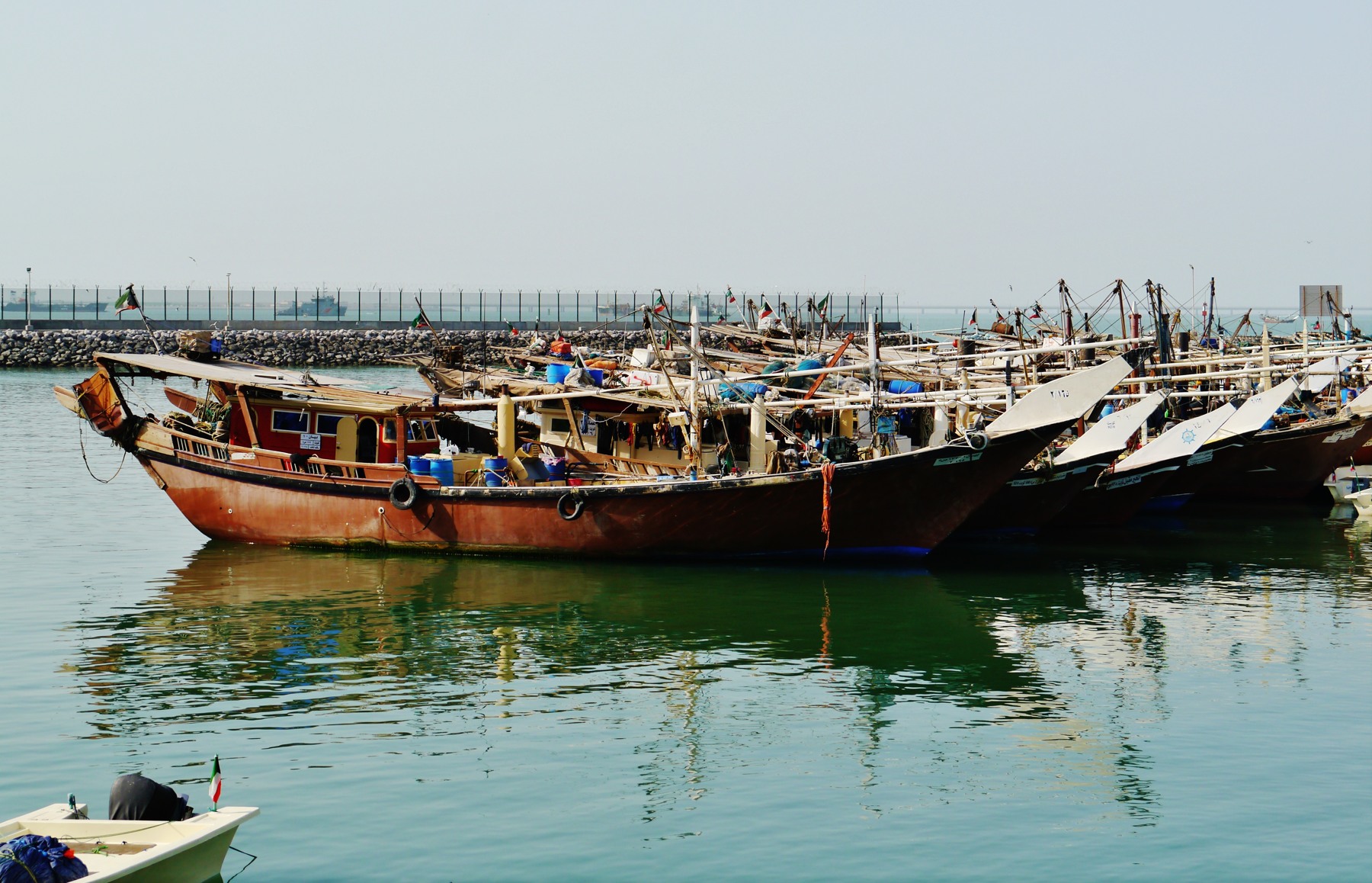
Give the weekend a question, not just a route
A maritime weekend becomes more interesting when its stops answer a shared question: how did the sea shape the movement of people, goods and ideas around Kuwait? A museum, a stretch of waterfront and an island visit can then become parts of one investigation rather than a checklist of unrelated attractions. The route below is an editorial planning framework. It is not a packaged tour, and it does not promise that every institution or archaeological location is accessible on any particular date.
Start by separating the mainland programme from the island excursion. A mainland day is easier to adjust around museum arrangements and the interests of the group. Failaka introduces a transport dependency that should be settled directly with the operator before the rest of the schedule is made rigid. This sequence also prevents disappointment from consuming the whole weekend: if the crossing cannot proceed, visitors can still explore a coherent story on the coast rather than improvise a hurried substitute after reaching a departure point.
Begin with the Maritime Museum’s institutional context
The National Council for Culture, Arts and Letters lists the Maritime Museum among its museum resources. That official listing is a reliable starting point for identifying the institution and finding the appropriate visiting channel. Confirm the current visiting arrangement, the entrance to use and any booking requirement with NCCAL or the museum. This guide deliberately avoids reproducing opening hours or ticket prices from older travel articles, because those practical details can change independently of a museum’s continuing existence.
Inside a maritime collection, look for relationships rather than only impressive objects. Ask what a vessel, navigational instrument or commercial record reveals about labour, navigation, materials and the exchange of goods. Where labels provide historical explanations, distinguish those documented interpretations from your own impressions. If a display is unavailable, a guide may still help explain the collection’s focus. The purpose of the visit is not to confirm an imagined romantic past. It is to encounter evidence and ask how it changes the visitor’s understanding of the modern coast.
Connect the museum to the urban waterfront
After the museum, use the waterfront as a setting for observation rather than a claim that every visible object belongs to the same historical period. Modern roads, harbour infrastructure, commercial premises and leisure spaces have different functions. Their proximity can help visitors think about how a coastal city changes, but it does not establish a continuous history for a particular building. Consult the official descriptions of individual sites when making a historical attribution or planning a specific stop.
Keep the walking segment modest and adaptable. A scenic line on a map is not proof of a continuous, comfortable pedestrian route. Check crossings, shade, seating and the actual distance from the entrance where the group will emerge. Families and mixed-mobility groups should evaluate the route through the least flexible traveller’s needs, not the fastest walker’s estimate. Transport between two relevant locations can be the better choice when it protects the quality of the visit. A maritime itinerary should leave room for looking and discussing, rather than turn every transition into a physical endurance exercise.
Add Dickson House as a different kind of evidence
NCCAL’s museum directory also identifies Dickson House Museum. Its inclusion offers a way to extend a coastal itinerary into a different scale of historical experience: a house and its interpreted context, rather than the larger geographical story suggested by an island. Verify the current visiting procedure separately. The fact that two institutions share an official directory does not mean that their hours, booking systems, staffing or accessibility arrangements are identical.
A productive visit compares the types of questions each institution can answer. A maritime collection may foreground vessels, work or trade; a house museum may illuminate domestic space, social relationships or a particular period through its own interpretation. Avoid forcing either place to represent all Kuwaiti life. Discuss what is present, what is absent and whose perspective the displays make visible. This approach is especially useful for younger visitors, who can be encouraged to identify one object or room and explain the evidence for their interpretation rather than collect a long list of historical dates.
Understand what makes Failaka a separate undertaking
Failaka should be approached as an island with heritage significance and practical constraints, not an automatically accessible outdoor museum. NCCAL describes archaeological work and preservation activity associated with the island. That establishes its cultural importance, but it does not mean a visitor may enter every excavation, building or protected area. Access to a transport service and permission to visit a particular heritage site are different questions, and both deserve a current answer.
Before booking, decide what kind of island experience you want. A general excursion, a guided heritage visit and a research-oriented archaeological interest require different preparation. Ask the operator what the purchased service actually covers: transport only, transfers on the island, a guide, meals, or a defined itinerary. An attractive photograph of ruins is not proof that those ruins are on the permitted route. The strongest plan begins with the places and services that are explicitly confirmed, then leaves unverified possibilities outside the essential programme.
Verify the crossing with the actual operator
Joan Al Kuwait’s official website advertises ferry and speedboat services associated with Failaka and provides a booking channel. Its service information is useful primary evidence that an operator offers island transport. It should not be converted into an unconditional promise of daily availability for every traveller. Confirm the departure point, sailing date, check-in arrangement, return journey, identification requirements and what happens if a service changes. Do not assume that a passenger ticket includes vehicle transport or that all boats have the same capabilities.
Ask for a written confirmation that is easy to retrieve offline. Record the operator’s contact details and distinguish the time for presenting at the departure point from the advertised sailing time. Verify whether the return is fixed or chosen from available services, and whether an onward arrangement depends on the same boat. This guide publishes no live timetable or fare. A reliable booking is a current agreement with the operator, not a screenshot of an old travel recommendation that happens to contain the word Failaka.
Make weather a decision point rather than a footnote
The Kuwait Meteorological Department identifies itself as the official weather-information provider and publishes forecasts, marine conditions and warnings. Use its current material when assessing the day’s plan, then follow the transport operator’s operational instructions. A comfortable temperature on land does not establish suitable sea conditions. Equally, a general forecast cannot tell an individual passenger whether a particular journey meets their personal needs. Keep those questions separate instead of treating one weather icon as a complete travel assessment.
Leave a genuine mainland alternative in the schedule. If a crossing is cancelled or postponed, return to a prepared museum, waterfront or indoor cultural plan whose own arrangements have been checked. Avoid placing an expensive, non-refundable commitment immediately after the expected return. This is a resilience principle, not a prediction of disruption. Island excursions are more enjoyable when the itinerary acknowledges that the sea and transport operations introduce uncertainty, and the traveller does not have to turn that uncertainty into a series of rushed financial decisions.
Treat heritage access as a responsibility
An archaeological location is evidence that can be damaged, not simply a backdrop. Follow the instructions of the responsible authority or authorised guide. Do not enter restricted areas, move objects, climb fragile remains or collect material as a souvenir. Where a site cannot be entered, an external view or an authorised explanation may still be worthwhile. The absence of a visible barrier should never be treated as permission, and social-media images of other visitors are not a substitute for access rules.
Photography also needs context. Ask about restrictions at museums, sensitive locations and during guided visits. Describe photographs accurately when sharing them: a modern reconstruction, a vessel on display and an archaeological structure are not interchangeable forms of heritage evidence. If a guide’s interpretation is uncertain or contested, retain that uncertainty rather than present it as a settled fact. Responsible visiting does not diminish the story. It helps ensure that a memorable weekend does not contribute to the gradual loss of the evidence that made the place worth visiting.
Build a budget around confirmed inclusions
Separate the budget into mainland transport, institutional visits, food, the island crossing and any confirmed island services. Then add costs arising from the group’s actual circumstances, such as an accessible transfer or a different return arrangement. Compare packages by what they include rather than their headline price. A lower-cost ticket may simply cover fewer services; a higher-cost offer may include convenience that the group does not need. Neither can be judged sensibly until the inclusions are written down.
Use a small decision sheet before paying. For each commitment, record the supplier, date, participants, cancellation terms and unresolved question. In a hypothetical example, a group can preserve flexibility by leaving an optional meal unbooked until the crossing is confirmed, while securing a necessary transfer with terms it understands. No numerical fare is required to make that logic useful. This guide is intended to help readers obtain and organise real quotations, not supply fabricated current prices that might appear precise while weakening the reliability of the itinerary.
Prepare a small evidence notebook for the journey
Choose three questions before leaving home and assign each to a different setting. One might concern how boats were used, another how a coastal household is interpreted, and another how an island site is protected. Carry the questions on paper or in a phone note. They create continuity when opening arrangements change, because the group can pursue the same inquiry through a different authorised source instead of treating one unavailable room as the end of the subject.
During the visit, record the institution and the label or guide responsible for an important explanation. Separate those notes from personal impressions. A child might write that an object looked heavy; a museum label might explain its purpose; a guide might describe a technique. Those are different kinds of information. Preserving the distinction makes later discussion more accurate and turns photographs into useful prompts rather than unsupported historical claims. Back home, select a few images that explain what the weekend taught you. The best record is often a short, clearly attributed account rather than an enormous album whose locations and context have already become uncertain.
Leave with a connected understanding of Kuwait
At the end of the weekend, compare what each setting revealed. The museum offers interpreted objects and institutional knowledge; the waterfront shows a living coastal city; the island, if visited through appropriate arrangements, introduces another geographical and historical dimension. The connections between them should remain grounded in what you actually saw and what credible sources explained. A trip can be culturally substantial even if it contains only a few carefully chosen stops and a crossing never takes place.
This is the advantage of a question-led maritime itinerary. It creates a way to understand Kuwait that survives changes in transport and opening arrangements. Visitors can return with a clearer sense of how places, evidence and practical access fit together, rather than a collection of rushed photographs detached from their context. Consult the official heritage and transport sources below close to departure. The route is yours to adapt; the distinction between confirmed access, interpretation and possibility should remain intact throughout the plan.
Gabriel Nicolaev – CyGuru
Sources & further reading
NCCAL — official museum directory
NCCAL — archaeological preservation and Failaka projects
Kuwait government — museums and galleries
Joan Al Kuwait — official ferry and marine services
Joan Al Kuwait — current booking and operator contact channel
Kuwait Meteorological Department — official service information
Photograph: Zairon — original file and attribution
Related on MyGCCNews
Finding Your Place in Kuwait’s Sporting Life: A Practical Guide Beyond the Stadium