
Bahrain / Tools
Bahrain and the causeway: a practical budget model for a regional trip
A Bahrain trip with a possible Saudi extension needs more than a hotel total and an optimistic driving time. This guide builds a transparent planning model around actual quotations, individual entry eligibility, vehicle permission, time buffers and the cost of changing the plan.
Define the trip before calculating the total
A useful budget begins with a decision about the trip’s purpose. A short cultural visit to Bahrain, a family weekend, a business appointment and a wider regional journey create different priorities. Writing all of them into one itinerary can produce a plan that looks efficient on paper but gives nobody enough time for the activity that matters most. Identify the essential experience, the fixed commitments and the optional additions before attaching costs.
For a possible Saudi extension, specify the destination and the reason for going. Crossing a border is not an activity in itself, and a neighbouring country is not a single destination. An additional city visit needs a real time window, appropriate entry permission and a workable return plan. The model in this guide compares a Bahrain-only trip with a Bahrain trip plus an optional cross-border element. It is a method for organising the traveller’s own information, not a statement of current visa charges, transport fares or guaranteed processing times.
Treat eligibility as a gate, not a budget assumption
Before pricing a border crossing, establish whether every traveller can make it under the applicable conditions. Nationality, residence status, purpose of travel, document validity and the particular permission held can affect the answer. The fact that one member of a family is eligible does not establish eligibility for everyone else. Nor does permission to enter Bahrain automatically establish permission to enter Saudi Arabia or return to Bahrain afterwards.
Use Bahrain’s Nationality, Passports and Residence Affairs information and the relevant Saudi official visa channels for the actual traveller. Read the conditions attached to the proposed permission, including the permitted activity and entry arrangements. If a point is unclear, resolve it with the responsible authority before making a non-refundable commitment. A budget should include an explicit status for each eligibility question: verified, pending or not applicable. A pending requirement is not a zero-cost line. It is an unresolved condition that may change the route, the timing or the feasibility of the entire extension.
Distinguish a private car, a rental and a licensed service
Transport permission is separate from passenger eligibility. A vehicle that can be driven legally within one country is not automatically authorised for an international trip. Ownership, driver authorisation, the rental agreement, insurance coverage and the operator’s permissions can all require separate confirmation. Obtain the answer for the actual vehicle and journey, rather than relying on a general statement that a crossing is physically possible.
Bahrain’s government portal includes a service concerning authorisation to drive a vehicle outside Bahrain. The transport ministry also publishes information about licensed taxi operations across the causeway. These official resources help identify the right questions, but the traveller must still confirm the terms of the particular service booked. Ask a provider whether the quotation covers the complete journey, whether waiting is included and how return arrangements work. Do not treat a local hire quotation as a cross-border offer unless that scope is expressly confirmed. This distinction can prevent a cheap-looking option from becoming unusable on the day.
Create separate cost buckets
Divide the model into costs that behave differently. A practical structure includes arrival and departure transport, accommodation, daily spending, local journeys, activities, the optional border extension and a contingency reserve. Within each bucket, distinguish costs per person, per room, per vehicle and per trip. These units are not interchangeable. Multiplying a vehicle quotation by the number of passengers or forgetting that a room price is per night can materially distort the result.
Keep uncertain items visible rather than burying them in an attractive total. Mark a quotation as confirmed only when its date, scope and conditions are understood. A price displayed without the required inclusions should remain provisional until those details are checked. Separate refundable deposits from expected expenditure, because a traveller may need access to the money even if it is later returned. This produces two useful totals: expected spending and the amount of cash or available payment capacity required to execute the trip without relying on an immediate refund.
Use a numerical example without confusing it with a price guide
Consider a deliberately hypothetical two-adult, three-night Bahrain-only scenario. Suppose the traveller enters 150 budget units for the room total, 90 for meals, 40 for local transport, 30 for activities and 40 for arrival and departure transfers. The base total is 350 units. A reserve of 15 percent adds 52.5, producing a planning envelope of 402.5 units. These figures are invented solely to show the arithmetic; they are not Bahrain prices or quotations in any named currency.
Now suppose the optional extension adds 120 units for a confirmed service, 30 for extra meals and 20 for another verified requirement. Its incremental cost is 170 units before any additional reserve. The important output is not just the combined total. It is the visible price of the optional decision. Once the traveller replaces the demonstration values with actual offers, the model can show whether the extension is worth what it displaces: another experience, a more flexible booking or money retained for an unexpected change.
Calculate time with the same discipline as money
A regional itinerary has a time budget as well as a financial budget. Include the journey to the crossing, border procedures, onward travel, stops, the activity itself and the return. A road-distance estimate accounts for only part of that sequence. Published live traffic information can inform departure decisions, but it cannot promise the conditions that will exist later or remove the need for individual procedures.
For planning, enter a normal assumption and a more demanding assumption for the uncertain stages. The difference is a buffer, not a prediction. If the optional activity remains worthwhile only when every stage takes the shortest imaginable time, the itinerary is fragile. This is particularly important when the return connects to a flight, a hotel checkout or another fixed obligation. Work backwards from that commitment and protect an adequate margin. The model should help the traveller recognise when a shorter, more coherent programme is the stronger choice, even if a map suggests that more could theoretically fit.
Compare scenarios instead of chasing one perfect total
Build three versions of the plan. The first is the essential Bahrain itinerary. The second adds the desired extension using realistic current quotations. The third shows what happens if the extension cannot proceed or takes longer than expected. The third version should not be a vague note saying that something else will be arranged. Identify the alternative activity, the accommodation consequence and the transport needed to carry it out.
This comparison exposes which commitments create avoidable pressure. A non-refundable booking in another location may appear economical until the fallback scenario is priced. A more flexible arrangement may cost more initially but reduce the amount lost if eligibility or timing changes. The objective is not to purchase maximum flexibility at any price. It is to pay for flexibility where the uncertainty justifies it. A good model makes that trade-off explicit and leaves the traveller with a deliberate decision rather than a mixture of cheap individual bookings that do not function well together.
Evaluate local transport on the actual itinerary
Bahrain offers more than one way to move between places, and the best choice depends on the route. Official airport information and Bahrain Public Transport Company timetables are useful starting points. Compare pickup locations, walking distances, service times and the number of changes required. A low fare does not establish that a service is convenient for a particular appointment, just as a private transfer is not automatically necessary for every outing.
Group nearby activities where doing so improves the experience rather than merely reducing kilometres. Check the final leg back to the accommodation, especially after an evening programme. For families or travellers with accessibility needs, confirm the relevant practical details directly with the operator. Do not assume that an itinerary suitable for an individual carrying a small bag will work unchanged for a group. Enter the cost of the transport arrangement the travellers can actually use. An unrealistically low line in a spreadsheet is not a saving if the party must replace it at the last moment.
Keep currency conversion and payment costs explicit
When a trip crosses jurisdictions, costs may be quoted in more than one currency. Choose a reporting currency for the model and record the conversion rate used for each quotation. Use the rate available to the actual payment method where possible, including disclosed charges. A general market rate is useful for orientation but may not match the amount charged by a card issuer, exchange service or booking platform.
Avoid converting a total repeatedly between currencies, because small rounding differences can obscure the original quotation. Retain the amount and currency supplied by the provider, then show the converted value alongside it. Keep deposits, final payments and refund conditions linked to the same record. For an optional cross-border extension, this makes it easier to compare offers without losing sight of what will actually be payable. The guide does not recommend a particular financial product or predict exchange rates. Its purpose is to make the traveller’s own payment assumptions visible enough to check before committing.
Set cancellation rules before the decision becomes emotional
Once an itinerary has been discussed enthusiastically, people can become reluctant to remove an optional element even when the practical case has weakened. A predetermined decision rule helps. For example, the party might agree that the extension proceeds only if all entry conditions are verified by a stated date, the vehicle arrangement is confirmed in writing and the total remains within a defined limit. Those are planning choices made by the traveller, not official deadlines.
A second rule can protect the return commitment: if the available time falls below the agreed margin, use the Bahrain-only alternative. These rules are valuable because they translate an uncertain situation into an ordinary decision. They also reduce disagreement within a group by establishing the conditions in advance. Keep the fallback attractive enough that it feels like a valid itinerary rather than a punishment for changing course. The strongest travel plan is not the one that survives every optimistic assumption; it is the one that still offers a worthwhile experience when one of those assumptions fails.
Recheck the inputs that can invalidate the result
Before departure, revisit the small number of inputs that carry the greatest consequence: traveller eligibility, document validity, the scope of vehicle permission, the provider’s confirmation, operating times and the conditions attached to significant bookings. Record when each was checked and where the answer came from. A detailed budget can create false confidence if its critical assumptions are old or based on an unrelated traveller’s experience.
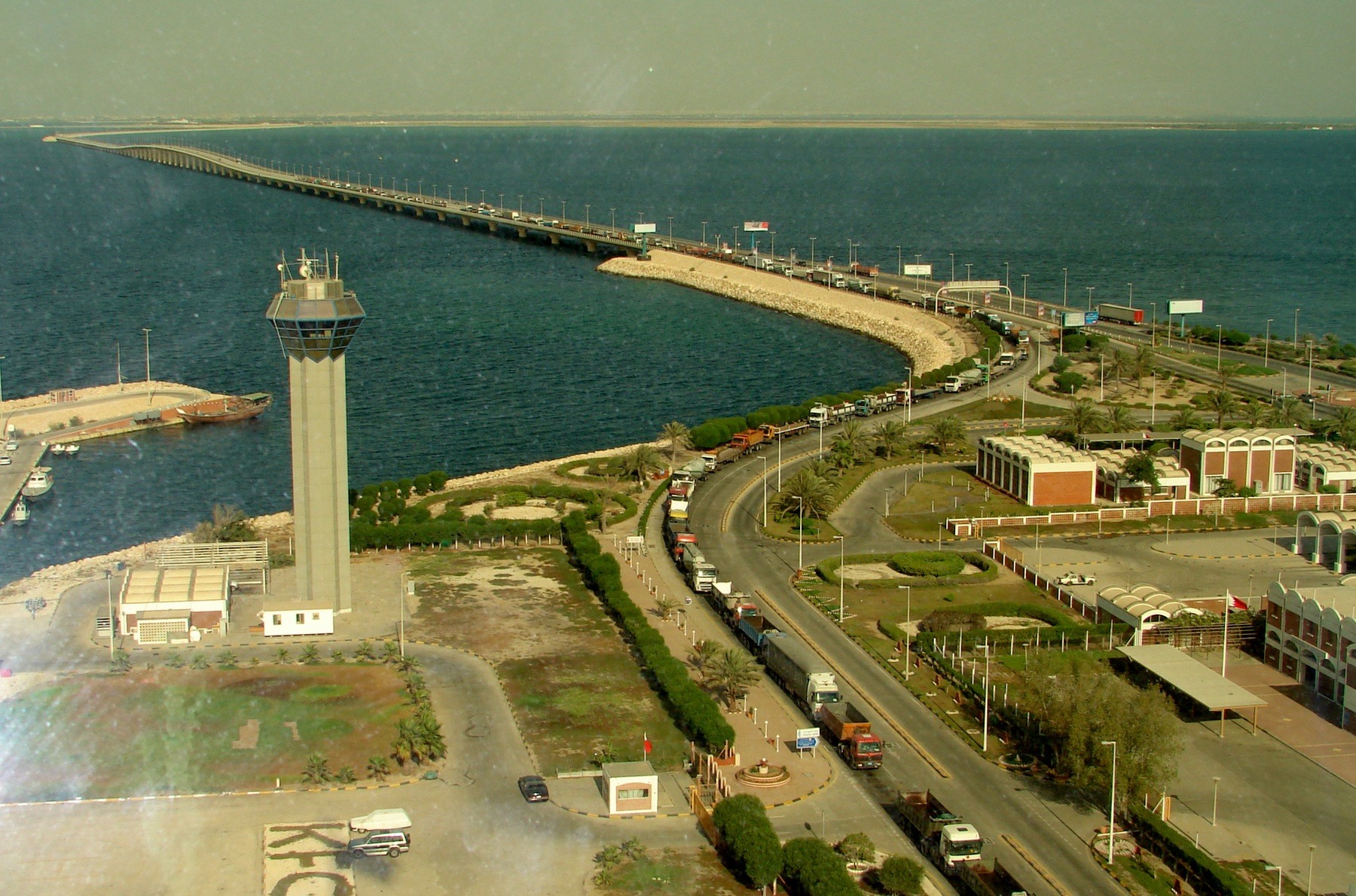
The King Fahd Causeway Authority, Bahrain’s entry authorities, Saudi official visa channels and the chosen transport operators perform different roles. Use each for the question it can actually answer. A traffic display does not establish immigration eligibility, and a hotel booking does not establish that a rental car may cross a border. Once these boundaries are clear, the model becomes straightforward: confirmed requirements first, realistic costs second, optional additions third. The result is a Bahrain journey that can stand on its own, with a regional extension added only when it genuinely improves the trip.
Gabriel Nicolaev – CyGuru
Sources & further reading
Bahrain NPRA: port and entry services
Saudi Arabia: official tourist visa website
Bahrain government: vehicle driving authorisation outside Bahrain
Bahrain transport ministry: licensed taxis across the causeway
Bahrain Public Transport Company: timetables and maps
Bahrain International Airport: bus connections
Photograph: Navin Shetty Brahmavar at English Wikipedia . — original file and attribution
Related on MyGCCNews
Use the GCC trip budget planner
Travel reporting and practical guides
Bahrain official services and legislation
Bahrain’s electric airport-taxi pilot: the operational questions behind the announcement